10.6 Biology on Your Own
10.6 Biology on Your Own
Biology Passage III (Questions 1–6)
Yeasts, which are unicellular fungi, can reproduce by budding or by performing mitosis and meiosis. Saccharomyces cerevisiae, for example, will undergo mitosis when resources are plentiful but can undergo meiosis to form haploid spores when the primary fuel sources support fermentation rather than aerobic respiration.
Both mitosis and meiosis depend on formation of a complex, Cdk1-Clb, between the proteins Cdk1 and cyclin B to activate spindle formation. In mitosis, Cdk1-Clb is activated within minutes, but in meiosis, it typically takes at least three hours. The human analog of Cdk1, Cdc2, can substitute for Cdk1 in yeast.
The entry of yeast into meiosis I depends on the expression of Ndt80, a transcription factor expressed only during meiosis, which triggers the formation of the meiotic spindle and disassembly of synaptonemal complexes. It is regulated in part by positive feedback: Ndt80 acts as an activator for its own gene. Another required protein is Ama1, which activates the anaphase-promoting complex (APC/C), which is required for the cell to enter anaphase I. During prophase I, APC/C suppresses the signals that cause yeast cells to undergo mitosis; it also helps inhibit entry into S phase.
In an experiment, a researcher cultured S. cerevisiae cells in glucose-rich medium. One population was mutated to lack the gene for Ndt80; the other lacked genes for both Ndt80 and Ama1. Two hundred cells from each sample were then transferred to media designed to induce meiosis. The researcher then counted the number of cells in each sample that exhibited the presence of a meiotic spindle; the results are shown in Figure 1.
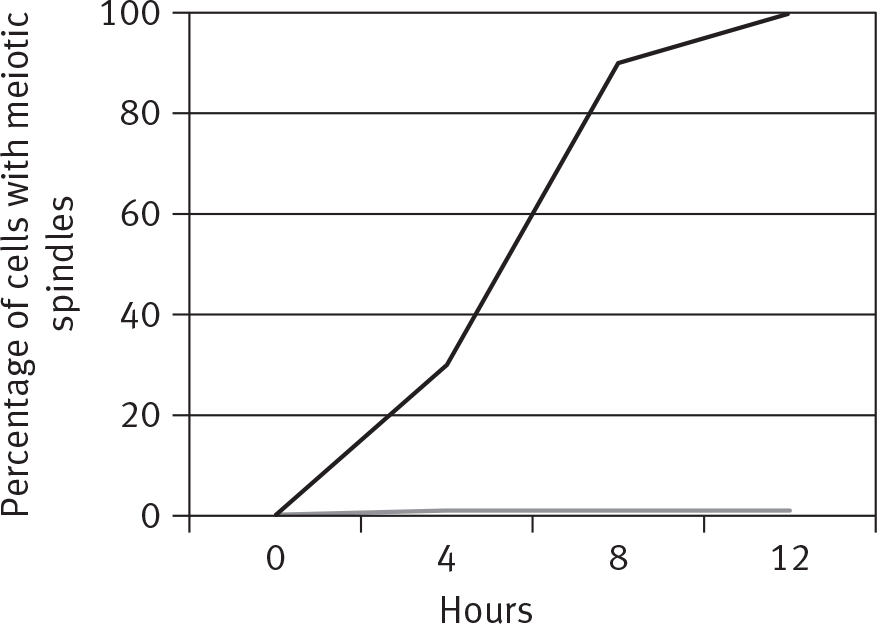
Figure 1.Development of the meiotic spindle in
–Ndt80 /–Ama1 (—) and –Ndt80 (—) cells
-
Suppose researchers discover a compound that prevents binding of Cdk1 to cyclin B. Although they use the drug in their research, they do not pursue using it as a treatment for fungal infections. Which of the following would be the most likely reason for that decision?
- The drug might not quantitatively kill fungal cells.
- The drug might be too expensive to mass produce.
- The drug might pose too great a risk to subjects.
- The drug might cause dangerous genetic mutations in the yeast cells.
-
Based on information in the passage, which of the following is most likely to be true of meiotic cells lacking Ndt80 and Ama1?
- Cells lacking only Ndt80 will arrest in prophase I; cells lacking both proteins will arrest in anaphase I.
- Cells lacking only Ndt80 will arrest in anaphase I; cells lacking both proteins will arrest in metaphase I.
- Cells lacking only Ndt80 will arrest in prophase I; cells lacking both proteins will arrest in metaphase I.
- Cells lacking only Ndt80 will arrest in metaphase I; cells lacking both proteins will arrest in anaphase I.
-
Which of the following, if true, would be the best explanation for how Ama1 is regulated prior to entry into anaphase?
- The cell can detect chromosomes not attached to spindle fibers and produces a signal that inhibits Ama1 when it does.
- The cell can detect chromosomes not attached to spindle fibers and produces a signal that activates Ama1 when it does.
- The cell can detect the attachment of chromosomes to spindle fibers and produces a signal that activates Ama1 when it does.
- The cell can detect the attachment of chromosomes to spindle fibers and produces a signal that inhibits Ama1 when it does.
-
A sample of S. cerevisiae grown in a medium containing only acetate and no glucose would most likely exhibit:
- formation of Cdk1-Clb in less than an hour.
- activation of APC/C in prophase I.
- exclusively mitosis.
- decreased expression of Ndt80.
-
A certain yeast cell is unable to proceed to metaphase I of meiosis and is unable to proceed to metaphase I of mitosis. It most likely contains a mutation in the gene for:
- Ama1.
- Ndt80.
- tubulin.
- Cdc2.
-
Based on information in the passage, is it reasonable to conclude that after telophase I:
- APC/C remains active into meiosis II.
- Ndt80 remains active into meiosis II.
- Additional Ama1 must be synthesized.
- II only
- I and II only
- I and III only
- I, II, and III
Biology Practice Passage Explanations
Biology Practice Passage Explanations
- (C)
One of the keys to antimicrobial therapy, in general, is that it must be relatively safe for the host and attack a mechanism that the infected organism’s cells do not use. For example, the bacterial ribosome is not identical to the human ribosome, so drugs that target the bacterial ribosome generally pose little threat to humans. Here, however, paragraph 2 tells us that the human analog of Cdk1, Cdc2, can work like Cdk1 in yeast cells. That implies there is a high degree of homology between the yeast pathway and the mitotic pathway in humans and other mammals. As a result, such a drug would likely affect both yeast cells and human cells; it could cause damage to organs that require frequent cell divisions (such as the stomach). (C) is the best answer.
(A) might be true. However, even if it could kill the yeast cells (and perhaps especially if it could kill the yeast cells!), it would still pose a risk to the subjects. Even if (B) were true, it would not be the best reason to avoid testing the drug. The formation of the mitotic spindle is independent of DNA synthesis, and no information in the passage suggests the drug would be capable of causing mutations in the yeast cells (D).
- (C)
First, note that all of the answers state that the cells will arrest at some stage of meiosis. To answer this question, we need to know the key events of prophase I and metaphase I. To exit prophase I, chromosomes must condense, the nuclear envelope needs to disintegrate, and the spindle bodies need to form. According to Figure 1, in cells lacking only Ndt80, the spindle never forms; in cells lacking both Ndt80 and Ama1, though, it does form. Therefore, we can conclude that Ndt80 cells should arrest in prophase I. According to paragraph 3, Ama1 activates APC/C, which is needed for entry into anaphase I. Therefore, it is most reasonable to conclude that in the absence of Ama1, the cells will arrest in metaphase I. This matches (C).
Ndt80 cells will arrest in prophase I. However, the lack of Ama1 prevents activation of APC/C, which is needed for entry into anaphase I. So (A) is incorrect. Without Ndt80, the spindle never forms, so cells cannot leave prophase I. This means (B) is impossible. Without Ndt80, the spindle never forms, so cells cannot leave prophase I. Moreover, without Ama1, cells cannot enter anaphase I. Thus, (D) is incorrect.
- (A)
During anaphase, the cell needs to avoid nondisjunction, the incorrect separation of chromosomes during cell division. To do this, the cell needs to make sure that every chromosome is attached to a spindle fiber. Because the number of chromosomes in cells varies widely, the easiest way to do this would be to depend on a signal that disappears when all chromosomes have been attached, rather than a signal that appears when chromosomes are attached. As a result, we can eliminate (C) and (D). Because paragraph 3 tells us that Ama1 activates APC/C, which initiates anaphase, we would expect that the signal should be an inhibitory one. Once all of the chromosomes have attached, the inhibitory signal disappears; Ama1 will become active. This matches (A).
- (B)
Paragraph 1 states that when fermentable fuel sources predominate, yeast cells are more likely to undergo sporulation. Acetate would be an example of such a fuel source, especially in the absence of glucose. Thus, we would expect the yeast to undergo meiosis. The only answer choice that corresponds to the induction of meiosis is (B).
According to paragraph 2, Cdk1-Clb forms within minutes in mitosis, not meiosis, thus eliminating (A). We would expect to see exclusively meiosis, not mitosis, which means (C) is incorrect. Ndt80 is required for meiosis. So this would be a signal for mitosis, thus nullifying (D).
- (C)
According to the information in Figure 1, neither Ama1 nor Ndt80 is necessary for the formation of the meiotic spindle. That rules out both (A) and (B). A close reading of paragraph 2 shows that Cdc2 is a gene found in humans, not in yeast, which eliminates (D). That leaves (C) as the correct answer; tubulin is the protein required for actual formation of the spindle fibers.
- (B)
This question tests your understanding of meiosis II. In particular, to answer this question correctly, you need to know that there is no S phase preceding meiosis II as there is preceding meiosis I. Therefore, we would expect that APC/C (item I) would remain active to prevent the cell from undergoing S phase. That eliminates (A). We also would expect that Ndt80 (item II) would be active; because a second meiotic spindle is needed for meiosis II, we can eliminate (C). On the other hand, we have no reason to conclude that additional Ama1 is needed to activate the APC/C (item III). It is possible that Ama1 activation of APC/C during prophase I lasts throughout meiosis I and meiosis II. (B) is the best answer.