U1 · Neuroscience perspective + brain anatomy
Neuroanatomy and Research Methods, complete study guide
Contents
Learning objectives 2
Part 1: Cells of the nervous system 2
1.1 The neuron doctrine 2
1.2 The prototypical neuron 5
1.3 Classifying neurons 10
1.4 Glia 11
Part 2: The layout of the nervous system 15
2.1 Directions and planes 15
2.2 The two big divisions 16
2.3 Coverings and fluid 17
2.4 Development: neural tube to adult brain 18
2.5 The structures you must be able to place 20
Part 3: Research methods 26
3.1 The historical arc 26
3.2 Seeing structure 28
3.3 Measuring activity 29
3.4 Manipulating the system, the only way to get causation 29
3.5 Levels of analysis and the ethics frame 30
One-page condensed review 31
The 12 facts most likely to be tested 31
Mnemonic set 31
Self-test 31
Questions 31
Answer key 32
This guide covers the cells that make up the nervous system, the layout of the nervous system itself, and the toolkit neuroscientists use to study both. Work top to bottom the first time. After that, use the Contents to jump, and finish with the self-test at the end.
Learning objectives
- Explain the neuron doctrine and the Golgi/Cajal dispute that settled it.
- Label a prototypical neuron and state the job of every organelle and structural element.
- Classify neurons four different ways and say which classification a given question is using.
- Name the four glial cell types and their functions, and explain why myelin matters.
- Use anatomical direction and plane vocabulary correctly for the human brain.
- Trace the neural tube through three primary and five secondary vesicles to the adult structures and ventricles.
- Locate the major forebrain, midbrain, and hindbrain structures and give one function each.
- Match a research question to the right method, and state each method spatial and temporal resolution.
- Explain why correlational imaging cannot establish causation, and which methods can.
Part 1: Cells of the nervous system
1.1 The neuron doctrine
- The nervous system is built from two broad cell classes: neurons, which carry and process signals, and glia, which support, insulate, and regulate them. That sounds obvious now. It was a genuine fight in the 1890s.
The staining problem
- Brain tissue is uniformly pale and densely packed, so under a plain microscope you cannot tell where one cell ends and the next begins.
- Nissl stain (Franz Nissl, cresyl violet): binds RNA, so it labels the nucleus and the rough endoplasmic reticulum around it. Result: every cell body in a slice lights up.
- What it gives you: cell counts, and cytoarchitecture, which is the pattern of cell size, shape, and density that defines cortical layers and brain areas.
- What it does not give you: axons and dendrites. Nissl stains somata only.
- Golgi stain (Camillo Golgi, 1873, silver chromate): randomly fills roughly 1% of cells completely, soma and all neurites.
- The randomness is the feature. If every cell stained, the slice would be a black smear.
- Figure 1. Nissl-stained cortex: every cell body is visible, but nothing else is.
- Figure 2. Golgi-stained neurons: a small random subset of cells is filled completely, neurites included.
Golgi versus Cajal
- Mnemonic: “Golgi glued them, Cajal cut them apart.” Golgi invented the tool and drew the wrong conclusion from it.
- Cajal could not resolve the gap with a light microscope, because a synaptic cleft is about 20 nm and light microscopy bottoms out near 200 nm. The electron microscope confirmed him in the 1950s, roughly 20 years after his death.
- Figure 3. Electron microscopy settles it: neurites make contact, not continuity.
The three ideas the neuron doctrine buys you
- Neurons are individual cells, so they obey normal cell biology (cell theory applies to the brain).
- Signals pass across a gap at specialized junctions, which means the junction can be modulated. That is where learning, drugs, and disease act.
- Information has a direction: dendrites and soma in, axon out. Cajal called this dynamic polarization.
1.2 The prototypical neuron
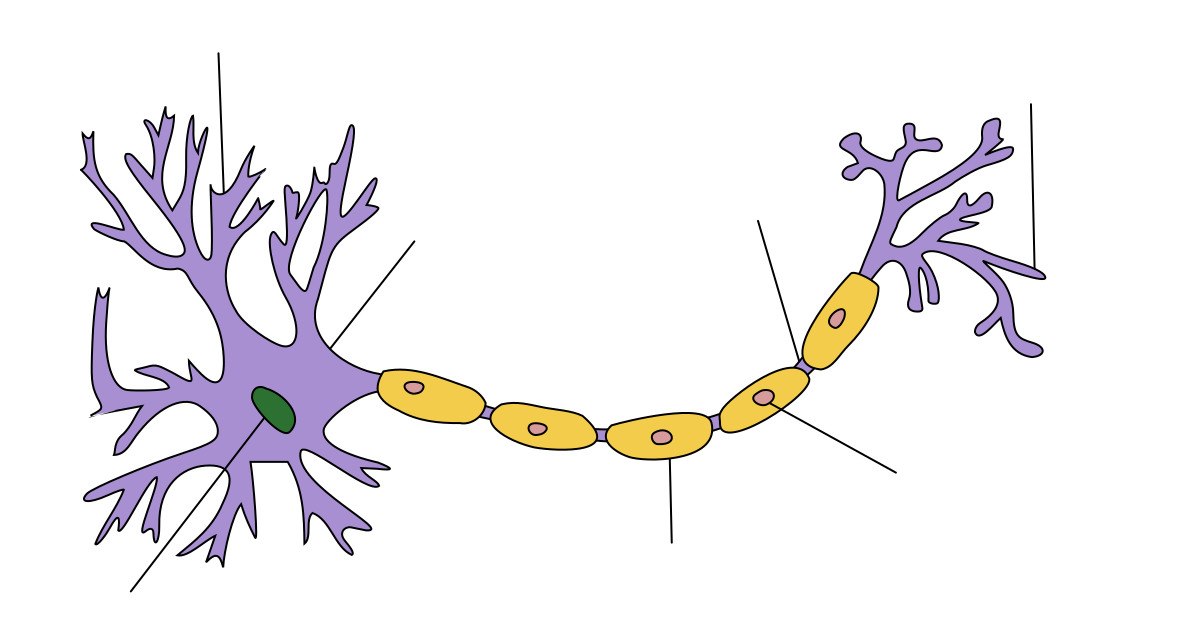
- Figure 4. The basic parts of a neuron: soma, dendrites, and axon.
- Neurons run the same organelles as any other cell, but the proportions are extreme. A neuron may be 1 m long, spends enormous energy on ion pumping, and must ship freshly made protein a very long way.
- Figure 5. The internal structure of a typical neuron.
The cytoskeleton, in size order
- Mnemonic: 20 / 10 / 5 nm goes Microtubule, Neurofilament, Microfilament. Alphabetical order is also size order if you say “Mt, Nf, Mf”.
- Figure 6. The three cytoskeletal elements drawn to relative scale.
The axon
- Begins at the axon hillock, continues as the initial segment, which is the trigger zone where the action potential is generated.
- No rough ER and few ribosomes, so essentially no protein is made in the axon. Everything must be shipped from the soma.
- Uniform diameter along its length; branches (axon collaterals) leave at right angles. Diameter matters: thicker axon, faster conduction.
- Ends in axon terminals (terminal boutons) or, where an axon passes and contacts en route, boutons en passant.
- Figure 7. The axon and its collaterals.
Axoplasmic transport, the two directions
- Mnemonic: “Kinesin Kicks it out, Dynein Drags it home.”
- Figure 8. Vesicles moving along microtubules by motor protein.
Dendrites
- The dendritic tree is the receptive surface. A single cortical pyramidal neuron may carry tens of thousands of synaptic inputs.
- Dendritic spines are small protrusions, each usually the site of one excitatory synapse. Spine shape and number change with experience and are abnormal in fragile X syndrome and other intellectual disability disorders.
- Spines chemically isolate the synapse, so calcium entering one spine does not flood its neighbors. That is what makes synapse-specific plasticity possible.
- Unlike axons, dendrites contain polyribosomes, so a single active synapse can build new protein locally.
- Figure 9. A reconstructed dendrite segment showing the variety of spine shapes.
1.3 Classifying neurons
- Exam questions rarely say which classification scheme they are using. Learn all four and read the wording carefully.
- Figure 10. Classification by number of neurites.
- Figure 11. Classification by dendritic tree: stellate versus pyramidal.
1.4 Glia
- Glia outnumber or roughly equal neurons depending on brain region and counting method. They do not fire action potentials, but removing them kills the circuit.
- Figure 12. An astrocyte filling the space between neurons and vessels.
- Figure 13. An oligodendroglial cell myelinating several CNS axons at once.
- Mnemonic for myelin: “Oligo does Overtime (many axons), Schwann does a Single one.” And “MS is CNS, GB is PNS.”
- Figure 14. Myelinated optic nerve fibers in cross section.
Part 2: The layout of the nervous system
2.1 Directions and planes
- Get this vocabulary automatic. Every later description depends on it, and the human brain has a bend in it that trips people up.
- Figure 15. The three anatomical planes of section.
- Figure 16. Direction terms applied to a rat nervous system, where the neuraxis is straight.
2.2 The two big divisions
- Central nervous system (CNS): brain and spinal cord.
- Peripheral nervous system (PNS): everything else.
- Somatic PNS: spinal nerves innervating skin, joints, and skeletal muscle. Sensory axons enter the dorsal root (cell bodies in the dorsal root ganglion); motor axons leave through the ventral root.
- Visceral (autonomic) PNS: innervates smooth muscle, cardiac muscle, and glands. Sympathetic (fight or flight, thoracolumbar), parasympathetic (rest and digest, craniosacral), enteric (the gut own network).
- Afferent means carrying toward the CNS; efferent means carrying away from it.
- Mnemonic: “Same dave” -- Sensory Afferent, Motor Efferent; Dorsal Afferent, Ventral Efferent.
- Cranial nerves: 12 pairs. Some are pure PNS, some (I olfactory and II optic) are actually CNS tracts.
- Spinal nerves: 31 pairs, 8 cervical, 12 thoracic, 5 lumbar, 5 sacral, 1 coccygeal.
- Figure 17. The spinal cord inside the vertebral column, with dorsal and ventral roots.
2.3 Coverings and fluid
- Meninges, outside in: dura mater (tough), arachnoid (web-like), pia mater (thin, adheres to the brain surface).
- Cerebrospinal fluid fills the subarachnoid space (between arachnoid and pia) and the ventricles. It cushions the brain, removes waste, and lets a 1.4 kg brain effectively weigh about 50 g while floating.
- CSF is produced by the choroid plexus in the ventricles, flows lateral ventricles to third ventricle to cerebral aqueduct to fourth ventricle to subarachnoid space, and is absorbed into venous blood.
- Blockage causes hydrocephalus: CSF accumulates, ventricles swell, and pressure damages the brain.
- A subdural hematoma is bleeding between dura and arachnoid; meningitis is inflammation of these layers.
- Figure 18. The human ventricular system.
2.4 Development: neural tube to adult brain
- The single most efficient way to memorize brain anatomy is to learn how it is built. Every adult structure and every ventricle falls out of this sequence.
- Gastrulation produces ectoderm, mesoderm, and endoderm. The nervous system comes from ectoderm.
- The neural plate folds into the neural groove, then closes into the neural tube. Neural crest cells pinch off and become the PNS (including dorsal root ganglia).
- Failure to close causes neural tube defects: anencephaly (rostral) and spina bifida (caudal). Folic acid supplementation reduces the risk.
- The rostral tube swells into three primary vesicles, then five secondary vesicles.
- Mnemonic: “Two Doves Met My Mother” gives the five secondary vesicles rostral to caudal: Telencephalon, Diencephalon, Mesencephalon, Metencephalon, Myelencephalon.
- Figure 19. The three primary brain vesicles.
- Figure 20. The forebrain splits into telencephalon and diencephalon.
- Figure 21. Differentiation of the telencephalon, and how the lateral ventricles get their C shape.
2.5 The structures you must be able to place
Telencephalon
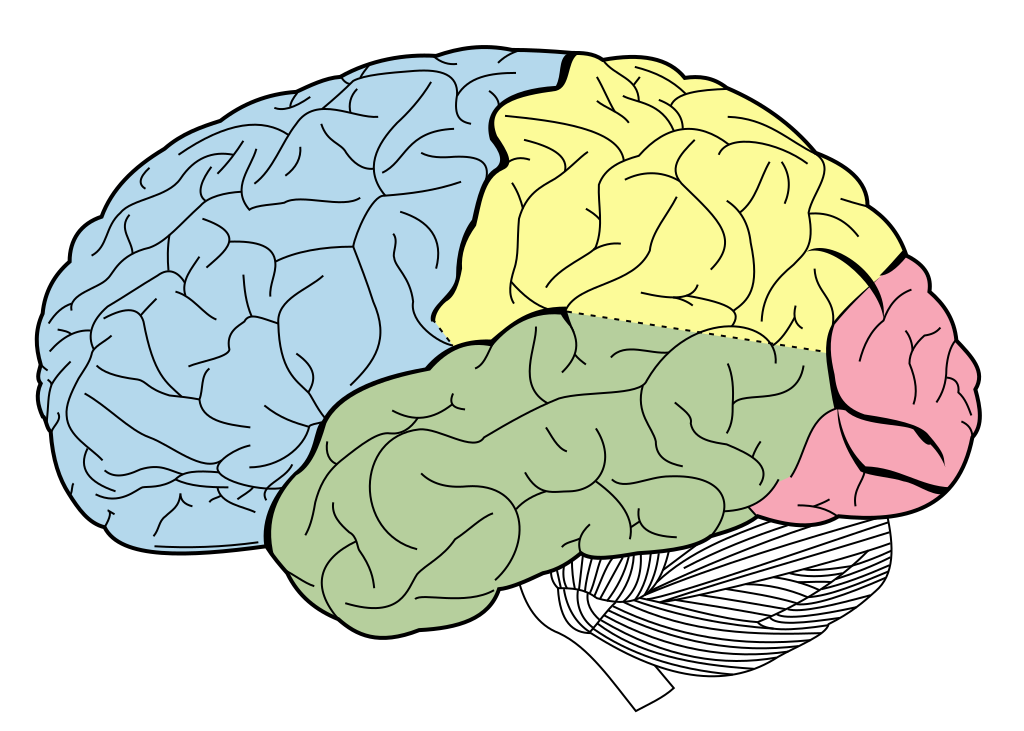
- Cerebral cortex: the sheet of gray matter on the surface, folded into gyri (bumps) and sulci (grooves), with deep grooves called fissures. Folding packs roughly 2500 cm2 of sheet into the skull.
- Four lobes, divided by the central sulcus and the lateral (Sylvian) fissure.
- Figure 22. The lobes of the human cerebrum.
- Gray matter is cell bodies; white matter is myelinated axons. A nucleus is a cluster of cell bodies in the CNS; a ganglion is the PNS equivalent; a tract is a bundle of axons in the CNS, a nerve is the PNS equivalent.
- Cortical layers: neocortex has six layers. Brodmann divided the cortex into about 52 areas by cytoarchitecture alone, in 1909, and many of his areas turned out to be functional units (area 4 = motor, area 17 = V1).
- Figure 23. Brodmann cytoarchitectural map of the human cortex.
- Basal ganglia (caudate, putamen, globus pallidus, with substantia nigra and subthalamic nucleus functionally attached): action selection and movement initiation. Degeneration of the nigrostriatal dopamine pathway causes Parkinson disease; caudate degeneration causes Huntington disease.
- Hippocampus: forming new declarative memories. Patient H.M. lost the ability to form new episodic memories after bilateral medial temporal lobe removal, while old memories and skill learning survived.
- Amygdala: emotional salience, especially fear learning and the emotional tagging of memory.
- Corpus callosum: about 200 million axons connecting the hemispheres.
Diencephalon
- Thalamus: the gateway to cortex. Every sensory pathway except olfaction relays through a specific thalamic nucleus before reaching cortex (LGN for vision, MGN for hearing, VP for somatosensation).
- Hypothalamus: homeostasis and motivated behavior, the “four Fs”. Controls the autonomic nervous system and, through the pituitary, the endocrine system.
- Figure 24. The thalamus as the gateway to cerebral cortex.
Midbrain
- Tectum (roof): superior colliculus (visual orienting reflexes, saccades) and inferior colliculus (auditory relay).
- Tegmentum (floor): substantia nigra (dopamine to the striatum), ventral tegmental area (dopamine to the limbic system and cortex, the reward pathway), periaqueductal gray (pain modulation, defensive behavior), reticular formation (arousal).
- Figure 25. Differentiation of the midbrain into tectum and tegmentum.
Hindbrain
- Cerebellum: about half of all the neurons in the brain, in 10% of the volume. Coordination, timing, motor learning. Damage is ipsilateral, because its outputs cross twice.
- Pons: bridge between cortex and cerebellum; also sleep and arousal nuclei.
- Medulla: autonomic centers for breathing, heart rate, and blood pressure. The pyramidal decussation, where the corticospinal tract crosses, is here. That is why one hemisphere controls the opposite side of the body.
- Figure 26. The pyramidal decussation in the medulla.
- Figure 27. The whole plan of the mammalian brain in one diagram.
- Study move: cover the labels on Figure above and name every structure out loud. If you can narrate the “brainship” diagram from memory, you have Part 2.
Part 3: Research methods
- A method question is really two questions: what does this technique actually measure, and can it show causation? Keep those separate.
3.1 The historical arc
- Figure 28. The preserved brain of Broca patient, with the frontal lesion visible.
- Figure 29. A phrenological map: localization pushed to an absurd conclusion.
3.2 Seeing structure
- Figure 30. Structural MRI of a living human brain.
3.3 Measuring activity
- The central trade-off: methods with excellent temporal resolution (EEG, MEG) have poor spatial resolution, and the method with good spatial resolution in humans (fMRI) is slow because it measures blood, not spikes. Combining them is the usual workaround.
3.4 Manipulating the system, the only way to get causation
- Lesion studies. Naturally occurring (stroke, tumor, trauma) or experimental. Strength: shows a region is necessary. Weakness: lesions are messy, damage passing fibers, and the brain reorganizes afterward.
- Transcranial magnetic stimulation (TMS). A magnetic pulse induces current in cortex, producing a reversible “virtual lesion” or driving activity. Non-invasive, causal, but limited to superficial cortex.
- Optogenetics. A light-sensitive ion channel (channelrhodopsin-2 to excite, halorhodopsin to inhibit) is expressed in a genetically defined cell type; light through a fiber turns those cells on or off in milliseconds. Cell-type specific plus millisecond causal control, which is why it changed the field.
- Chemogenetics (DREADDs). An engineered receptor responds only to an otherwise inert drug. Slower than optogenetics but needs no implanted fiber and can cover a whole region.
- Pharmacology. Agonists, antagonists, and reuptake blockers applied systemically or by microiontophoresis onto a single cell.
- Genetic manipulation. Knockout and knock-in mice, Cre-lox for conditional and region-specific deletion, Crispr editing, and transgenic reporter lines.
- Figure 31. Microiontophoresis: applying a drug to one neuron while recording from it.
- Rule for exam questions: correlational methods (fMRI, PET, EEG, recording) tell you a region is involved. Only manipulation (lesion, TMS, optogenetics, DREADDs, drugs) tells you it is necessary or sufficient.
3.5 Levels of analysis and the ethics frame
- Neuroscience is organized by level: molecular, cellular, systems, behavioral, cognitive. A complete explanation usually needs more than one.
- Animal research is regulated: institutional animal care and use committee review, and the three Rs, Replacement, Reduction, Refinement. Species choice follows the question, not convenience.
- Human research requires informed consent and institutional review board approval; imaging studies must also plan for incidental findings.
One-page condensed review
The 12 facts most likely to be tested
- Nissl stains cell bodies only; Golgi stains about 1% of cells completely. Cajal used Golgi stain to disprove Golgi.
- Axons have no ribosomes; dendrites do. That is why axoplasmic transport exists and why local plasticity happens in dendrites.
- Kinesin moves cargo anterograde, dynein retrograde. Rabies and herpes ride retrograde transport.
- Microtubule 20 nm, neurofilament 10 nm, microfilament 5 nm.
- Oligodendrocytes myelinate many CNS axons; Schwann cells myelinate one PNS segment each.
- Astrocytes buffer extracellular K+ and clear glutamate.
- Dorsal root sensory, ventral root motor (Same dave).
- Three primary vesicles, five secondary vesicles, and their ventricles. Know the table cold.
- Central sulcus separates precentral (motor) from postcentral (somatosensory) gyrus.
- All sensory pathways except olfaction relay through thalamus.
- The corticospinal tract crosses at the pyramidal decussation in the medulla; cerebellar deficits are ipsilateral.
- fMRI has good spatial and poor temporal resolution; EEG is the reverse; only manipulation shows causation.
Mnemonic set
- “Golgi glued them, Cajal cut them apart” -- the neuron doctrine.
- “Kinesin Kicks it out, Dynein Drags it home” -- axoplasmic transport.
- “Oligo does Overtime, Schwann does a Single one” -- myelination.
- “Same dave” -- Sensory Afferent, Motor Efferent, Dorsal Afferent, Ventral Efferent.
- “Two Doves Met My Mother” -- Telencephalon, Diencephalon, Mesencephalon, Metencephalon, Myelencephalon.
- “Blood is slow, voltage is fast” -- fMRI versus EEG.
Self-test
- A slice of cortex is stained and every cell body appears purple, but no axons are visible. Which stain was used, and what question can this slice answer?
- Why was it an advantage for Cajal to work with embryonic tissue?
- A toxin blocks dynein specifically. Name two consequences for the neuron.
- A neuron has one process leaving the soma that splits into two branches. What is it called, and where in the nervous system would you expect to find it?
- Explain why a cortical pyramidal neuron is spiny and a cortical basket cell is not, in terms of what each does.
- A patient has intact sensation but flaccid paralysis in one dermatome. Which root is damaged?
- A tumor blocks the cerebral aqueduct. Which ventricles enlarge, and which do not?
- From which secondary vesicle does the retina arise, and why is the optic nerve technically a CNS tract?
- A stroke destroys the left precentral gyrus. Predict the deficit and its side.
- Which brain structure would you expect to be abnormal in someone who can learn new motor skills but cannot remember learning them?
- You have an fMRI finding that region X activates during lying. A journalist calls it a lie-detector. Give two reasons that is wrong, and name the study you would run instead.
- Rank EEG, fMRI, and single-unit recording by spatial resolution, then by temporal resolution.
- Why does optogenetics allow conclusions that pharmacological microinjection does not?
- A drug reverses symptoms when injected into a brain region. Does that prove the region causes the behavior? Explain.
- Explain the difference between a nucleus, a ganglion, a tract, and a nerve.
Show answer key — try the questions first
- Nissl stain. It answers questions about cell density, cell size, and cytoarchitecture, which is how brain areas and cortical layers are defined.
- Embryonic axons are shorter, less branched, and unmyelinated, so a Golgi-filled cell can be followed in a single section instead of being lost across many.
- Worn-out organelles and membrane are not returned to the soma for recycling, and target-derived signals such as growth factors never reach the nucleus, so the neuron loses its trophic support.
- Unipolar (pseudounipolar in vertebrates). Dorsal root ganglion sensory neurons.
- Spines are the sites of excitatory synapses, so a cell receiving mostly excitatory input is spiny. Aspinous cortical cells are typically GABAergic inhibitory interneurons.
- The ventral root, which carries motor efferents. Dorsal root damage would produce sensory loss instead.
- Both lateral ventricles and the third ventricle enlarge, because they are upstream of the block. The fourth ventricle does not. This is non-communicating (obstructive) hydrocephalus.
- The diencephalon. The optic vesicle is an outgrowth of the diencephalon, so the retina is displaced CNS tissue and the optic nerve is a CNS tract, myelinated by oligodendrocytes.
- Contralateral (right-sided) weakness of voluntary movement, because the corticospinal tract crosses at the medullary pyramids.
- The hippocampus and medial temporal lobe. Skill (procedural) learning depends on the basal ganglia and cerebellum, which are spared, which is the H.M. dissociation.
- First, BOLD is an indirect hemodynamic proxy with a several-second lag, so it cannot resolve a fast cognitive act. Second, activation is correlational and the same region activates for many other things, so reverse inference is invalid. You would need a manipulation study, for example TMS over the region during the task, plus a within-subject design with proper base rates.
- Spatial: single-unit (best) > fMRI > EEG. Temporal: single-unit = EEG (best, milliseconds) > fMRI (seconds).
- Optogenetics is restricted to a genetically defined cell type and acts on a millisecond timescale, so you can implicate a specific population at a specific moment. An injected drug spreads through the tissue, hits every cell expressing the target, and acts over minutes.
- No. It shows the region is sufficient to modulate the behavior under those conditions, and only if the drug did not diffuse. Necessity requires a loss-of-function experiment, and both should be shown.
- Nucleus: a cluster of cell bodies in the CNS. Ganglion: a cluster of cell bodies in the PNS. Tract: a bundle of axons in the CNS. Nerve: a bundle of axons in the PNS. The basal ganglia are misnamed, because they are in the CNS.
- | Camillo Golgi | Santiago Ramon y Cajal
- Position | Reticular theory: neurites fuse into one continuous network, like a circulatory system | Neuron doctrine: the neuron is a discrete cell, and neurites contact without fusing
- Used | His own silver stain | The same stain, applied to young/embryonic tissue where axons are shorter and less myelinated
- Outcome | Wrong | Right
- 1906 Nobel Prize | Shared | Shared, and the two argued in their acceptance lectures
- Structure | What it is | Why a neuron needs it
- Soma (cell body, perikaryon) | The roughly 20 um central compartment holding the nucleus | Metabolic headquarters; integrates the dendritic input that reaches it
- Nucleus | Contains the chromosomes; site of transcription | Neurons are post-mitotic, so this DNA has to last a lifetime
- Rough ER (Nissl bodies) | Ribosome-studded ER, unusually abundant | Synthesizes membrane and secreted protein: receptors, channels, peptide transmitters
- Free ribosomes / polyribosomes | Ribosomes floating in cytosol, some out in dendrites | Cytosolic protein; dendritic polyribosomes allow local, synapse-specific protein synthesis (a substrate for memory)
- Smooth ER and Golgi apparatus | Membrane folding, Ca2+ regulation; Golgi sorts and addresses protein | Decides whether a protein goes to a dendrite or down the axon
- Mitochondria | ATP factories running the Krebs cycle and electron transport | The Na+/K+ pump is the single largest energy sink in the brain
- Neuronal membrane | Phospholipid bilayer roughly 5 nm thick, studded with proteins | The barrier that makes an electrical signal possible; protein composition differs between soma, dendrite, and axon
- Cytoskeleton | Microtubules (20 nm), neurofilaments (10 nm), microfilaments (5 nm) | Shape and internal highways
- Element | Diameter | Made of | Job | Clinical hook
- Microtubule | 20 nm | Tubulin polymers | Longitudinal rails for axoplasmic transport | Tau protein binds microtubules; hyperphosphorylated tau forms the neurofibrillary tangles of Alzheimer disease
- Neurofilament | 10 nm | Intermediate filament protein | Mechanical strength; the most abundant fibrous element in the axon | Neurofilament light chain in blood or CSF is a general biomarker of axonal damage
- Microfilament | 5 nm | Two actin strands braided | Anchors membrane proteins; drives spine shape change | Spine remodeling during learning is actin-driven
- | Anterograde | Retrograde
- Direction | Soma to terminal | Terminal to soma
- Motor protein | Kinesin | Dynein
- Rate (fast) | Up to about 1000 mm/day | Roughly half the anterograde fast rate
- Cargo | Vesicles, mitochondria, membrane protein | Growth-factor signals, worn-out organelles, “status reports”
- Hijacked by | Nothing famous | Herpes, rabies, tetanus and polio viruses ride dynein to the soma
- Lab use | Anterograde tracers map where an area projects to | Retrograde tracers (HRP, fluorogold) map what projects into an area
- Scheme | Categories | Notes
- Number of neurites | Unipolar (one), bipolar (two), multipolar (three or more) | Most CNS neurons are multipolar; retinal bipolar cells and dorsal root ganglion pseudounipolar cells are the classic exceptions
- Dendritic tree shape | Stellate (star-shaped) versus pyramidal (triangular soma, one long apical dendrite) | Also spiny versus aspinous; all spiny cortical cells are excitatory, aspinous cells are usually inhibitory
- Connections | Primary sensory (afferent), motor (efferent), interneuron | Interneurons are by far the most numerous
- Axon length | Golgi type I (long, projection) versus Golgi type II (short, local circuit) | Same Golgi
- Neurotransmitter | Cholinergic, glutamatergic, GABAergic, dopaminergic, serotonergic, etc. | The scheme that matters most for pharmacology (see the Chapter 3 guide)
- Cell | Location | Functions | If it fails
- Astrocyte | CNS | Fills space between neurons; regulates extracellular K+ (spatial buffering); clears glutamate and GABA from the cleft; end-feet contribute to the blood-brain barrier; delivers metabolic substrate | Glutamate accumulates and causes excitotoxicity; K+ builds up and the tissue becomes hyperexcitable
- Oligodendrocyte | CNS | Myelinates; one cell wraps segments of many axons (up to about 30) | Multiple sclerosis: demyelination slows or blocks conduction
- Schwann cell | PNS | Myelinates; one cell wraps exactly one segment of one axon; also guides regeneration | Guillain-Barre syndrome; PNS axons can regrow, CNS axons largely cannot, partly because of this difference
- Microglia | CNS | Resident immune cell; phagocytosis of debris; synaptic pruning during development | Chronic activation contributes to neuroinflammation and neurodegeneration
- Ependymal cell | CNS ventricle lining | Ciliated; directs CSF flow; part of choroid plexus produces CSF | Impaired CSF circulation, hydrocephalus
- Term | Meaning | Human note
- Anterior / rostral | Toward the nose | In humans the neuraxis bends about 90 degrees at the midbrain, so “rostral” in the forebrain means forward, but in the spinal cord it means up
- Posterior / caudal | Toward the tail |
- Dorsal | Toward the back | In the forebrain, dorsal means toward the top of the head
- Ventral | Toward the belly | In the forebrain, ventral means toward the base of the skull
- Medial | Toward the midline |
- Lateral | Away from the midline |
- Ipsilateral | Same side |
- Contralateral | Opposite side | Most motor and sensory pathways cross, so the left hemisphere controls the right body
- Plane of section | Cuts the brain into | Best for showing
- Midsagittal | Left and right halves, exactly on the midline | Corpus callosum, brainstem, cerebellum, ventricles
- Sagittal | Left and right pieces, off midline | Lateral structures such as the hippocampus
- Horizontal (axial) | Top and bottom | The standard clinical CT/MRI view
- Coronal (frontal) | Front and back | Basal ganglia, thalamus, internal capsule
- Primary vesicle | Secondary vesicle | Major adult structures | Ventricle
- Prosencephalon (forebrain) | Telencephalon | Cerebral cortex, basal ganglia, hippocampus, amygdala, olfactory bulb | Lateral ventricles
- Prosencephalon (forebrain) | Diencephalon | Thalamus, hypothalamus, retina and optic nerve | Third ventricle
- Mesencephalon (midbrain) | Mesencephalon | Tectum (superior and inferior colliculi), tegmentum (substantia nigra, VTA, periaqueductal gray) | Cerebral aqueduct
- Rhombencephalon (hindbrain) | Metencephalon | Cerebellum, pons | Fourth ventricle (upper)
- Rhombencephalon (hindbrain) | Myelencephalon | Medulla oblongata | Fourth ventricle (lower)
- Lobe | Bounded by | Signature functions | Landmark areas
- Frontal | Anterior to the central sulcus | Voluntary movement, working memory, planning, personality, speech production | Precentral gyrus = primary motor cortex; Broca area (usually left inferior frontal)
- Parietal | Posterior to the central sulcus | Somatic sensation, spatial attention, body map | Postcentral gyrus = primary somatosensory cortex
- Temporal | Below the lateral fissure | Hearing, language comprehension, object recognition, declarative memory | Heschl gyrus = primary auditory cortex; Wernicke area
- Occipital | Posterior pole | Vision | Calcarine sulcus = primary visual cortex (V1)
- Era / person | Claim | Why it matters
- Trephination, 7000 years ago | Drilling the skull to treat disease | The oldest evidence that people located the mind in the head
- Hippocrates, about 400 BCE | The brain, not the heart, is the seat of sensation and intelligence | First explicit brain hypothesis
- Galen, about 170 CE | Cerebrum receives sensation, cerebellum commands muscle; fluid in the ventricles carries the signal | Half right structurally, wrong mechanistically; the ventricular theory lasted 1500 years
- Descartes, 1600s | Body is a machine; the mind interacts through the pineal gland | Set up the dualism debate that neuroscience still pushes against
- Bell and Magendie, early 1800s | Dorsal roots are sensory, ventral roots are motor | First demonstration that nerves are not interchangeable
- Gall, early 1800s | Phrenology: bumps on the skull reveal faculties | Wrong method, right instinct about localization
- Flourens, 1823 | Experimental ablation in animals; no phrenological localization found | Introduced experimental lesion as a method
- Broca, 1861 | Patient Leborgne (“Tan”) could understand but not speak; lesion in left inferior frontal gyrus | The convincing case for functional localization
- Darwin, 1859 | Behavior is a heritable trait shaped by selection | Justifies animal models: shared ancestry means shared mechanisms
- Method | What it shows | Resolution | Notes
- Nissl stain | Cell bodies and cytoarchitecture | Cellular | Cheap, still the workhorse for identifying brain areas
- Golgi stain | Complete morphology of about 1% of cells | Cellular | The technique that built the neuron doctrine
- Electron microscopy | Organelles, synaptic vesicles, the 20 nm cleft | Nanometer | Only fixed dead tissue; extremely labor-intensive
- Immunohistochemistry | Where a specific protein is | Cellular / subcellular | Antibody plus visible tag
- In situ hybridization | Where a specific mRNA is | Cellular | Tells you which cell is making a transmitter or receptor
- Tract tracing | What connects to what | Cellular | Anterograde tracer = outputs; retrograde tracer = inputs
- CT | X-ray density: bone, blood, gross tissue | About 1 mm, minutes | Fast and available; the emergency-room scan for bleeds and fractures
- MRI (structural) | Proton density in a magnetic field, excellent soft-tissue contrast | About 1 mm, minutes | No ionizing radiation; cannot be used with ferromagnetic implants
- DTI / tractography | Direction of water diffusion, which follows axon bundles | About 1–2 mm | The only non-invasive way to map human white-matter tracts
- Method | Signal | Spatial resolution | Temporal resolution | Invasive?
- EEG | Summed postsynaptic potentials at the scalp | Poor, centimeters | Excellent, milliseconds | No
- MEG | Magnetic fields from the same currents | Moderate | Excellent, milliseconds | No
- PET | Radiotracer: glucose use, blood flow, or receptor binding | About 5 mm | Poor, tens of seconds to minutes | Yes, injected tracer
- fMRI (BOLD) | Blood-oxygen-level dependent signal, an indirect proxy for neural activity | About 1–3 mm | Poor, 1–6 s (hemodynamic lag) | No
- Extracellular single-unit recording | Spikes from one neuron | Single cell | Sub-millisecond | Yes
- Intracellular / sharp electrode | Membrane potential, including subthreshold events | Single cell | Sub-millisecond | Yes
- Patch clamp | Current through a single ion channel, or whole-cell current | Single channel | Sub-millisecond | Yes
- Two-photon calcium imaging | Calcium transients as a spiking proxy, in hundreds of cells at once | Single cell | Tens of milliseconds | Yes, cranial window
- Levels of analysis
- Molecular → cellular → systems → behavioral → cognitive. Each level constrains the others.
- Central nervous system (CNS)
- Brain + spinal cord. Encased in bone (cranium + vertebral column), bathed in CSF.
- Peripheral nervous system (PNS)
- Cranial + spinal nerves + autonomic ganglia outside CNS.
- Major brain divisions
- Telencephalon (cerebrum, basal ganglia) · diencephalon (thalamus, hypothalamus) · mesencephalon (midbrain) · metencephalon (pons, cerebellum) · myelencephalon (medulla).
- Cerebral cortex lobes
- Frontal (motor + executive), parietal (somatosensation, spatial), temporal (auditory + memory + face), occipital (visual). Insula, cingulate sit deeper.
- Anatomical planes
- Sagittal (left-right), coronal/frontal (front-back), horizontal/axial (top-bottom). Rostral=anterior, caudal=posterior.
- Gray vs white matter
- Gray = cell bodies + dendrites + synapses. White = myelinated axon tracts.
- Ventricles
- Lateral (×2) → third → cerebral aqueduct → fourth → central canal. Choroid plexus produces CSF.
U2 · Neurons + glia
- Neuron doctrine
- Cajal: nervous system = discrete cells communicating across gaps (synapses). Defeated Golgi's reticular theory.
- Soma
- Cell body containing nucleus + organelles. Site of protein synthesis (Nissl bodies = stacks of rough ER).
- Dendrite
- Branched input region; receives synapses; spines on excitatory contacts.
- Axon
- Output process. Single per neuron. Initiates action potential at axon hillock; conducts to terminals.
- Axon hillock / initial segment
- High density of voltage-gated Na⁺ channels — site of AP initiation.
- Neuron classifications
- By shape: unipolar, bipolar, multipolar. By function: sensory (afferent), motor (efferent), interneuron.
- Astrocyte
- Star-shaped glia. K⁺ buffering, glutamate uptake (EAAT), tripartite synapse, BBB end-feet, lactate shuttle to neurons.
- Oligodendrocyte
- CNS myelinator; one cell wraps multiple axons.
- Schwann cell
- PNS myelinator; one cell wraps one axon segment.
- Microglia [Chivero focus]
- CNS-resident immune cells. Phagocytose debris + dead cells; respond to injury + infection. Activated states: M1 pro-inflammatory vs M2 anti-inflammatory. Drive neuroinflammation in HIV, methamphetamine, neurodegeneration.
- Ependymal cells
- Ciliated cells lining ventricles + central canal. Choroid plexus produces CSF.
- Blood-brain barrier (BBB)
- Tight junctions between brain capillary endothelial cells (claudin-5, occludin, ZO-1) + astrocyte end-feet + pericytes. Excludes most polar/large molecules.
U3 · Membrane potential
The generation, transmission, and integration of neural signals
Contents
Learning objectives 2
Part 1: The neuronal membrane at rest 3
1.1 The cast 3
1.2 Why there is a voltage at all 4
1.3 The resting potential 7
1.4 Why potassium is the clinical ion 9
Part 2: The action potential 11
2.1 What it looks like 11
2.2 The mechanism, gate by gate 12
2.3 Pharmacology of the action potential 13
2.4 Conduction along the axon 14
Part 3: Synaptic transmission 17
3.1 Two kinds of synapse 17
3.2 The seven steps, in order 18
3.3 The neuromuscular junction as the model synapse 19
3.4 Postsynaptic receptors 20
3.5 Excitation, inhibition, and the reversal potential 22
3.6 Integration: how the neuron decides 22
Condensed review 23
Numbers to have memorized 23
Mnemonic set 23
The one-paragraph version 23
Self-test 23
Questions 23
Answer key 24
This chapter is one continuous story told in three acts: how a neuron builds and holds a voltage across its membrane, how it flips that voltage into a travelling signal, and how it hands that signal to the next cell and decides what to do with everything it receives. Nearly every fact below is a consequence of two things: ions are unevenly distributed, and the membrane can selectively let them through.
Learning objectives
- State the intracellular and extracellular concentrations of K+, Na+, Cl-, and Ca2+ and explain what maintains them.
- Use the Nernst equation to calculate an equilibrium potential and explain what that number means physically.
- Explain why the resting potential sits near EK but not exactly at it.
- Label the phases of the action potential and assign the correct ionic conductance to each.
- Explain the Hodgkin positive-feedback cycle and why the action potential is all-or-none.
- Distinguish absolute from relative refractory period at the level of channel gates.
- Explain how axon diameter and myelin change conduction velocity, and what saltatory conduction actually means.
- List the steps of chemical synaptic transmission in order and name what each depends on.
- Compare ionotropic and metabotropic receptors on speed, mechanism, and duration.
- Predict whether a synapse is excitatory or inhibitory from its ionic permeability and reversal potential.
- Explain spatial summation, temporal summation, and shunting inhibition, and where the decision is made.
Part 1: The neuronal membrane at rest
1.1 The cast
- Cytosol and extracellular fluid are watery salt solutions. Water is polar, so it surrounds ions in a hydration shell and keeps salts dissolved.
- The ions that matter: potassium (K+), sodium (Na+), calcium (Ca2+), and chloride (Cl-).
- The phospholipid bilayer, about 5 nm thick, is hydrophobic in its core, so ions cannot cross it unaided. That is the entire basis of the membrane potential.
- Membrane proteins do the crossing: ion channels (passive pores, selective, often gated) and ion pumps (active, ATP-consuming).
- Figure 1. The phospholipid bilayer, the barrier ions cannot cross on their own.
- Figure 2. A membrane ion channel formed by membrane-spanning protein subunits.
1.2 Why there is a voltage at all
- Two forces act on every ion. Diffusion pushes it down its concentration gradient. The electrical field pushes it toward the opposite charge. The equilibrium potential for an ion is the membrane voltage at which those two forces exactly cancel, so there is no net flow.
- Figure 3. Approximate ion concentrations on each side of the membrane, with the equilibrium potential for each.
The Nernst equation
- The equilibrium potential depends only on the charge of the ion, the temperature, and the ratio of outside to inside concentration. At mammalian body temperature (37 °C) the general form collapses to a clean working equation:
- Here z is the valence of the ion. Worked example for potassium, using the concentrations in the table above:
- Sign check: for a positive ion that is more concentrated inside, the log is negative, so the equilibrium potential is negative. That is potassium.
- For a positive ion more concentrated outside, the equilibrium potential is positive. That is sodium and calcium.
- For chloride the valence is -1, which flips the sign, so being more concentrated outside gives a negative value.
- Ten-fold gradient rule of thumb: every tenfold concentration ratio is worth about 60 mV for a monovalent ion.
- Figure 4. Ion movement under an electrical field.
- Figure 5. Charge separation across the membrane: only a thin shell of ions is involved.
1.3 The resting potential
- A typical neuron rests near -65 mV, meaning the inside is 65 mV negative relative to the outside.
- The resting membrane is far more permeable to K+ than to anything else, because K+ leak channels are open at rest. So V_rest sits close to E_K.
- It is not exactly E_K because there is a small resting Na+ permeability that drags the voltage slightly positive. The Goldman equation is the version of Nernst that weights each ion by its relative permeability, and it predicts the real resting potential.
- Selectivity is structural. The potassium channel pore has a selectivity filter whose carbonyl oxygens mimic the hydration shell of K+. Na+ is smaller, so it keeps its water and does not fit the filter geometry. Size is not the whole story, chemistry is.
- Figure 6. The potassium channel pore and its selectivity filter.
What maintains the gradients
- The sodium-potassium pump (Na+/K+ ATPase) moves 3 Na+ out for every 2 K+ in, consuming one ATP per cycle. It is electrogenic, so it makes a small direct contribution to the negativity.
- This pump consumes a large fraction of the brain energy budget, which is why the brain uses roughly 20% of the body oxygen while being about 2% of its mass.
- The calcium pump keeps intracellular Ca2+ at about 0.0002 mM. Keeping calcium that low is what allows a small calcium influx to be a powerful signal.
- Figure 7. The sodium-potassium pump: 3 out, 2 in, one ATP.
- Mnemonic: “3 Na out the door, 2 K in for more.” Also, “Pumps set the table, channels serve the meal.” Pumps build the gradients slowly; channels spend them fast.
1.4 Why potassium is the clinical ion
- V_rest tracks external K+. Raise [K+]outside and E_K becomes less negative, so the neuron depolarizes toward threshold and becomes hyperexcitable; push further and it depolarizes into inactivation and stops working.
- That is why serum potassium is tightly regulated and why hyperkalemia is a cardiac emergency.
- Astrocytes handle local spikes in extracellular K+ by potassium spatial buffering: they take K+ in where activity is high and release it where it is low, using their gap-junction-coupled network.
- Figure 8. Potassium spatial buffering by astrocytes.
Part 2: The action potential
2.1 What it looks like
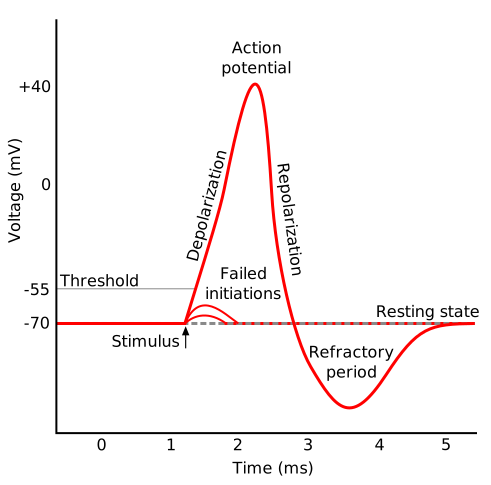
- Figure 9. An action potential and the names of its parts.
- Total duration is roughly 2 ms. Amplitude is about 100 mV.
- Threshold is the critical depolarization, typically around -55 to -40 mV, at which enough Na+ channels open that influx exceeds K+ efflux.
- All-or-none: above threshold the spike always has the same size and shape. Stimulus intensity is coded by firing frequency, not by spike amplitude.
- Figure 10. Firing frequency scales with the size of the depolarization; spike amplitude does not.
2.2 The mechanism, gate by gate
The voltage-gated sodium channel has two gates
- Activation gate: closed at rest, opens fast on depolarization.
- Inactivation gate: open at rest, closes slowly after depolarization, plugging the pore even though the activation gate is still open.
- Three states follow from that: closed but available (resting), open (activated), and inactivated. The channel cannot go straight from inactivated to open, it must first repolarize to reset.
- Figure 11. A model for how depolarization changes sodium channel configuration.
- The selectivity filter of the Na+ channel is a narrow pore about 0.5 by 0.5 nm; ions cross with a water molecule still attached, and the filter interacts with that hydrated ion.
- Figure 12. Dimensions of the sodium channel selectivity filter.
The Hodgkin cycle: why it is explosive
- Depolarization opens voltage-gated Na+ channels.
- Na+ enters.
- Entry of positive charge depolarizes the membrane further.
- Which opens more Na+ channels. Return to step 1.
- This positive feedback loop is what makes the rising phase nearly vertical and makes the event all-or-none. Two things stop it: Na+ channel inactivation and delayed K+ channel opening.
Refractory periods, explained by the gates
2.3 Pharmacology of the action potential
- Figure 13. The puffer fish, the classic source of tetrodotoxin.
- Test hook: TTX blocks Na+ channels, so it abolishes the action potential but leaves the resting potential intact. That dissociation is the point of the experiment.
2.4 Conduction along the axon
- Charge entering at one point spreads passively down the axon, depolarizing the adjacent membrane to threshold and regenerating the spike there. The spike is re-created at every point, so it does not decay with distance.
- It travels one way only, because the membrane behind it is refractory. Stimulate the middle of an axon in the lab and it propagates in both directions, which shows the one-way rule is about refractoriness, not about the axon itself.
- Figure 14. Action potential conduction: positive charge spreads ahead and regenerates the spike.
Two ways to make conduction faster
- Increase axon diameter. A wider axon has lower internal resistance, so current spreads further. This is the invertebrate solution: the squid giant axon is about 1 mm across.
- Add myelin. Wrapping the axon in insulating membrane raises membrane resistance and lowers capacitance, so current runs further inside the axon before leaking out.
- Myelin is interrupted about every 0.2 to 2 mm at nodes of Ranvier, where voltage-gated Na+ channels are densely clustered. Between nodes the membrane has very few.
- Saltatory conduction: the action potential is regenerated only at the nodes, so it appears to jump from node to node. This is both faster and much cheaper metabolically, because far less membrane has to be pumped back to rest.
- Speeds range from about 0.5 m/s in small unmyelinated fibers to about 120 m/s in large myelinated ones.
- Figure 15. The myelin sheath and nodes of Ranvier.
- Figure 16. Saltatory conduction: the spike is regenerated only at nodes.
- Clinical: in multiple sclerosis the immune system attacks CNS myelin. Current leaks out between the sparse nodes, conduction slows or fails, and symptoms depend on which tracts are demyelinated. The mismatch between severe symptoms and intact axons is why remission is possible.
Part 3: Synaptic transmission
3.1 Two kinds of synapse
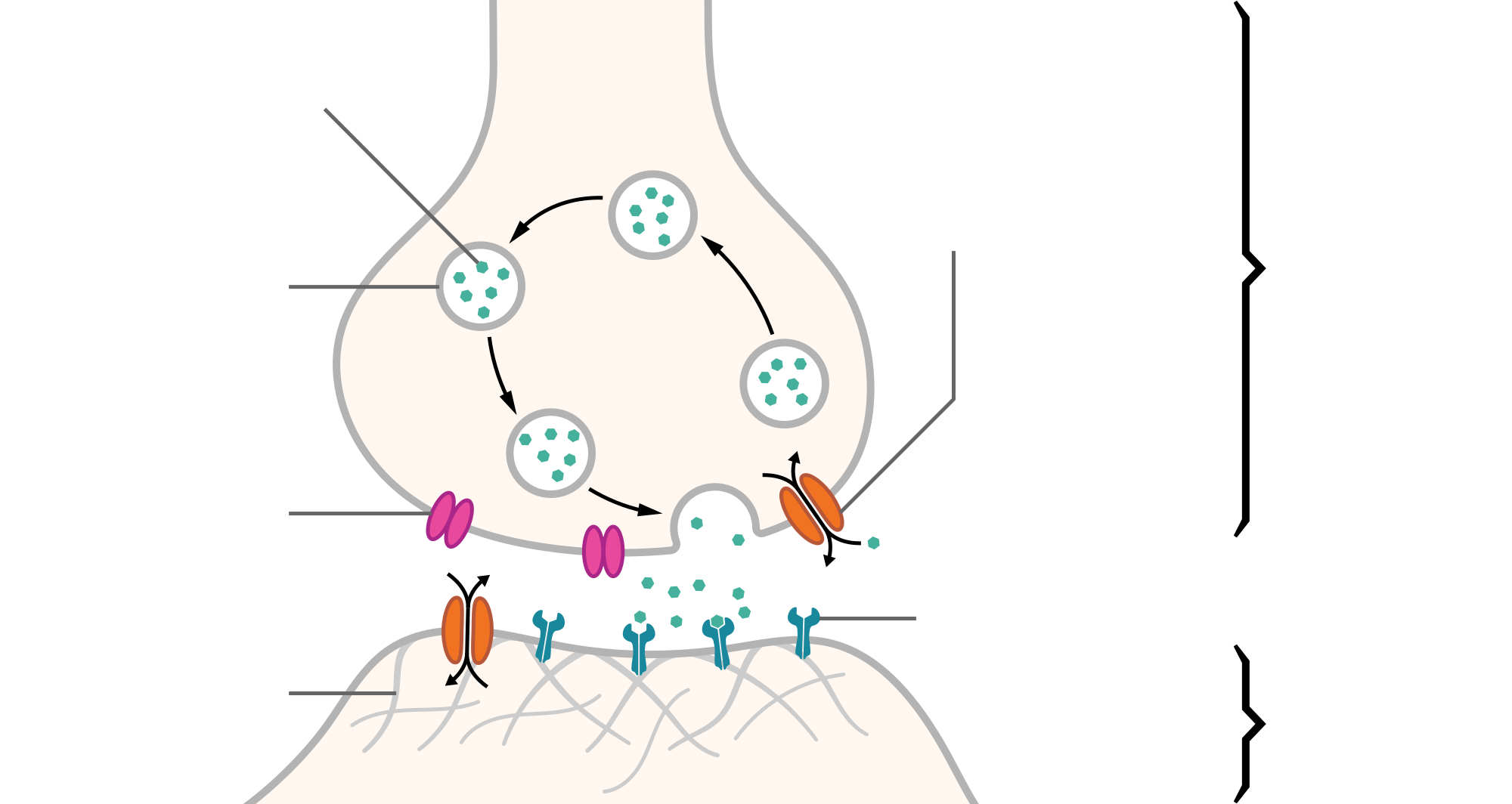
- Figure 17. The components of a chemical synapse.
- Figure 18. Chemical synapses under the electron microscope.
3.2 The seven steps, in order
- Synthesis and storage. Small-molecule transmitters are made in the terminal and loaded into synaptic vesicles by transporters; peptides are made in the soma and shipped down by fast anterograde transport in secretory granules.
- Action potential invades the terminal.
- Depolarization opens voltage-gated calcium channels. Ca2+ enters, and because resting intracellular Ca2+ is so low, local concentration spikes sharply at the active zone.
- Calcium triggers exocytosis. Vesicles already docked at the active zone fuse with the membrane through the SNARE complex (synaptobrevin on the vesicle, syntaxin and SNAP-25 on the terminal membrane), with synaptotagmin acting as the calcium sensor.
- Transmitter diffuses across the cleft in well under a millisecond.
- Transmitter binds postsynaptic receptors, opening ion channels directly (ionotropic) or launching a second-messenger cascade (metabotropic).
- Termination and recycling. Transmitter is cleared by reuptake into the terminal or into glia, by enzymatic degradation in the cleft, or by simple diffusion. Vesicle membrane is retrieved by endocytosis and refilled.
- Every one of these steps is a drug target. Botulinum toxin cleaves SNARE proteins (step 4). Cocaine and SSRIs block reuptake transporters (step 7). Organophosphates block the degrading enzyme (step 7). Curare blocks the receptor (step 6).
- Figure 19. Synaptic arrangements in the CNS: axodendritic, axosomatic, axoaxonic.
- Figure 20. Gray type I (asymmetric, usually excitatory) versus type II (symmetric, usually inhibitory) synapses.
3.3 The neuromuscular junction as the model synapse
- Large, accessible, and uses one transmitter (acetylcholine) on one receptor (nicotinic), which is why nearly all the founding experiments were done here.
- The postsynaptic membrane, the motor end-plate, is folded into junctional folds packed with receptors.
- One presynaptic action potential reliably produces one muscle action potential. Central synapses are nothing like this: a single central EPSP is typically far too small to fire the postsynaptic cell alone.
- Quantal analysis was done here: transmitter is released in fixed packets (quanta), each corresponding to one vesicle, which is why miniature end-plate potentials come in multiples of a unit size.
- Figure 21. The neuromuscular junction.
3.4 Postsynaptic receptors
- Figure 22. Structure of a transmitter-gated ion channel.
- Figure 23. Transmitter action at a G-protein-coupled receptor.
- Figure 24. Patch-clamp recording of current through a single transmitter-gated channel.
3.5 Excitation, inhibition, and the reversal potential
- An EPSP (excitatory postsynaptic potential) is a transient depolarization; an IPSP (inhibitory postsynaptic potential) is a transient hyperpolarization.
- Whether a synapse excites or inhibits is not a property of the transmitter, it is a property of which ions the channel passes.
- Driving force = V_membrane minus E_reversal. A chloride synapse at a membrane potential already equal to E_Cl produces no voltage change at all, yet it still inhibits, because opening the channels short-circuits (shunts) incoming excitatory current. That is shunting inhibition, and it is why “no visible IPSP” does not mean “no inhibition”.
3.6 Integration: how the neuron decides
- A single central EPSP is small, often a fraction of a millivolt at the soma. Reaching threshold requires many inputs.
- Spatial summation: EPSPs arriving at the same time at different locations on the dendritic tree add together.
- Temporal summation: EPSPs arriving in quick succession at the same synapse add, because each one has not yet decayed.
- Dendritic cable properties set how well a distant EPSP survives the trip. The length constant (λ) is the distance over which a passive signal falls to 37% of its size. Larger internal resistance shrinks it; larger membrane resistance grows it.
- Inhibitory synapses on the soma and axon hillock are positioned to veto the whole cell; inhibitory synapses on individual dendrites veto one branch.
- The decision point is the axon initial segment, which has the highest density of voltage-gated Na+ channels and therefore the lowest threshold in the cell.
- One-sentence summary: dendrites and soma do analog arithmetic on graded potentials, and the axon initial segment converts the answer into a digital, all-or-none spike train.
Condensed review
Numbers to have memorized
Mnemonic set
- “Pumps set the table, channels serve the meal.”
- “3 Na out the door, 2 K in for more.”
- “Sodium In, Potassium Out” gives the rising and falling phases in order.
- “Absolute = inactivated, Relative = hyperpolarized.”
- “Myelin makes it jump” -- saltatory conduction, from Latin saltare, to leap.
- “Calcium is the trigger, not the message” -- Ca2+ entry causes release; the transmitter carries the message.
- “Ionotropic is fast and brief, metabotropic is slow and lasting.”
The one-paragraph version
- Pumps build steep ion gradients. At rest the membrane is mostly permeable to K+, so the inside sits near -80 mV and lands at about -65 mV once a small Na+ leak is included. A depolarization to threshold opens voltage-gated Na+ channels, whose influx depolarizes further in a positive-feedback loop, producing a fixed-size spike that peaks near +40 mV. Na+ channel inactivation plus delayed K+ opening repolarize the cell and impose a refractory period, which makes conduction unidirectional. Myelin and large diameter speed conduction; at the terminal the spike opens Ca2+ channels, calcium triggers SNARE-mediated vesicle fusion, and transmitter crosses the cleft to open ionotropic channels or start metabotropic cascades. The postsynaptic cell sums those graded potentials in space and time, and the axon initial segment turns the sum into a spike train.
Self-test
- External K+ is raised from 5 mM to 20 mM. Compute the new E_K and predict what happens to excitability.
- Why does the action potential peak near +40 mV instead of reaching E_Na at +62 mV?
- A drug prevents Na+ channel inactivation. Describe the effect on the action potential waveform and on the refractory period.
- A neuron is bathed in TTX. What happens to the resting potential, and what happens to the action potential? Explain the difference.
- Explain, in terms of gates, why an action potential cannot travel backward.
- Two axons conduct at the same velocity. One is myelinated and 4 um across; the other is unmyelinated. What can you say about the second one, and which one costs more ATP per spike?
- Why does removing extracellular calcium abolish chemical synaptic transmission but not the action potential in the axon?
- A synapse opens Cl- channels in a cell whose resting potential equals E_Cl. Is it inhibitory? Justify your answer.
- You record a postsynaptic response that begins 300 ms after the presynaptic spike and lasts 20 seconds. Ionotropic or metabotropic? What else would you predict about it?
- A dendritic EPSP measured at the synapse is 5 mV but only 0.5 mV at the soma. Name two cable properties that determine this, and one way the neuron could compensate.
- Botulinum toxin and curare both cause paralysis. Distinguish their mechanisms and predict which one would still allow a muscle to contract if ACh were applied directly to the muscle.
- Why is the neuromuscular junction a poor model for a cortical synapse?
Show answer key — try the questions first
- E_K = 61.54 x log10(20/100) = 61.54 x (-0.699), which is about -43 mV. The resting potential depolarizes toward that value, the cell sits closer to threshold and initially becomes hyperexcitable. Push it further and Na+ channels inactivate at rest, so the cell becomes inexcitable, which is the dangerous end of hyperkalemia.
- Because K+ channels open during the same window and Na+ channels begin inactivating, so the membrane never becomes purely Na+ permeable. The peak is a balance point, not an equilibrium.
- The spike becomes very prolonged (a plateau) because Na+ influx continues, repolarization depends only on K+ efflux, and the absolute refractory period is shortened or abolished, so the cell can fire uncontrollably. Batrachotoxin does this.
- The resting potential is unchanged, because it depends on K+ leak channels and the pump, neither of which TTX touches. The action potential is abolished, because it depends on voltage-gated Na+ channels, which TTX plugs.
- The membrane just behind the advancing spike has its Na+ channels in the inactivated state and its K+ channels still open. Charge spreads backward, but that membrane cannot regenerate a spike until it repolarizes and the inactivation gates reset.
- The unmyelinated axon must be far larger in diameter, on the order of hundreds of micrometres, to match the velocity. It costs far more ATP per spike, because the whole membrane surface depolarizes and must be pumped back, whereas the myelinated axon only does this at nodes.
- Release requires Ca2+ influx through voltage-gated calcium channels at the active zone. The action potential itself depends on Na+ and K+, so it is unaffected.
- Yes. There will be no visible voltage change, because the driving force is zero, but opening chloride conductance clamps the membrane near E_Cl and shunts excitatory current, reducing the EPSP the cell would otherwise see. This is shunting inhibition.
- Metabotropic. Predict that it involves a G protein and a second messenger, that it is sensitive to the intracellular biochemistry, that it can amplify a small transmitter signal enormously, and that it may modulate the strength of other synapses rather than directly driving spikes.
- The dendritic length constant (set by internal and membrane resistance) and membrane capacitance, which filters fast signals. Compensations include placing more receptors at distal synapses, active dendritic conductances such as dendritic Na+ or Ca2+ channels that boost the signal, and clustering coactive inputs on the same branch.
- Botulinum toxin cleaves SNARE proteins and blocks ACh release presynaptically. Curare competitively blocks the postsynaptic nicotinic receptor. With botulinum poisoning the receptors are intact, so applying ACh directly still contracts the muscle; with curare it does not.
- One NMJ action potential reliably drives one muscle spike, the synapse uses one transmitter and one receptor, and it is not integrated with thousands of competing inputs. Cortical neurons integrate many small, unreliable, chemically diverse inputs and only fire when a large population coincides.
- Ion | Inside (mM) | Outside (mM) | Ratio out:in | Equilibrium potential at 37 °C
- K+ | 100 | 5 | 1:20 | about -80 mV
- Na+ | 15 | 150 | 10:1 | about +62 mV
- Ca2+ | 0.0002 | 2 | 10,000:1 | about +123 mV
- Cl- | 13 | 150 | 11.5:1 | about -65 mV
- Phase | What the voltage does | What the channels are doing
- Rising phase | Rapid depolarization from threshold toward positive | Voltage-gated Na+ channels activate; Na+ rushes in down both gradients
- Overshoot | Inside becomes positive, peaking near +40 mV | Membrane briefly approaches E_Na (+62 mV) but never reaches it
- Falling phase | Rapid repolarization back through 0 toward rest | Na+ channels inactivate; voltage-gated K+ channels (delayed rectifier) open and K+ leaves
- Undershoot / after-hyperpolarization | Voltage dips below the resting potential | K+ channels are still open, so the membrane is transiently even closer to E_K
- Return to rest | Voltage settles at -65 mV | K+ channels close; Na+ channels recover from inactivation
- | Absolute refractory period | Relative refractory period
- Duration | About 1 ms | A few ms after that
- Can another spike fire? | No, at any stimulus strength | Yes, but only with stronger stimulation
- Why | Na+ channels are inactivated and cannot reopen | Some Na+ channels are still inactivated and K+ channels are still open, so the membrane is hyperpolarized and leaky
- Consequence | Sets the maximum firing rate, roughly 1000 Hz in principle, far lower in practice | Ensures the action potential travels forward only, since the membrane behind it is refractory
- Agent | Source | Target | Effect
- Tetrodotoxin (TTX) | Puffer fish | Blocks the voltage-gated Na+ channel pore | No action potentials; paralysis, respiratory failure
- Saxitoxin | Dinoflagellates (red tide, shellfish) | Same Na+ channel site | Paralytic shellfish poisoning
- Local anesthetics (lidocaine, procaine) | Synthetic | Bind Na+ channels from the inside, preferentially when open or inactivated | Use-dependent block: the most active (pain-signalling) fibers are silenced first
- Batrachotoxin | Poison dart frog | Prevents Na+ channel inactivation | Channels stay open, uncontrolled firing
- Dendrotoxin | Mamba venom | Blocks voltage-gated K+ channels | Prolonged spikes, hyperexcitability
- | Electrical synapse | Chemical synapse
- Structure | Gap junction, channels formed by connexins, cells about 3 nm apart | Presynaptic terminal, cleft about 20–50 nm, postsynaptic membrane
- Signal | Ionic current flows directly between cytoplasms | Neurotransmitter released into the cleft
- Delay | Essentially none | About 0.3 to several ms
- Direction | Usually bidirectional | One way only
- Amplification / modulation | Little | Large; the site of nearly all plasticity and nearly all drug action
- Typical use | Synchronizing populations, fast escape reflexes, glia coupling | Almost everything else in the mammalian CNS
- | Ionotropic (transmitter-gated ion channel) | Metabotropic (G-protein-coupled)
- Structure | Receptor and channel are the same protein, usually four or five subunits around a pore | Seven-transmembrane receptor, physically separate from any channel
- Speed of onset | Under 1 ms | Hundreds of ms to seconds
- Duration | Milliseconds | Seconds to minutes, sometimes lasting changes in gene expression
- Mechanism | Binding opens the pore directly | Binding activates a G protein, which acts on a channel directly (shortcut pathway) or launches a second-messenger cascade
- Amplification | One-to-one | Enormous: one receptor can activate many G proteins, each cascade many enzymes
- Examples | Nicotinic ACh, AMPA, NMDA, GABA-A, glycine | Muscarinic ACh, GABA-B, all dopamine and adrenergic receptors, most serotonin receptors, mGluRs
- Permeant ion(s) | Reversal potential | Effect from rest (-65 mV) | Typical receptor
- Na+ (and K+) mixed cation | About 0 mV | Depolarizing, EPSP | Nicotinic ACh, AMPA
- Ca2+ plus Na+ and K+ | Positive | Depolarizing EPSP plus a calcium signal | NMDA
- Cl- | About -65 mV | Hyperpolarizing or shunting IPSP | GABA-A, glycine
- K+ | About -80 mV | Hyperpolarizing IPSP | GABA-B via G-protein-coupled K+ channels
- Quantity | Value
- Resting membrane potential | About -65 mV
- Membrane thickness | About 5 nm
- Synaptic cleft | About 20–50 nm
- E_K / E_Na / E_Ca / E_Cl at 37 °C | -80 / +62 / +123 / -65 mV
- Nernst constant at 37 °C | 61.54 mV per decade for a monovalent ion
- Action potential duration / amplitude | About 2 ms / about 100 mV
- Action potential peak | About +40 mV
- Absolute refractory period | About 1 ms
- Na+/K+ pump stoichiometry | 3 Na+ out, 2 K+ in, 1 ATP
- Conduction velocity range | About 0.5 to 120 m/s
- Synaptic delay | About 0.3 ms and up
- Ion gradients (typical mammalian neuron)
- Inside: high K⁺ (~140 mM), low Na⁺ (~10 mM), low Cl⁻ (~10 mM), low Ca²⁺ (~100 nM). Outside: opposite.
- Resting membrane potential
- ~−65 mV (range −60 to −80 mV in different neurons). Set primarily by K⁺ permeability through leak channels.
- Nernst equation
- E_ion = (RT/zF) ln([out]/[in]). At 37°C: E_K ~ −85 mV, E_Na ~ +60 mV, E_Cl ~ −65 mV, E_Ca ~ +120 mV.
- Goldman-Hodgkin-Katz equation
- V_m = (RT/F) ln[(P_K[K]_o + P_Na[Na]_o + P_Cl[Cl]_i) / (P_K[K]_i + P_Na[Na]_i + P_Cl[Cl]_o)]. Weighted by permeabilities.
- Why is V_m close to E_K?
- Resting membrane is most permeable to K⁺ (open leak K⁺ channels). V_m drifts toward whichever ion has the highest permeability.
- Na⁺/K⁺-ATPase
- Maintains gradients: 3 Na⁺ out + 2 K⁺ in per ATP. Electrogenic — contributes ~−5 to −10 mV directly.
- Equilibrium vs steady state
- At E_ion, no net flux for that ion (reversal potential). Resting V_m is steady state — pumps balance leakage.
U4 · Action potential
- Action potential definition
- All-or-none rapid depolarization (~100 mV swing) lasting ~1-2 ms; propagates without decrement along axon.
- Threshold
- ~−55 mV. Voltage-gated Na⁺ channel opening exceeds K⁺ leak → positive feedback → AP.
- Voltage-gated Na⁺ channel
- Three states: closed (resting), open (activated), inactivated (ball-and-chain). Inactivation explains absolute refractory period.
- Voltage-gated K⁺ channel
- Slower activation (delayed rectifier). Repolarizes membrane → afterhyperpolarization. No fast inactivation.
- Phases of AP
- (1) Rising: Na⁺ in. (2) Overshoot: peaks ~+30 to +40 mV. (3) Falling: Na⁺ inactivates, K⁺ out. (4) Undershoot/AHP: V_m below rest until K⁺ closes.
- Absolute refractory period
- ~1 ms; Na⁺ channels inactivated, no AP possible regardless of stimulus.
- Relative refractory period
- ~2-4 ms; some Na⁺ channels still inactivated + AHP — stronger stimulus required.
- Saltatory conduction
- AP "jumps" between nodes of Ranvier in myelinated axons. ~10-50× faster than unmyelinated of same diameter.
- Conduction velocity factors
- ↑ axon diameter → ↑ velocity (less internal resistance). Myelin → much faster (saltatory).
- Tetrodotoxin (TTX)
- Pufferfish toxin; blocks voltage-gated Na⁺ channels → no AP. Classic experimental tool.
U5 · Synaptic transmission
- Electrical synapse
- Gap junction (connexons) between cells. Bidirectional, fast, no delay. Coupling for synchronized firing.
- Chemical synapse — sequence
- (1) AP arrives at terminal. (2) Voltage-gated Ca²⁺ channels open. (3) Ca²⁺ triggers vesicle fusion via SNAREs + synaptotagmin. (4) NT released into cleft. (5) Binds postsynaptic receptors. (6) Termination by reuptake/enzyme/diffusion.
- Vesicle fusion proteins
- v-SNARE synaptobrevin (VAMP) + t-SNAREs syntaxin + SNAP-25 form 4-helix bundle. Ca²⁺ sensor: synaptotagmin.
- EPSP
- Excitatory postsynaptic potential — depolarizing (e.g., glutamate → cation influx through AMPA/NMDA).
- IPSP
- Inhibitory postsynaptic potential — hyperpolarizing (e.g., GABA → Cl⁻ influx through GABA_A; or K⁺ efflux through GABA_B-coupled GIRK).
- Spatial vs temporal summation
- Spatial: multiple synapses simultaneously. Temporal: rapid trains from one synapse. Both bring the soma toward AP threshold.
- Ionotropic vs metabotropic receptor
- Ionotropic = ligand-gated ion channel (fast, ms). Metabotropic = GPCR → 2nd messenger (slow, seconds, modulatory).
- Long-term potentiation (LTP)
- Sustained increase in synaptic strength. Classic NMDA-dependent LTP in hippocampal CA1: Ca²⁺ through NMDA → CaMKII → AMPA insertion. Cellular basis of memory.
- Long-term depression (LTD)
- Sustained decrease in synaptic strength. Modest Ca²⁺ rise → phosphatases → AMPA internalization.
U6 · Neurotransmitters
Neurotransmitters and neuropharmacology
Contents
Learning objectives 2
Part 1: What counts as a neurotransmitter 3
1.1 The four criteria 3
1.2 The methods behind the criteria 3
Part 2: The transmitters 6
2.1 The three chemical families 6
2.2 Acetylcholine 6
2.3 The catecholamines: dopamine, norepinephrine, epinephrine 9
2.4 Serotonin 11
2.5 The amino acid transmitters 12
2.6 The unconventional transmitters 16
Part 3: Second messengers and G proteins 18
3.1 The basic G-protein cycle 18
3.2 The two canonical cascades 19
3.3 Why cascades exist: three properties 20
Part 4: The diffuse modulatory systems 23
4.1 Hypothalamus and the endocrine interface 26
Part 5: Neuropharmacology 29
5.1 Vocabulary you must be exact about 29
5.2 Six places to attack a synapse 29
5.3 Tolerance, dependence, and addiction 29
Condensed review 31
Synthesis pathways, all in one place 31
Receptor cheat sheet 31
Mnemonic set 31
Self-test 31
Questions 31
Answer key 32
Chapter 2 explained how a synapse works mechanically. This chapter is about the chemistry running through it: which molecules carry the signal, how each one is made and destroyed, which receptors read it, and what happens when a drug interferes at any of those points. Almost every psychiatric and neurological drug in existence acts somewhere in this chapter.
Learning objectives
- State the four criteria a molecule must meet to be called a neurotransmitter, and the experiment that tests each.
- Draw the synthesis pathway for ACh, the catecholamines, serotonin, GABA, and glutamate, naming the rate-limiting enzyme.
- State how each transmitter is cleared from the cleft.
- Sort the major receptors into ionotropic and metabotropic and give the ion or second messenger for each.
- Trace a G-protein second-messenger cascade and explain amplification, divergence, and convergence.
- Name the four diffuse modulatory systems, their nucleus of origin, transmitter, and behavioral role.
- Define agonist, antagonist, competitive, noncompetitive, allosteric modulator, and inverse agonist.
- Given a drug mechanism, predict its behavioral effect; given a behavioral effect, propose a mechanism.
- Explain tolerance, dependence, withdrawal, and addiction in terms of receptor and circuit changes.
Part 1: What counts as a neurotransmitter
1.1 The four criteria
- Figure 1. The elements of a neurotransmitter system.
- Mnemonic: “SRMB -- Synthesis, Release, Mimicry, Blockade.” If a candidate fails any one, it is a neuromodulator or a metabolite, not a transmitter.
1.2 The methods behind the criteria
- Immunocytochemistry: an antibody against a synthetic enzyme, tagged with a visible marker, shows which cells could make the transmitter.
- In situ hybridization: a labelled complementary nucleic-acid probe binds the mRNA, showing which cells are actively transcribing the enzyme or receptor.
- Microiontophoresis: a fine pipette passes current to eject a tiny, precisely timed amount of drug onto a single cell while you record from it. This is the mimicry test.
- Receptor autoradiography and ligand binding: a radiolabeled drug is applied to a tissue slice, and film reveals where the receptor is concentrated.
- Ligand-binding assays measure affinity (how tightly a drug binds) separately from efficacy (whether binding activates anything).
- Figure 2. In situ hybridization for a peptide transmitter mRNA.
- Figure 3. Microiontophoresis: applying a candidate transmitter to one neuron while recording.
- Figure 4. Receptor autoradiography: opiate receptor binding mapped across a brain slice.
Part 2: The transmitters
2.1 The three chemical families
- Rule of thumb: amino acids and amines mediate fast point-to-point transmission; peptides modulate. Peptides are often co-released with a small transmitter from the same terminal, but only when the cell fires hard.
2.2 Acetylcholine
- Synthesis: choline + acetyl CoA, catalyzed by choline acetyltransferase (ChAT). ChAT presence is the marker of a cholinergic neuron. Choline uptake into the terminal is the rate-limiting step.
- Degradation: acetylcholinesterase (AChE) in the cleft splits ACh into choline and acetate. This is unusual, because most transmitters are cleared by reuptake rather than destroyed in place.
- Choline is then recaptured and reused.
- Where: the neuromuscular junction, all autonomic preganglionic neurons and parasympathetic postganglionic neurons, and two diffuse modulatory systems in the brain.
- Figure 5. The life cycle of acetylcholine.
- Figure 6. ACh synthesis by ChAT and degradation by AChE.
- Figure 7. The neuropharmacology of a cholinergic synapse, with every drug-sensitive site labelled.
- Figure 8. Subunit arrangement of the nicotinic ACh receptor.
- Clinical block: myasthenia gravis is an autoimmune attack on nicotinic receptors at the NMJ, treated with AChE inhibitors. Organophosphate nerve agents and many insecticides irreversibly inhibit AChE, causing an ACh flood (the Sludge syndrome plus paralysis). Atropine treats the muscarinic component.
2.3 The catecholamines: dopamine, norepinephrine, epinephrine
- All three share a catechol ring and are built on one pathway from the amino acid tyrosine.
- Pathway: Tyrosine -> (tyrosine hydroxylase) -> L-DOPA -> (DOPA decarboxylase) -> Dopamine -> (dopamine β-hydroxylase) -> Norepinephrine -> (PNMT) -> Epinephrine. Tyrosine hydroxylase is the rate-limiting enzyme, and it is the one regulated.
- Which product a cell makes depends only on which enzymes it expresses. A dopaminergic neuron simply stops after DOPA decarboxylase.
- Clearance: reuptake by selective transporters (DAT, NET), then degradation by monoamine oxidase (MAO) inside the terminal and catechol-O-methyltransferase (COMT) outside.
- Figure 9. The catechol group and the three catecholamine transmitters.
- Figure 10. Catecholamine synthesis from tyrosine.
- Dopamine receptors: five subtypes, all metabotropic, grouped as D1-like (D1, D5; stimulate adenylyl cyclase) and D2-like (D2, D3, D4; inhibit it).
- Adrenergic receptors: α-1, α-2, β-1, β-2, all metabotropic. Beta blockers such as propranolol act here.
2.4 Serotonin
- Synthesis: tryptophan -> (tryptophan hydroxylase, rate-limiting) -> 5-hydroxytryptophan -> (5-HTP decarboxylase) -> serotonin (5-HT).
- Tryptophan is an essential amino acid, so dietary intake can influence brain synthesis. Tryptophan depletion studies lower mood in vulnerable people.
- Clearance: reuptake by the serotonin transporter (SERT), then MAO degradation.
- Receptors: at least 14 subtypes in seven families. All are metabotropic except 5-HT3, which is an ionotropic cation channel and the target of antinausea drugs such as ondansetron.
- Drugs: SSRIs (fluoxetine, sertraline) block SERT. LSD and psilocybin are 5-HT2A agonists. MDMA is a releaser and reuptake blocker.
- Figure 11. Serotonin synthesis from tryptophan.
- Exam trap: the monoamine hypothesis of depression predicts relief as soon as synaptic monoamines rise, which happens within hours. Clinical benefit takes weeks. That mismatch is the strongest argument that the mechanism involves downstream adaptation (receptor downregulation, neurotrophic and plasticity changes), not the raw monoamine level.
2.5 The amino acid transmitters
- Glutamate is the main excitatory transmitter of the CNS. Most excitatory synapses in the brain are glutamatergic.
- GABA is the main inhibitory transmitter of the brain; glycine is the main inhibitory transmitter of the spinal cord and brainstem.
- GABA is made from glutamate in one step, by glutamic acid decarboxylase (GAD). GAD is therefore the marker of a GABAergic neuron. One enzyme separates the main excitatory and the main inhibitory transmitter.
- Clearance for all three is reuptake, into the terminal and heavily into astrocytes. Astrocytes convert glutamate to glutamine and hand it back, the glutamate-glutamine cycle.
- Figure 12. The amino acid neurotransmitters.
- Figure 13. GABA is synthesized from glutamate by GAD.
Glutamate receptors
- Figure 14. The neuropharmacology of a glutamatergic synapse.
- Figure 15. Voltage-dependent Mg2+ block of the NMDA channel: why it is a coincidence detector.
- Excitotoxicity: after stroke or trauma, failing pumps let glutamate accumulate. Overactivated NMDA receptors flood the cell with Ca2+, which activates proteases and lipases and kills the neuron. This is why the tissue damaged after a stroke is larger than the tissue that lost blood flow.
GABA receptors
- GABA-A is ionotropic, a chloride channel. Opening it hyperpolarizes or shunts the cell.
- GABA-B is metabotropic, and typically opens K+ channels or closes Ca2+ channels.
- GABA-A is the single most drugged receptor in medicine. Benzodiazepines, barbiturates, alcohol, and many general anesthetics all bind distinct allosteric sites on it.
- Figure 16. Drug binding sites on the GABA-A receptor.
- Mnemonic: “Benzos boost Frequency, Barbs boost Duration.” F comes before D alphabetically, and benzodiazepines come before barbiturates in safety.
2.6 The unconventional transmitters
- Endocannabinoids (anandamide, 2-AG) are made on demand from membrane lipids in the postsynaptic cell, travel backward across the synapse, and bind presynaptic CB1 receptors to suppress transmitter release. This is retrograde signaling, and it is how a postsynaptic cell turns down its own input. THC is a CB1 agonist.
- Nitric oxide is a gas. It is not stored in vesicles, is not released by exocytosis, and diffuses freely through membranes to act on nearby cells within seconds. It breaks most of the textbook rules.
- ATP and adenosine act as transmitters and modulators. Caffeine is an adenosine receptor antagonist, which is why blocking a sleep-promoting signal feels like stimulation.
- Figure 17. Retrograde endocannabinoid signaling.
Part 3: Second messengers and G proteins
3.1 The basic G-protein cycle
- Transmitter binds a seven-transmembrane receptor.
- The receptor changes shape and activates a G protein sitting on the inner membrane face.
- The G protein exchanges GDP for GTP and splits into an α subunit and a β-gamma pair.
- Either piece can act, in one of two ways.
- Shortcut pathway: the subunit binds an ion channel directly. Fast (tens of milliseconds), local, no diffusible messenger. The classic example is ACh slowing the heart through muscarinic receptors that open K+ channels.
- Second-messenger cascade: the subunit activates an effector enzyme, which makes a diffusible second messenger.
- The α subunit slowly hydrolyzes its own GTP and reassembles, turning the signal off. That built-in timer sets the duration.
- Figure 18. Basic structure of a G-protein-coupled receptor.
- Figure 19. The shortcut pathway: a G protein acting directly on a channel.
3.2 The two canonical cascades
- Figure 20. The components of a second messenger cascade.
- Figure 21. Protein phosphorylation by kinases and dephosphorylation by phosphatases.
3.3 Why cascades exist: three properties
- Amplification. One bound transmitter molecule activates several G proteins, each activating an enzyme that makes many second-messenger molecules, each activating a kinase that phosphorylates many proteins. Gain can reach many thousandfold.
- Divergence. One transmitter can drive multiple cascades and produce different effects in different cells, depending only on which receptor subtype and which downstream machinery that cell has.
- Convergence. Several different transmitters can funnel into the same kinase, so the cell integrates chemical signals the way the dendrite integrates electrical ones.
- Figure 22. Signal amplification through a G-protein cascade.
- Figure 23. Divergence and convergence in transmitter signaling.
- The reason a slow, expensive cascade is worth it: phosphorylation can change protein function for minutes, and cascades that reach the nucleus can change gene expression for days. Ionotropic receptors cannot do that.
Part 4: The diffuse modulatory systems
- Four small clusters of neurons project axons across enormous swaths of brain and release transmitter from varicosities rather than at conventional one-to-one synapses. They do not carry detailed information. They set the state of the machine, and they are the target of most psychiatric drugs.
- Figure 24. The noradrenergic system arising from the locus coeruleus.
- Figure 25. The serotonergic systems arising from the raphe nuclei.
- Figure 26. Noradrenergic neurons of the locus coeruleus, chemically labelled.
- Mnemonic for origins: “Locus is Loud (arousal), Raphe Regulates mood, Nigra Nudges movement, Basalis Builds memory.”
4.1 Hypothalamus and the endocrine interface
- The hypothalamus controls the pituitary two ways. Magnocellular neurosecretory cells send axons straight into the posterior pituitary and release oxytocin and vasopressin into the blood. Parvocellular cells release hypophysiotropic hormones into the portal circulation, which control anterior pituitary hormone release.
- This is how a neural signal becomes a body-wide chemical signal, and it is the top of the stress axis (hypothalamus, pituitary, adrenal).
- Figure 27. Locations of the hypothalamus and pituitary.
- Figure 28. Magnocellular neurosecretory cells projecting to the posterior pituitary.
- Figure 29. The enteric division of the autonomic nervous system.
Part 5: Neuropharmacology
5.1 Vocabulary you must be exact about
5.2 Six places to attack a synapse
- Synthesis: block or supply a precursor (L-DOPA supplies; α-methyl-para-tyrosine blocks tyrosine hydroxylase).
- Vesicle loading: reserpine blocks it, amphetamine reverses it.
- Release: botulinum toxin blocks it, black widow venom (latrotoxin) forces it.
- Receptor: agonists, antagonists, allosteric modulators.
- Reuptake: cocaine, SSRIs, SNRIs.
- Degradation: AChE inhibitors, MAO inhibitors.
- Any exam question of the form “drug X does Y, predict the effect” is asking which of these six steps X hits and whether that raises or lowers signalling at the receptor.
5.3 Tolerance, dependence, and addiction
- Tolerance: the same dose produces a smaller effect over time. Mechanisms include receptor downregulation, receptor desensitization, and increased hepatic metabolism (metabolic tolerance).
- Physical dependence: the body has adapted so that removing the drug produces withdrawal, and withdrawal symptoms are usually the mirror image of the drug effect.
- Addiction: compulsive use despite harm. It is behavioral and circuit-level, and is not the same thing as physical dependence. Opioid patients can be dependent without being addicted; gambling can be addictive with no substance at all.
- The common pathway: nearly every addictive drug increases dopamine in the nucleus accumbens, either directly (cocaine, amphetamine) or indirectly by disinhibiting VTA dopamine neurons (opioids, alcohol, nicotine, cannabis).
- Chronic use shifts the system from liking to wanting: dopamine signals incentive salience, so cues become powerful triggers even when the drug is no longer pleasurable.
Condensed review
Synthesis pathways, all in one place
Receptor cheat sheet
Mnemonic set
- “SRMB” -- Synthesis, Release, Mimicry, Blockade: the four transmitter criteria.
- “Tyrosine Takes a DOPA and DOes Not Ever Panic” -- Tyrosine, L-DOPA, Dopamine, NE, Epinephrine.
- “GAD makes GABA from glutamate” -- one enzyme separates excitation from inhibition.
- “NMDA needs two keys” -- glutamate plus depolarization to remove the Mg2+ block.
- “Benzos boost Frequency, Barbs boost Duration.”
- “Locus is Loud, Raphe Regulates, Nigra Nudges, Basalis Builds.”
- “Every road to addiction runs through the accumbens.”
Self-test
- A candidate molecule is present in a terminal and is released when the cell fires, but applying it to the postsynaptic cell does nothing. Is it a transmitter? What would you check next?
- Why does giving a Parkinson patient dopamine directly not work, and why does L-DOPA?
- A drug inhibits DOPA decarboxylase only in the periphery. Explain why that is combined with L-DOPA therapy.
- Explain in one sentence why blocking GAD causes seizures.
- Compare benzodiazepine and barbiturate action on GABA-A, and use the difference to explain why barbiturate overdose is more often fatal.
- Why is the NMDA receptor called a coincidence detector, and what does that let a synapse compute?
- A stroke patient develops damage extending beyond the region that lost blood flow. Name the mechanism and the receptor most responsible.
- Nicotinic and muscarinic receptors bind the same transmitter. Explain how one drug can affect one and not the other.
- A nerve agent inhibits AChE. Predict the effects at the neuromuscular junction and at parasympathetic targets, and name the drug given as an antidote.
- Explain how one transmitter can be excitatory in one cell and inhibitory in another.
- Why does an SSRI raise synaptic serotonin within hours but relieve depression only after weeks? What does that imply about the mechanism?
- Endocannabinoids are released by the postsynaptic cell. What does that let the postsynaptic neuron do that ordinary transmission cannot?
- A patient on an MAO inhibitor eats aged cheese and has a hypertensive crisis. Explain the chain of events.
- Distinguish physical dependence from addiction using a clinical example of each without the other.
Show answer key — try the questions first
- Not yet. It satisfies synthesis and release but fails mimicry. Check whether the applied dose reached the right receptors at the right site, whether the response requires a co-agonist, and whether it is a co-released modulator rather than the primary transmitter. Also test blockade.
- Dopamine does not cross the blood-brain barrier. L-DOPA does, using an amino acid transporter, and is then decarboxylated to dopamine inside the brain.
- Peripheral decarboxylation would convert most of the dose to dopamine before it reaches the brain, causing nausea and cardiovascular effects while wasting the drug. A peripherally restricted inhibitor (carbidopa) keeps L-DOPA intact until it crosses.
- GAD is the only route from glutamate to GABA, so blocking it removes the brain main inhibitory transmitter while leaving the main excitatory one intact, and unopposed excitation produces seizures.
- Benzodiazepines increase the frequency of channel opening and require GABA to be present, so their effect saturates. Barbiturates increase the duration of opening and at high concentration can open the channel without GABA, so there is no ceiling, and respiratory depression follows.
- It requires glutamate binding AND postsynaptic depolarization to expel Mg2+ from the pore, so it only conducts when presynaptic and postsynaptic activity coincide. That lets the synapse detect correlated activity and strengthen accordingly, which is Hebbian plasticity.
- Excitotoxicity, mediated mainly by the NMDA receptor. Failing ion pumps let glutamate accumulate, NMDA receptors admit excess Ca2+, and calcium-activated enzymes destroy the cell.
- Because a drug binds a receptor protein, not a transmitter. Nicotinic and muscarinic receptors are structurally unrelated (one is an ion channel, one is a GPCR) and have different binding pockets, so curare fits one and atropine the other.
- ACh accumulates everywhere. At the NMJ, persistent depolarization causes fasciculation then depolarizing block and paralysis, including the diaphragm. At parasympathetic targets, muscarinic overstimulation gives salivation, lacrimation, urination, defecation, GI distress, and emesis, plus bradycardia and bronchoconstriction. Atropine (a muscarinic antagonist) is the antidote for the muscarinic component; pralidoxime can reactivate the enzyme if given early.
- Because the sign is set by the postsynaptic receptor and its permeant ion, not by the transmitter. ACh depolarizes skeletal muscle through nicotinic cation channels and slows the heart through muscarinic receptors that open K+ channels.
- Blocking SERT changes the extracellular concentration immediately, but the therapeutic effect tracks slower adaptations: autoreceptor desensitization, receptor downregulation, changes in gene expression, and increased neurotrophic and plasticity signalling. The delay is evidence the mechanism is adaptive rather than simply a serotonin deficit.
- It lets the postsynaptic cell control its own input. By signalling backward to presynaptic CB1 receptors, it suppresses release onto itself, a negative feedback loop that no forward transmission can implement.
- Aged cheese contains tyramine, normally destroyed by MAO in the gut and liver. With MAO inhibited, tyramine enters the circulation, is taken up into sympathetic terminals, and displaces stored norepinephrine, producing a massive release and a hypertensive crisis.
- Dependence without addiction: a chronic pain patient on long-term opioids who takes the drug as prescribed, does not crave or seek it, but experiences withdrawal if it is stopped abruptly. Addiction without physical dependence: compulsive gambling or stimulant use where withdrawal is mild but the compulsive behavior persists despite serious harm.
- Criterion | What it means | How it is tested
- Synthesis | The molecule, or its synthetic enzymes, must be present in the presynaptic neuron | Immunocytochemistry for the enzyme; in situ hybridization for its mRNA
- Release | It must be released on depolarization, in a calcium-dependent way | Stimulate and collect; show release disappears when Ca2+ is removed
- Mimicry | Applying it experimentally must reproduce the postsynaptic response | Microiontophoresis onto the postsynaptic cell while recording
- Blockade | A specific receptor antagonist must block both the natural response and the applied one | Pharmacological block plus recording
- Family | Members | Size | Made where | Stored in | Speed
- Amino acids | Glutamate, GABA, glycine | Small | Terminal cytosol | Small clear vesicles | Fast, millisecond
- Amines | ACh, dopamine, norepinephrine, epinephrine, serotonin, histamine | Small | Terminal cytosol | Small clear or dense-core vesicles | Fast to slow
- Peptides | Substance P, endorphins, enkephalins, oxytocin, vasopressin, neuropeptide Y, CCK | Large, 3 to 36 amino acids | Soma, on rough ER, then cleaved in the Golgi | Large dense-core secretory granules | Slow, and requires high-frequency firing
- Receptor | Type | Mechanism | Where | Key drugs
- Nicotinic | Ionotropic | Mixed cation channel, depolarizing | Neuromuscular junction, autonomic ganglia, CNS presynaptic terminals | Nicotine (agonist), curare (competitive antagonist), α-bungarotoxin (irreversible antagonist)
- Muscarinic | Metabotropic | G-protein-coupled; some open K+ channels via the shortcut pathway (slow, inhibitory), others act through cascades | Heart, smooth muscle, glands, CNS | Muscarine (agonist), atropine and scopolamine (antagonists)
- Drug | Action | Consequence
- L-DOPA | Precursor that crosses the blood-brain barrier (dopamine does not) | Boosts dopamine synthesis; standard Parkinson disease therapy
- Amphetamine | Reverses the transporters and displaces transmitter from vesicles | Massive non-vesicular monoamine release
- Cocaine | Blocks DAT (and NET, SERT) | Transmitter lingers in the cleft
- MAO inhibitors | Block intracellular degradation | Antidepressant; dangerous tyramine interaction with aged cheese and cured meat
- Reserpine | Blocks vesicular loading | Depletes monoamines; historically caused depression, which seeded the monoamine hypothesis
- Antipsychotics (haloperidol, chlorpromazine) | D2 receptor antagonists | Reduce positive symptoms of schizophrenia; extrapyramidal motor side effects
- Receptor | Type | Ions | Special property
- AMPA | Ionotropic | Na+ in, K+ out | Fast workhorse of excitatory transmission; trafficking AMPA receptors in and out of the membrane is a major mechanism of LTP and LTD
- NMDA | Ionotropic | Na+, K+, and importantly Ca2+ | Doubly gated: needs glutamate AND postsynaptic depolarization to expel a Mg2+ block. This makes it a coincidence detector, the molecular basis of Hebbian learning. Also needs glycine or D-serine as a co-agonist
- Kainate | Ionotropic | Cations | Modulatory, often presynaptic
- mGluR (groups I-III) | Metabotropic | None directly | Modulate excitability and plasticity over longer timescales
- Drug | Site | Effect on the channel
- Benzodiazepines (diazepam, alprazolam) | Allosteric site distinct from GABA | Increase the frequency of channel opening; cannot open it without GABA, which is why the ceiling on toxicity is relatively high alone
- Barbiturates | Different allosteric site | Increase the duration of opening; at high dose can open the channel without GABA, which is why overdose is lethal
- Alcohol | Multiple sites, plus NMDA antagonism | Potentiates inhibition and blocks excitation, which is why it is so behaviorally powerful
- Picrotoxin | Channel pore | Blocks; convulsant
- Bicuculline | GABA binding site | Competitive antagonist; convulsant
- | cAMP pathway | Phosphoinositide pathway
- Effector enzyme | Adenylyl cyclase | Phospholipase C
- Second messenger | cAMP | DAG and IP3
- Kinase activated | Protein kinase A | Protein kinase C (by DAG); IP3 releases Ca2+ from internal stores, activating Ca-calmodulin kinase
- Ends when | Phosphodiesterase degrades cAMP | Messengers are metabolized; Ca2+ is pumped back
- Drug example | Caffeine inhibits phosphodiesterase, prolonging cAMP; sildenafil does the same for cGMP | Lithium interferes with inositol recycling
- System | Nucleus of origin | Transmitter | Main targets | Behavioral role | Drugs and disease
- Noradrenergic | Locus coeruleus (pons), only about 12,000 neurons per side in humans | Norepinephrine | Cortex, thalamus, hypothalamus, cerebellum, spinal cord | Arousal, vigilance, attention, response to novelty and stress | SNRIs, amphetamine, β blockers
- Serotonergic | Raphe nuclei (midline brainstem) | Serotonin | Nearly the whole CNS; rostral raphe to forebrain, caudal raphe to spinal cord | Sleep-wake cycle, mood, aggression, appetite, pain gating | SSRIs, LSD, triptans
- Dopaminergic | Substantia nigra pars compacta; ventral tegmental area | Dopamine | SNc to striatum (nigrostriatal); VTA to nucleus accumbens, prefrontal cortex (mesolimbic, mesocortical) | Nigrostriatal: movement initiation. Mesolimbic: reward prediction and motivation | Parkinson disease (SNc degeneration), schizophrenia, all addictive drugs
- Cholinergic | Basal forebrain complex (including nucleus basalis of Meynert); pontine tegmentum | Acetylcholine | Widespread cortex and hippocampus; thalamus | Learning, memory, cortical activation, REM sleep | Alzheimer disease shows early basal forebrain loss; AChE inhibitors are a symptomatic treatment
- Term | Definition | Example
- Agonist | Binds the receptor and activates it | Nicotine at nicotinic receptors
- Antagonist | Binds the receptor and blocks activation without activating | Curare at nicotinic receptors
- Competitive antagonist | Binds the same site as the transmitter; can be overcome by more transmitter | Curare, bicuculline
- Noncompetitive antagonist | Binds elsewhere or blocks the pore; more transmitter does not help | Picrotoxin in the GABA-A pore
- Allosteric modulator | Binds a separate site and changes how the receptor responds to its own transmitter | Benzodiazepines at GABA-A
- Inverse agonist | Binds and produces the opposite of the agonist effect, reducing constitutive activity | Beta-carbolines at GABA-A
- Affinity | How tightly a drug binds | Measured by ligand binding assay
- Efficacy | How much effect binding produces | An antagonist has affinity but zero efficacy
- Potency | Dose needed for a given effect | A more potent drug is not a better drug
- Transmitter | Precursor | Rate-limiting enzyme | Cleared by
- Acetylcholine | Choline + acetyl CoA | ChAT (choline uptake is rate-limiting overall) | AChE in the cleft (degradation, not reuptake)
- Dopamine | Tyrosine | Tyrosine hydroxylase | DAT reuptake, then MAO and COMT
- Norepinephrine | Dopamine | Tyrosine hydroxylase (upstream) | NET reuptake, then MAO and COMT
- Serotonin | Tryptophan | Tryptophan hydroxylase | SERT reuptake, then MAO
- GABA | Glutamate | GAD | Reuptake into terminal and astrocytes
- Glutamate | Glutamine (from astrocytes) or Krebs cycle intermediates | Glutaminase | Reuptake, mostly into astrocytes, glutamate-glutamine cycle
- Ionotropic (fast) | Metabotropic (slow)
- Nicotinic ACh | Muscarinic ACh (M1-M5)
- AMPA, NMDA, kainate | mGluR groups I-III
- GABA-A (Cl-) | GABA-B (K+ / Ca2+ via G protein)
- Glycine (Cl-) | All dopamine (D1-D5) and all adrenergic (α, β)
- 5-HT3 | All other serotonin receptors
- P2X (ATP) | Opioid, cannabinoid CB1, all peptide receptors
- Glutamate
- Major excitatory NT in CNS. Receptors: AMPA (fast Na⁺/K⁺), NMDA (Ca²⁺, Mg²⁺ block, voltage-dependent), kainate, mGluRs.
- GABA
- Major inhibitory NT in CNS. Synthesized from glutamate by GAD. Receptors: GABA_A (Cl⁻ ionotropic), GABA_B (GPCR → K⁺ open + Ca²⁺ close).
- Glycine
- Inhibitory in spinal cord + brainstem. Cl⁻ channel. Strychnine antagonist.
- Acetylcholine (ACh)
- NMJ + autonomic + brain (cholinergic basal forebrain). Receptors: nicotinic (ionotropic, Na⁺/K⁺) + muscarinic (GPCR).
- Dopamine (DA)
- Motivation, reward, motor (substantia nigra → striatum). 5 receptor subtypes (D1-D5), all GPCRs. Implicated in Parkinson, addiction, schizophrenia.
- Norepinephrine (NE)
- Arousal, attention, autonomic. Locus coeruleus (CNS). α + β adrenergic receptors (GPCRs).
- Serotonin (5-HT)
- Mood, sleep, appetite. Raphe nuclei. ~14 receptor subtypes (mostly GPCR; 5-HT3 ionotropic).
- Histamine
- Wakefulness. Tuberomammillary nucleus. H1-H4 receptors.
- Endocannabinoids
- Retrograde messengers (anandamide, 2-AG). Activate presynaptic CB1 → reduce NT release.
- Nitric oxide (NO)
- Gas messenger, diffuses freely. Made by nNOS; activates soluble guanylyl cyclase → cGMP.
- Neuropeptides
- Larger NT (e.g., substance P, enkephalin, oxytocin, neuropeptide Y). Synthesized in soma, transported in dense-core vesicles, GPCR signaling.
U7 · Sensory + Somatosensory system
- Sensory transduction
- Conversion of stimulus energy into electrical signals (receptor potential).
- Receptor classes
- Mechanoreceptors (touch, hearing), thermoreceptors, photoreceptors, chemoreceptors, nociceptors (pain).
- Receptive field
- Region of stimulus space (skin area, retinal location) that affects a sensory neuron's firing.
- Adaptation
- Slowly adapting (SA) receptors fire continuously to maintained stimulus; rapidly adapting (RA) fire on changes.
- Touch receptors of glabrous skin
- Meissner (RA, fluttering touch) · Pacinian (RA, vibration deep) · Merkel (SA, pressure + form) · Ruffini (SA, skin stretch).
- Dorsal column–medial lemniscus pathway
- Fine touch, vibration, proprioception. 1st neuron → ipsilateral dorsal columns → gracile/cuneate nucleus (medulla) → DECUSSATES → medial lemniscus → VPL thalamus → S1 cortex.
- Spinothalamic (anterolateral) pathway
- Pain, temperature, crude touch. 1st neuron synapses in dorsal horn → DECUSSATES at spinal level → ascends contralaterally → VPL thalamus → S1.
- Sensory homunculus
- Distorted body map in S1 with overrepresentation of hands + face. Penfield's stimulation studies.
U8 · Pain & nociception
- Aδ fibers
- Thinly myelinated, fast (5-30 m/s); sharp, well-localized "first" pain.
- C fibers
- Unmyelinated, slow (0.5-2 m/s); dull, throbbing "second" pain; longer-lasting.
- TRPV1
- Capsaicin + heat (>43°C) receptor on nociceptors. Cation channel.
- Gate control theory (Melzack-Wall)
- Aβ touch fibers activate dorsal horn inhibitory interneurons → "gate" partially closes pain transmission. Why rubbing reduces pain.
- Periaqueductal gray (PAG)
- Midbrain center for descending pain modulation; activates raphe + locus coeruleus → spinal inhibition. Endogenous opioid system.
- Endogenous opioids
- Endorphins, enkephalins, dynorphins. Bind μ, δ, κ opioid receptors → presynaptic + postsynaptic inhibition of pain pathway.
- Hyperalgesia vs allodynia
- Hyperalgesia = exaggerated pain to noxious stimulus. Allodynia = pain from normally non-painful stimulus (light touch).
U9 · Vision
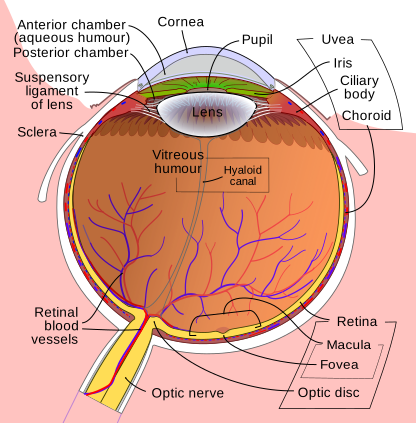
- Eye optics
- Cornea (~⅔ refraction) + lens (variable). Pupil = aperture; iris controls. Retina at back has receptors.
- Photoreceptors
- Rods (high sensitivity, low resolution, peripheral, scotopic) · cones (low sens, high res, central, photopic, color). 3 cone types (S/M/L; "blue/green/red").
- Phototransduction
- Dark: cGMP holds CNG channel open → Na⁺/Ca²⁺ in → photoreceptor depolarized → glutamate released. Light: rhodopsin → transducin → PDE → ↓ cGMP → channel closes → hyperpolarization → ↓ glutamate.
- Retinal cell layers
- Photoreceptor → bipolar → ganglion (output). Horizontal + amacrine = lateral interactions. Light enters from ganglion side.
- Center-surround receptive field
- ON-center: light in center excites, surround inhibits. OFF-center: opposite. Computed by horizontal cell lateral inhibition.
- Retinal ganglion cell axons
- Optic nerve → optic chiasm (decussation of nasal fibers) → optic tract → LGN of thalamus → V1 (primary visual cortex).
- Magnocellular vs parvocellular
- M: large, fast, motion + low contrast. P: small, slow, color + form, high acuity. Parallel processing.
- Dorsal vs ventral stream
- Dorsal "where/how" = parietal, motion + spatial. Ventral "what" = temporal, object + face recognition.
U10 · Audition + vestibular
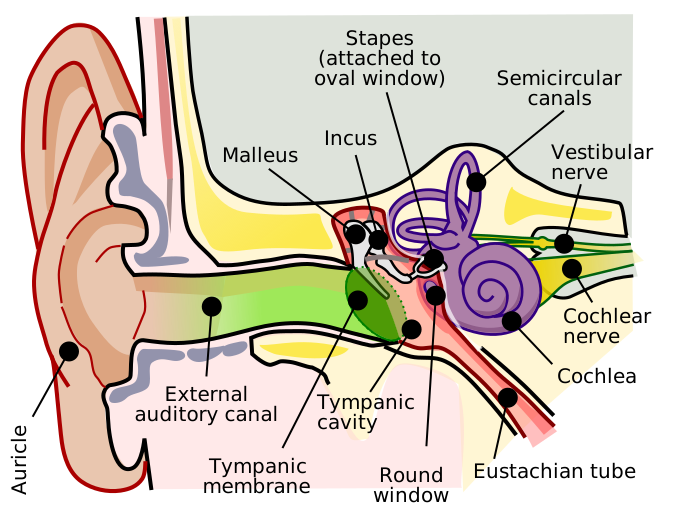
- Outer ear
- Pinna, ear canal → tympanic membrane (eardrum).
- Middle ear
- Ossicles malleus → incus → stapes (oval window). Impedance matching air → fluid (×22 amplification).
- Cochlea
- Spiral fluid-filled tube (3 chambers: scala vestibuli, scala media, scala tympani). Basilar membrane runs length.
- Organ of Corti
- On basilar membrane. Inner hair cells (sensory; ~3,500) + outer hair cells (motile, amplify; ~12,000). Tectorial membrane on top.
- Tonotopic organization
- Base of cochlea = high frequency; apex = low frequency. Maintained through auditory pathway up to A1 cortex.
- Mechanotransduction
- Stereocilia bending → tip-link tension → mechanically gated cation channel opens → K⁺ + Ca²⁺ in → depolarize hair cell → glutamate to spiral ganglion neurons.
- Auditory pathway
- Hair cell → spiral ganglion → cochlear nucleus → superior olive (sound localization) → inferior colliculus → MGN of thalamus → A1 (Heschl's gyrus).
- Sound localization
- Interaural time difference (ITD; low freq, medial superior olive) + interaural level difference (ILD; high freq, lateral superior olive).
- Vestibular system
- Semicircular canals (3, angular acceleration via cupula + ampulla) + otolith organs (utricle + saccule, linear accel + gravity via otoconia on macula). Hair cells transduce.
U11 · Chemical senses
- Olfactory receptor neurons
- Bipolar neurons in nasal epithelium. Cilia have GPCR olfactory receptors → G_olf → AC → cAMP → CNG channel → depolarization.
- OR gene family
- ~400 functional ORs in humans (largest gene family). Each ORN expresses one OR.
- Olfactory glomerulus
- All ORNs expressing the same OR converge on ~2 glomeruli in olfactory bulb. Mitral cells → piriform cortex (no thalamus relay!).
- 5 taste modalities
- Sweet, salty, sour, bitter, umami. Sweet/bitter/umami via GPCRs (T1R, T2R) → α-gustducin. Salty + sour via ion channels (ENaC, TRP).
- Taste pathway
- Taste bud → CN VII (anterior 2/3 tongue), IX (posterior 1/3), X (epiglottis) → solitary nucleus (medulla) → VPM thalamus → gustatory cortex (insula).
U12 · Motor systems intro
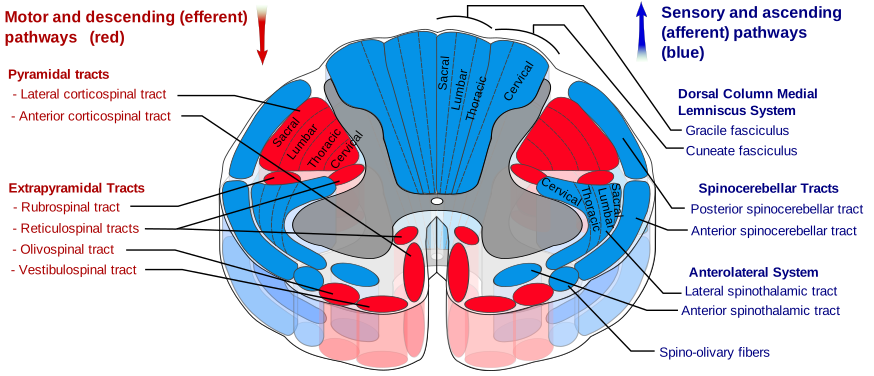
- Lower motor neuron (LMN)
- Final common pathway: cell body in ventral horn or brainstem motor nuclei → axon → muscle. Lesion → flaccid paralysis, atrophy, fasciculations.
- Upper motor neuron (UMN)
- Originates in motor cortex; descends via corticospinal tract; synapses on LMN. Lesion → spastic paralysis, hyperreflexia, Babinski sign.
- Motor unit
- One LMN + all muscle fibers it innervates. Size principle: smaller units recruited first.
- Stretch reflex (myotatic)
- Muscle spindle (Ia afferent) → monosynaptic excitation of homonymous motor neuron + reciprocal inhibition of antagonist via Ia interneuron. Knee jerk.
- Golgi tendon organ reflex
- Ib afferent senses tension → inhibits its own motor neuron. Protects against overload.
- Withdrawal reflex
- Polysynaptic; flexor activation + crossed extension contralateral.
- Corticospinal tract
- M1 → internal capsule → cerebral peduncle → medulla pyramids → DECUSSATES → lateral corticospinal tract → ventral horn LMN. Lateral = limbs; ventral = trunk.
- Basal ganglia
- Caudate, putamen, globus pallidus, subthalamic, substantia nigra. Direct (D1, GO) + indirect (D2, NO-GO) pathways. Parkinson = SNc dopamine loss; Huntington = caudate degeneration.
- Cerebellum
- Coordination, balance, motor learning. Three peduncles. Purkinje cell GABAergic output to deep cerebellar nuclei. Lesions → ataxia, dysmetria.
U13 · Glia & neuroinflammation — Chivero focus
- Microglia origin
- Yolk-sac-derived; resident macrophages of CNS. Distinct from infiltrating monocytes.
- Microglial activation states
- "M1" pro-inflammatory (TNFα, IL-1β, ROS) vs "M2" anti-inflammatory/restorative (IL-10, TGF-β). Spectrum, not binary.
- NLRP3 inflammasome
- Cytosolic multiprotein complex. Two-signal activation: priming (TLR → NF-κB → upregulates components) + activation (DAMPs/PAMPs → assembly). Recruits ASC + procaspase-1 → cleaves IL-1β + IL-18 + gasdermin D → pyroptosis. Chivero's research target.
- HIV-Tat in neuroinflammation
- HIV-1 Trans-activator of transcription crosses BBB; activates microglia; primes NLRP3; contributes to HAND (HIV-associated neurocognitive disorder) even on suppressive ART. Chivero's research.
- Methamphetamine + microglia
- Meth crosses BBB, activates microglia + induces oxidative stress + NLRP3 priming. Synergistic with HIV in dual-exposed individuals. Chivero's research.
- Astrocyte tripartite synapse
- Astrocyte processes ensheath synapses; take up glutamate (EAAT1/2), release gliotransmitters (glutamate, ATP, D-serine). Buffer K⁺.
- Reactive astrocytosis
- Astrocytes upregulate GFAP, hypertrophy, form glial scar after injury. A1 (neurotoxic) vs A2 (neuroprotective) phenotypes.
- Microglial pruning
- Complement-tagged synapses (C1q, C3) phagocytosed by microglia during development + aging + Alzheimer.
- Neurodegeneration + microglia
- Alzheimer (TREM2, complement), Parkinson (α-syn-activated), ALS, MS — chronic microglial activation contributes to pathology.
U14 · Pharmacology & drugs of abuse
- Agonist vs antagonist
- Agonist binds + activates receptor. Antagonist binds + blocks. Inverse agonist reduces constitutive activity.
- Allosteric modulator
- Binds non-orthosteric site → potentiates (PAM) or inhibits (NAM) agonist effect. Benzodiazepines = PAM at GABA_A.
- Mesolimbic dopamine pathway
- VTA → nucleus accumbens (NAc) + PFC. Final common reward circuit; activated by virtually all addictive drugs.
- Cocaine
- Blocks DAT, NET, SERT → ↑ synaptic monoamines. Strong reinforcer via NAc DA.
- Amphetamine + methamphetamine
- Reverses DAT (efflux), enters vesicles displacing DA. Massive ↑ extracellular DA. Neurotoxic at high doses (oxidative stress, microglia).
- Opioids
- μ receptor agonists → presynaptic Ca²⁺ ↓ + postsynaptic K⁺ ↑ → inhibition. Analgesia + euphoria + respiratory depression.
- Alcohol
- Enhances GABA_A + inhibits NMDA → sedation. Chronic → withdrawal hyperexcitability + addiction.
- Nicotine
- Nicotinic ACh receptor agonist; α4β2 on VTA DA neurons → NAc reward.
- Cannabis (THC)
- CB1 agonist; presynaptic; reduces NT release. Affects memory (hippocampus), motor (basal ganglia), reward.
- Tolerance
- Reduced response after repeated exposure. Pharmacodynamic (receptor downregulation) + pharmacokinetic (faster metabolism).
- Sensitization
- Increased response with repeated exposure (especially psychomotor stimulants).
- Addiction circuits
- VTA → NAc + amygdala + PFC; loss of top-down PFC control + amygdala stress dysregulation. Chivero's lab studies SUD-microglia interactions.
U15 · Methods + integration
- EEG
- Scalp electrodes record summed dendritic potentials. Excellent temporal (ms), poor spatial. Frequency bands: δ, θ, α, β, γ.
- fMRI
- BOLD signal — blood oxygenation. Good spatial (~mm), poor temporal (~seconds). Indirect measure of activity.
- Patch clamp
- Glass pipette suction onto cell membrane → record currents from individual ion channels (single-channel) or whole cell.
- Intracellular vs extracellular recording
- Intra: pipette inside cell; measures V_m + APs + synaptic potentials. Extra: outside; only spikes resolved.
- Optogenetics
- Express channelrhodopsin (ChR2, Na⁺ in, excitation) or halorhodopsin (Cl⁻ in, inhibition) → light-triggered control of neurons in vivo.
- Chemogenetics (DREADDs)
- Designer GPCRs (hM3Dq, hM4Di) activated by clozapine-N-oxide → minute-scale modulation.
- Calcium imaging
- GCaMP fluoresces with Ca²⁺. Bulk or single-cell readout of activity over time.
- Lesion studies
- Loss of function via surgical, chemical, or pharmacological ablation → infer normal role.
Chivero-targeted exam tips
- Be ready to diagram an action potential with phases + ion movements + channel states.
- Know NLRP3 inflammasome: priming → activation → caspase-1 → IL-1β + gasdermin D → pyroptosis.
- For each NT system: synthesis enzyme, source nucleus, receptor types, behavioral role.
- Sensory pathways — DC-ML vs spinothalamic vs visual — be able to draw decussation point + relay nuclei.
- Watch for Chivero's HIV-Tat / methamphetamine / microglia framing on standard topics.
📚 Textbook companion · The Mind’s Machine 4e
Each unit above maps to chapters in The Mind’s Machine 4e (Watson & Breedlove), the assigned text. Click a chapter to read it here: