Chapter 3: Learning and Memory
Chapter 3: Learning and Memory
SCIENCE MASTERY ASSESSMENT
Every pre-med knows this feeling: there is so much content I have to know for the MCAT! How do I know what to do first or what’s important?
While the high-yield badges throughout this book will help you identify the most important topics, this Science Mastery Assessment is another tool in your MCAT prep arsenal. This quiz (which can also be taken in your online resources) and the guidance below will help ensure that you are spending the appropriate amount of time on this chapter based on your personal strengths and weaknesses. Don’t worry though—skipping something now does not mean you’ll never study it. Later on in your prep, as you complete full-length tests, you’ll uncover specific pieces of content that you need to review and can come back to these chapters as appropriate.
How to Use This Assessment
If you answer 0–7 questions correctly:
Spend about 1 hour to read this chapter in full and take limited notes throughout. Follow up by reviewing all quiz questions to ensure that you now understand how to solve each one.
If you answer 8–11 questions correctly:
Spend 20–40 minutes reviewing the quiz questions. Beginning with the questions you missed, read and take notes on the corresponding subchapters. For questions you answered correctly, ensure your thinking matches that of the explanation and you understand why each choice was correct or incorrect.
If you answer 12–15 questions correctly:
Spend less than 20 minutes reviewing all questions from the quiz. If you missed any, then include a quick read-through of the corresponding subchapters, or even just the relevant content within a subchapter, as part of your question review. For questions you answered correctly, ensure your thinking matches that of the explanation and review the Concept Summary at the end of the chapter.
- Researchers repeatedly startle a participant with a loud buzzer. After some time, the participant stops being startled by the buzzer. If the researchers interrupt the study with the sound of pans banging together, which of the following would likely be observed?
- Increased startle response to the buzzer
- Decreased startle response to the buzzer
- No change in the response to the buzzer
- Generalization to previously nonaversive stimuli
- Many pets will run toward the kitchen when they hear the sound of a can opener opening a can of pet food. The sound of the can opener is a(n):
- conditioned response.
- unconditioned response.
- conditioned stimulus.
- unconditioned stimulus.
- A person suffers from food poisoning after eating a spoiled orange and later finds that the smell of lemon and other citrus fruits causes a feeling of nausea. This is an example of:
- acquisition.
- generalization.
- discrimination.
- negative reinforcement.
- Which of the following processes would increase the likelihood of a behavior?
- Extinction
- Negative punishment
- Positive punishment
- Avoidance learning
- The presynaptic neuron becomes more efficient at releasing neurotransmitters while receptor density increases on the postsynaptic neuron. These changes are consistent with:
- long term potentiation.
- synaptic pruning.
- an increase in neuroplasticity.
- amnesia.
- A rat is trained to press a lever to obtain food under a fixed-interval schedule. Which of the following behaviors would the rat most likely exhibit?
- Pressing the lever continuously whenever it is hungry.
- Pressing the lever exactly once and waiting for the food pellet before pressing it again.
- Pressing the lever slowly at first, but with increasing frequency as the end of the interval approaches.
- None of the above; the association formed by fixed-interval schedules is too weak to increase behavior.
- Which of the following is true of teaching an animal a complicated, multistage behavior?
- The individual parts of the behavior should not run counter to the animal’s natural instincts.
- The behaviors must be tied to a food reward of some kind.
- Rewarding individual parts of the behavior on their own interferes with reinforcement of the entire behavior.
- I only
- I and III only
- II and III only
- I, II, and III
- Which of the following is true of controlled processing?
- It is the means through which information enters short-term memory.
- Information that requires controlled processing cannot become automatic.
- It always requires active attention to the information being encoded.
- Most information we can later recall is encoded using controlled processing.
- Which of the following methods of encoding is most conducive to later recall?
- Semantic
- Visual
- Iconic
- Acoustic
- A hemisphere of the brain can be removed to prevent the recurrence of severe seizures. How would the ability of the other hemisphere to adopt functionalities of the removed section differ between a two year old and a twenty year old?
- The brain of the twenty year old would be more adaptable due to higher neuroplasticity.
- The brain of the twenty year old would be more adaptable due to lower neuroplasticity.
- The brain of the two year old would be more adaptable due to higher neuroplasticity.
- The brain of the two year old would be more adaptable due to lower neuroplasticity.
- An individual memorizes a shopping list by associating each item with an image that corresponds with a number. This individual is using which of the following mnemonics?
- Clustering
- Method of loci
- Elaborative rehearsal
- Peg-words
- A researcher uses a partial-report procedure after presenting participants with an array of nine numbers for a fraction of a second. Which of the following is the most likely result of this procedure?
- The participants will be able to recall any of the rows or columns in great detail but only immediately after presentation.
- The participants will only be able to recall the first few numbers in the array due to the serial position effect.
- The participants will be able to recall approximately seven of the numbers for a few seconds following presentation of the stimulus.
- The participants will not be able to recall any of the numbers verbally, but will be able to draw the full array under hypnosis.
- Which of the following is an example of a semantic memory?
- Having the ability to drive a car
- Knowing the parts of a car engine
- Remembering the experience of learning to drive
- Associating a car with other vehicles in a semantic network
- Which of the following is an example of a circumstance that could cause a state-dependent recall effect?
- The individual is outside on a rainy day.
- The individual is intoxicated on cannabis.
- The individual is experiencing a manic episode.
- I only
- III only
- II and III only
- I, II, and III
- Which of the following would an older adult be most likely to have trouble recalling?
- The circumstances of meeting a significant other in college
- A doctor’s appointment scheduled for 1:00 p.m.
- The names of the characters in a favorite television show
- That a library book needs to be returned when passing by the library on a morning walk
Answer Key
- A
- C
- B
- D
- A
- C
- A
- C
- A
- C
- D
- A
- B
- C
- B
Chapter 3: Learning and Memory
CHAPTER 3
LEARNING AND MEMORY
In This Chapter
3.1 Learning
Associative Learning
Classical Conditioning
Operant Conditioning
Observational Learning
3.2 Memory
Encoding
Storage
Retrieval
Forgetting
Memory Reconstruction
3.3 Neurobiology of Learning and Memory Concept Summary
CHAPTER PROFILE
The content in this chapter should be relevant to about 14% of all questions about the behavioral sciences on the MCAT.
This chapter covers material from the following AAMC content categories:
6B: Making sense of the environment
7C: Attitude and behavior change
Introduction
A college student sits hunched over a desk in a quiet library, poring over a small stack of textbooks. It’s 11 p.m. the night before the organic chemistry midterm, and there seems to be a near endless list of reactions to commit to memory before tomorrow. The situation seems bleak, but the student has been here before and has taken every precaution to make sure that this study session will be successful: drinking coffee will increase alertness, while the quiet of the library will reduce distractions to aid concentration. It’s stressful, to be sure, but the student has been able to study this way before and do quite well, reinforcing this current set of behaviors. The student works through a set of flashcards—reactants on one side, products on the other—and is able to identify most of them but misses a few. Those cards are placed in a separate pile to be reviewed later. Sure, this rehearsal will most likely help for the exam tomorrow, but will the student be able to recall this information again for the final in two months? The student takes another sip of coffee and tries to put everything else out of mind, focusing intently on the book sitting open on the desk.
Sound familiar? If you’re like most students, you’ve found yourself in a similar scenario at least once. This chapter will discuss the ways in which you both memorize new information and learn new behaviors. This will not only help you to directly prepare to answer MCAT questions about this content, but also to learn a few new tricks about how to effectively commit all of the MCAT content to memory. This is a skill that will be helpful both now and later in your career as a doctor.
3.1 Learning
LEARNING OBJECTIVES
After Chapter 3.1, you will be able to:
- Apply principles of habituation, dishabituation, and sensitization to real-life scenarios
- Identify the conditioned stimulus, unconditioned stimulus, conditioned response, and unconditioned response in a Pavlovian learning paradigm
- Distinguish between negative reinforcement, positive reinforcement, negative punishment, and positive punishment
- Predict how reinforcement schedule will affect relative frequency of behavioral response in an operant conditioning scenario:
To a psychologist, learning refers specifically to the way in which we acquire new behaviors. To understand learning, we must start with the concept of a stimulus. A stimulus can be defined as anything to which an organism can respond, including all of the sensory inputs we discussed in Chapter 2 of MCAT Behavioral Sciences Review. The combination of stimuli and responses serves as the basis for all behavioral learning.
Responses to stimuli can change over time depending on the frequency and intensity of the stimulus. For instance, repeated exposure to the same stimulus can cause a decrease in response called habituation. This is seen in many first-year medical students: students often have an intense physical reaction the first time they see a cadaver or treat a severe laceration, but as they get used to these stimuli, the reaction lessens until they are unbothered by these sights. Note that a stimulus too weak to elicit a response is called subthreshold stimulus.
The opposite process can also occur. Dishabituation is defined as the recovery of a response to a stimulus after habituation has occurred. Dishabituation is often noted when, late in the habituation of a stimulus, a second stimulus is presented. The second stimulus interrupts the habituation process and thereby causes an increase in response to the original stimulus. Imagine, for example, that you’re taking a long car trip and driving for many miles on a highway. After a while, your brain will get used to the sights, sounds, and sensations of highway driving: the dashed lines dividing the lanes, the sound of the engine and the tires on the road, and so on. Habituation has occurred. At some point you use an exit ramp, and these sensations change. As you merge onto the new highway, you pay more attention to the sensory stimuli coming in. Even if the stimuli are more or less the same as on the previous highway, the presentation of a different stimulus (using the exit ramp) causes dishabituation and a new awareness of—and response to—these stimuli. Dishabituation is temporary and always refers to changes in response to the original stimulus, not the new one.
KEY CONCEPT
Dishabituation is the recovery of a response to a stimulus, usually after a different stimulus has been presented. Note that the term refers to changes in response to the original stimulus, not the new one.
Learning, then, is a change in behavior that occurs in response to a stimulus. While there are many types of learning, the MCAT focuses on two types: associative learning and observational learning.
Associative Learning
Associative learning is the creation of a pairing, or association, either between two stimuli or between a behavior and a response. On the MCAT, you’ll be tested on two kinds of associative learning: classical and operant conditioning.
Classical Conditioning
Classical conditioning is a type of associative learning that takes advantage of biological, instinctual responses to create associations between two unrelated stimuli. For many people, the first name that comes to mind for research in classical conditioning is Ivan Pavlov. His experiments on dogs were not only revolutionary, but also provide a template for the way the MCAT will test classical conditioning.
Classical conditioning works, first and foremost, because some stimuli cause an innate or reflexive physiological response. For example, we reflexively salivate when we smell bread baking in an oven, or we may jump or recoil when we hear a loud noise. Any stimulus that brings about such a reflexive response is called an unconditioned stimulus, and the innate or reflexive response is called an unconditioned response. Many stimuli do not produce a reflexive response and are known as neutral stimuli.
In Pavlov’s experiment, the unconditioned stimulus was meat, which would cause the dogs to salivate reflexively, and the neutral stimulus was a ringing bell. Through the course of the experiment, Pavlov repeatedly rang the bell before placing meat in the dogs’ mouths. Initially, the dogs did not react much when they only heard the bell ring without receiving meat. However, after this procedure was repeated several times, the dogs began to salivate when they heard the bell ring. In fact, the dogs would salivate even if Pavlov only rang the bell and did not deliver any meat. Pavlov thereby turned a neutral stimulus into a conditioned stimulus: a normally neutral stimulus that, through association, now causes a reflexive response called a conditioned response. The process of using a reflexive, unconditioned stimulus to turn a neutral stimulus into a conditioned stimulus is termed acquisition, as shown in Figure 3.1. The experiment used appetitive conditioning, a type of classical conditioning in which the unconditioned stimulus is pleasant or desirable; this type of stimulus, referred to as an appetitive stimulus, functions to increase the frequency of a response.
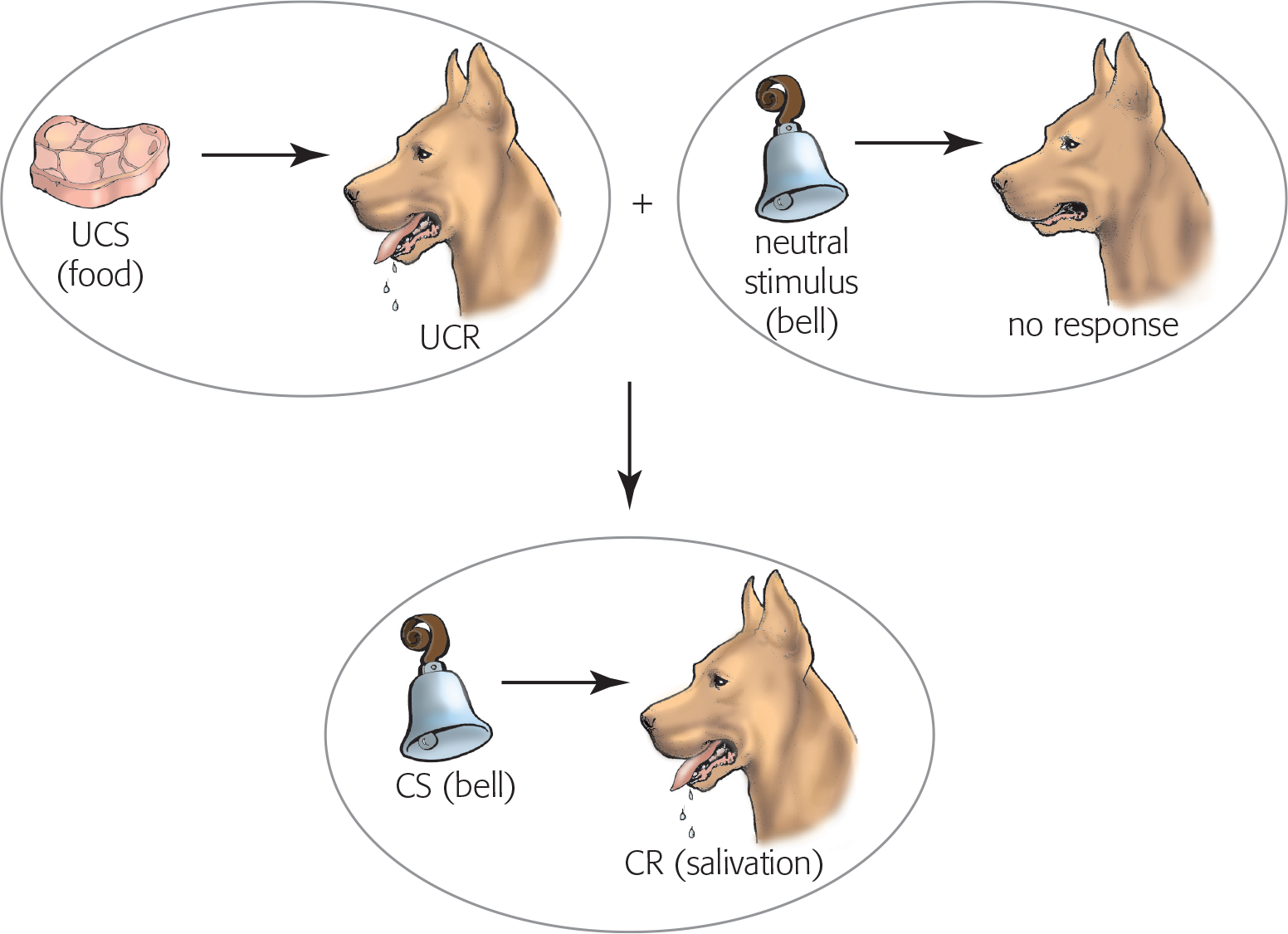
Figure 3.1. Acquisition in Classical Conditioning UCS = unconditioned stimulus, UCR = unconditioned response, CS = conditioned stimulus, CR = conditioned response
Notice that the stimuli change in this experiment, but the response is the same throughout. Because salivation in response to food is natural and requires no conditioning, it is an unconditioned response in this context. On the other hand, when paired with the conditioned stimulus of the bell, salivation is considered a conditioned response.
MCAT EXPERTISE
On the MCAT, the key to telling conditioned and unconditioned responses apart will be to look at which stimulus is causing them: unconditioned stimuli cause an unconditioned response, while conditioned stimuli cause a conditioned response.
However, it is important to recognize that just because a conditioned response has been acquired, that does not mean that the conditioned response is permanent. Extinction refers to the loss of a conditioned response, and can occur if the conditioned stimulus is repeatedly presented without the unconditioned stimulus. Applying this concept to the Pavlov example, if the bell rings often enough without the dog getting meat, the dog may stop salivating when the bell sounds. Interestingly, this extinction of a response is not always permanent; after some time, presenting subjects again with an extinct conditioned stimulus will sometimes produce a weak conditioned response, a phenomenon called spontaneous recovery.
There are a few processes that can modify the response to a conditioned stimulus after acquisition has occurred. Generalization is a broadening effect by which a stimulus similar enough to the conditioned stimulus can also produce the conditioned response. In one famous experiment, researchers conditioned a child called Little Albert to be afraid of a white rat by pairing the presentation of the rat with a loud noise. Subsequent tests showed that Little Albert’s conditioning had generalized such that he also exhibited a fear response to a white stuffed rabbit, a white sealskin coat, and even a man with a white beard.
Finally, in stimuli discrimination (sometimes referred to as just discrimination), an organism learns to distinguish between similar stimuli. Discrimination is the opposite of generalization. Pavlov’s dogs could have been conditioned to discriminate between bells of different tones by having one tone paired with meat, and another tone presented without meat. In this case, association could have occurred with one tone but not the other.
MCAT EXPERTISE
Classical conditioning is a favorite topic on the MCAT. Expect at least one question to describe a Pavlovian experiment and ask you to identify the role of one of the stimuli or responses described.
Operant Conditioning
Whereas classical conditioning is concerned with instincts and biological responses, the study of operant conditioning examines the ways in which consequences of voluntary behaviors change the frequency of those behaviors. Just as the MCAT will test you on the difference between conditioned and unconditioned responses and stimuli, it will ask you to distinguish between reinforcement and punishment too. While operant conditioning is most commonly associated with B. F. Skinner, it was actually first theorized by Edward Thorndike, who proposed the law of effect based on experiments with cages and cats. The law of effect states that behaviors that produce desirable outcomes (like pressing a button to open the cage) will be repeated. Skinner continued Thorndike’s work, and is considered one of the founders of behaviorism, the theory that all behaviors are conditioned. The four possible relationships between stimulus and behavior are summarized in Table 3.1.
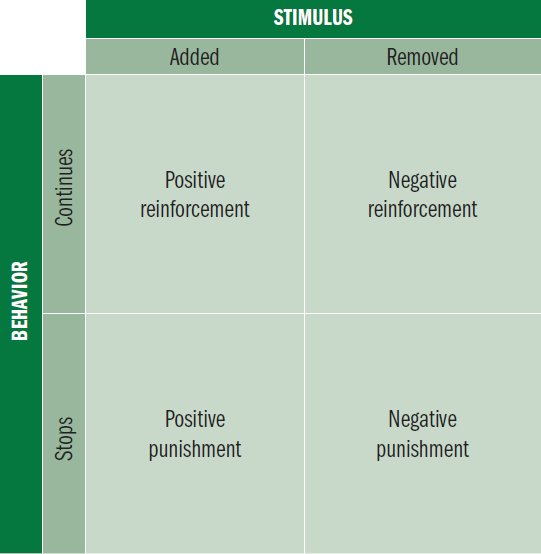
Table 3.1. Terminology of Operant Conditioning
Reinforcement
Almost all animals will innately search for resources in their environment. These reward-seeking behaviors, such as foraging and approach behaviors, are modified over time as the animal interacts with various stimuli and adjusts its behaviors accordingly. Reinforcement is the process of increasing the likelihood that an animal will perform a behavior. Reinforcers are divided into two categories. Positive reinforcers increase the frequency of a behavior by adding a positive consequence or incentive following the desired behavior. Money is an example of a common and strong positive reinforcer: employees will continue to work if they are paid. Negative reinforcers act similarly in that they increase the frequency of a behavior, but they do so by removing something unpleasant. For example, taking an aspirin reduces a headache, so the next time you have a headache, you are more likely to take one. Negative reinforcement is often confused with punishment, which will be discussed in the next section, but remember that the frequency of the behavior is the distinguishing factor: any reinforcement—positive or negative—increases the likelihood that a behavior will be performed.
REAL WORLD
This concept of learning by consequence forms the foundation for behavioral therapies for many disorders including phobias, anxiety disorders, and obsessive–compulsive disorder.
Negative reinforcement can be subdivided into escape learning and avoidance learning, which differ in whether the unpleasant stimulus occurs or not. Escape learning describes a situation where the animal experiences the unpleasant stimulus and, in response, displays the desired behavior in order to trigger the removal of the stimulus. So, in this type of learning, the desired behavior is used to escape the stimulus. In contrast, avoidance learning occurs when the animal displays the desired behavior in anticipation of the unpleasant stimulus, thereby avoiding the unpleasant stimulus.
Avoidance learning often develops from multiple experiences of escape learning. An example of this progression from escape learning to avoidance learning is the seat belt warning in a car. If a driver begins driving without buckling the seat belt, then the car will produce an annoying beeping noise, which only ends when the seat belt is buckled. In this example, the desired behavior is to buckle the seat belt. This behavior is reinforced by the removal of an unpleasant stimulus (the audible beeping), so this type of learning is negative reinforcement. More specifically, this example illustrates escape learning, since the driver first experiences the unpleasant stimulus, then exhibits the desired behavior in order to escape the unpleasant stimulus. However, after forgetting to buckle the seat belt several times, the driver will eventually learn to preemptively buckle up before driving the car in order to avoid the beeping sound. At that point, the escape learning has progressed to avoidance learning. Finally, this example illustrates an important misconception about the term negative reinforcement: Buckling one’s seat belt is generally considered a "positive" behavior, in that it protects one’s health. Nevertheless, the terms "positive" and "negative" in operant conditioning only refer to the addition or removal of a stimulus. So even though buckling up is a "good" thing, this example illustrates several types of negative reinforcement!
Classical and operant conditioning can be used hand-in-hand. For example, some dog trainers take advantage of reinforcers when training dogs to perform tricks. Sometimes, the trainers will feed the dog a bit of meat after it performs a trick. The meat can be said to be a primary reinforcer because the meat is a treat that the dog responds to naturally. Dog trainers also use tiny handheld devices that emit a clicking sound. This clicker would not normally be a reinforcer on its own, but the trainers use classical conditioning to pair the clicker with meat to elicit the same response. The clicker is thus a conditioned reinforcer, which is sometimes called a secondary reinforcer. Eventually, the dog may even associate the presence of the trainer with the possibility of reward, making the presence of the trainer a discriminative stimulus. A discriminative stimulus indicates that reward is potentially available in an operant conditioning paradigm. If the dog had to wait an extended period of time between performing the trick and getting the treat, then the treat would be considered a delayed reinforcement, which tends to be less effective than immediate reinforcement.
Punishment
In contrast to reinforcement, punishment uses conditioning to reduce the occurrence of a behavior. Positive punishment adds an unpleasant consequence in response to a behavior to reduce that behavior; for example, receiving a ticket and having to pay a fine for parking illegally. Because positive punishment involves using something unpleasant to discourage a behavior, it is sometimes referred to as aversive conditioning. By contrast, negative punishment is removing a stimulus in order to cause reduction of a behavior. For example, a parent or guardian may forbid a child from watching television as a consequence for bad behavior, with the goal of preventing the behavior from happening again.
KEY CONCEPT
Negative reinforcement is often confused with positive punishment. Negative reinforcement is the removal of a bothersome stimulus to encourage a behavior; positive punishment is the addition of a bothersome stimulus to reduce a behavior.
BRIDGE
Sociological institutions often rely on punishments and rewards to adjust behavior. Within a society, formal sanctions, or rules and laws, can be used to reinforce or punish behavior. Likewise, informal sanctions, such as ostracization, praise, and shunning, can be used to reinforce or punish social behavior without depending on rules established by social institutions. Socialization and social institutions are discussed in Chapters 8 and 11 of MCAT Behavioral Sciences Review, respectively.
Reinforcement Schedules
The presence or absence of reinforcing or punishing stimuli is just a part of the story. The rate at which desired behaviors are acquired is also affected by the reinforcement schedule being used to deliver the stimuli. There are two key factors to reinforcement schedules: whether the schedule is fixed or variable, and whether the schedule is based on a ratio or an interval.
- Fixed-ratio (FR) schedules reinforce a behavior after a specific number of performances of that behavior. For example, in a typical operant conditioning experiment, researchers might reward a rat with a food pellet every third time it presses a bar in its cage. Continuous reinforcement is a fixed-ratio schedule in which the behavior is rewarded every time it is performed.
- Variable-ratio (VR) schedules reinforce a behavior after a varying number of performances of the behavior, but such that the average number of performances to receive a reward is relatively constant. With this type of reinforcement schedule, researchers might reward a rat first after two button presses, then eight, then four, then finally six.
- Fixed-interval (FI) schedules reinforce the first instance of a behavior after a specified time period has elapsed. For example, once our rat gets a pellet, it has to wait 60 seconds before it can get another pellet. The first lever press after 60 seconds gets a pellet, but subsequent presses during those 60 seconds accomplish nothing.
- Variable-interval (VI) schedules reinforce a behavior the first time that behavior is performed after a varying interval of time. Instead of waiting exactly 60 seconds, for example, our rat might have to wait 90 seconds, then 30 seconds, then three minutes. In each case, once the interval elapses, the next press gets the rat a pellet.
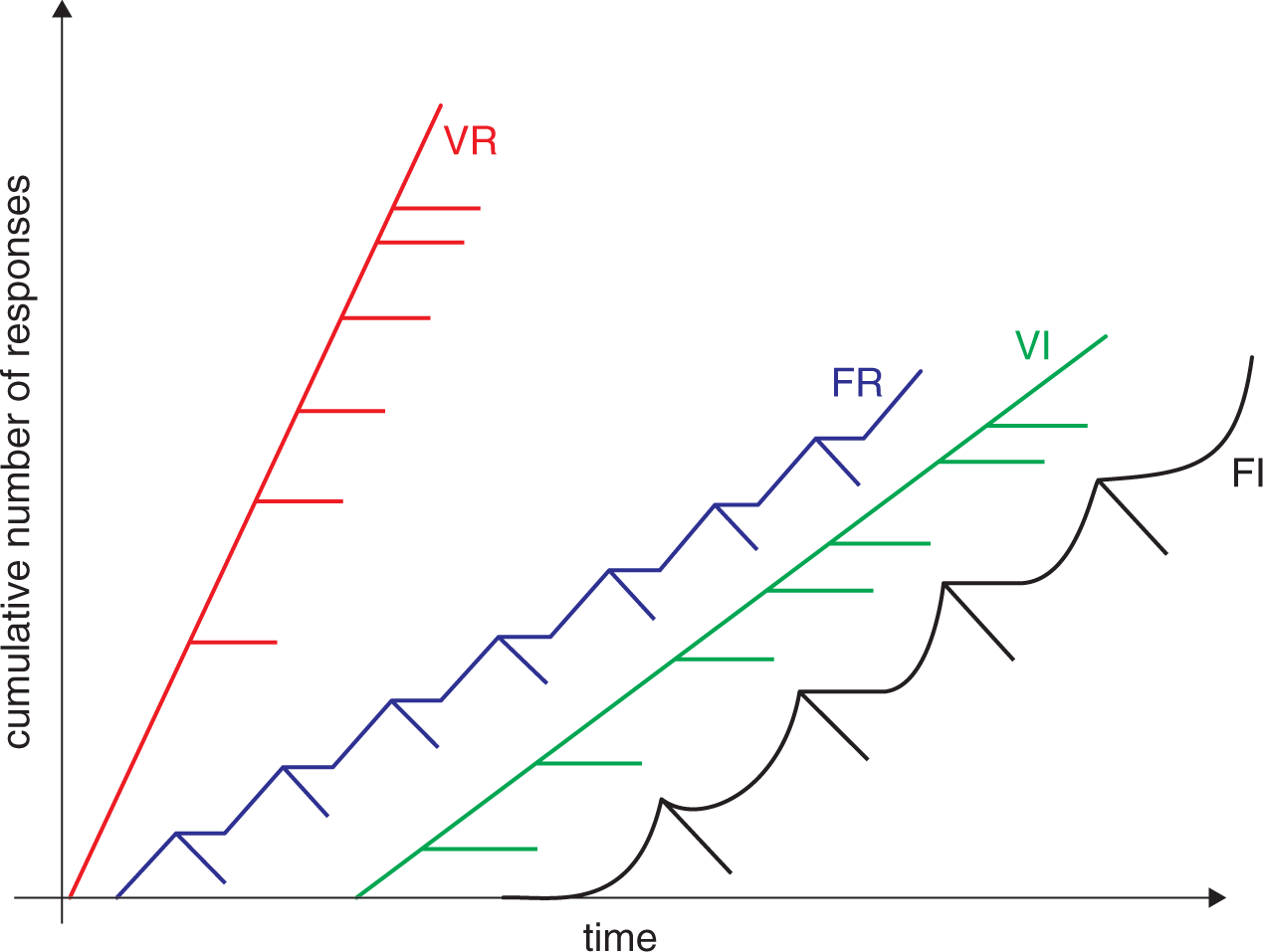
Of these schedules, variable-ratio works the fastest for learning a new behavior, and is also the most resistant to extinction. The effectiveness of the various reinforcement schedules is demonstrated in Figure 3.2.
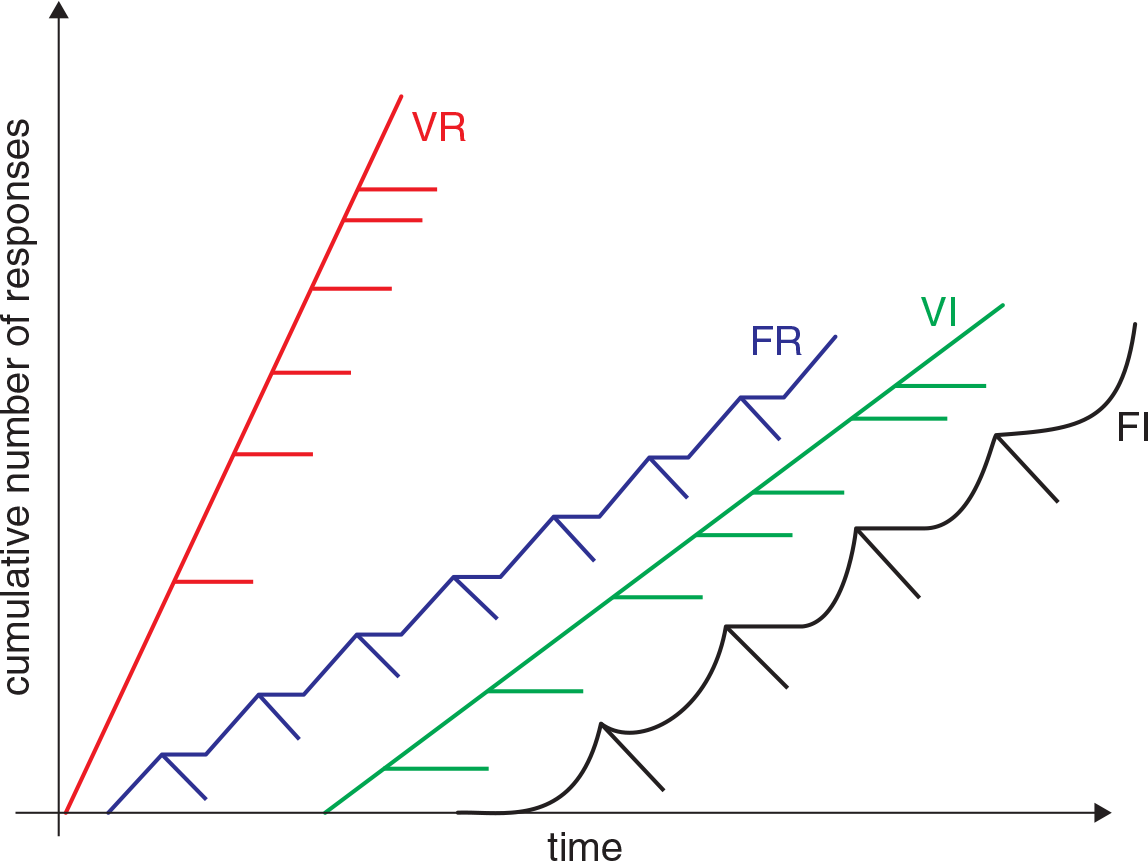
Figure 3.2. Reinforcement Schedules Hatches correspond to instances of reinforcement. The start of each line corresponds to time zero for that schedule.
There are a few things to note in this graph. First, variable-ratio schedules have the fastest response rate: the rat will continue pressing the bar quickly with the hope that the next press will be the “right one.” Also note that fixed schedules (fixed-ratio and fixed-interval) often have a brief moment of no responses after the behavior is reinforced: the rat will stop hitting the lever until it wants another pellet, once it has figured out what behavior is necessary to receive the pellet.
MNEMONIC
VR stands for Variable-Ratio, but it can also stand for Very Rapid and Very Resistant to extinction.
REAL WORLD
Gambling (and gambling addiction) is so difficult to extinguish because most gambling games are based on variable-ratio schedules. While the probability of winning the jackpot on any individual pull of a slot machine is the same, we get caught in the idea that the next pull will be the “right one.”
One final idea associated with operant conditioning is the concept of shaping, which is the process of rewarding increasingly specific behaviors that become closer to a desired response. For example, if you wanted to train a bird to spin around in place and then peck a key on a keyboard, you might first give the bird a treat for turning slightly to the left, then only for turning a full 90 degrees, then 180, and so on, until the bird has learned to spin around completely. Then you might only reward this behavior if done near the keyboard until eventually the bird is only rewarded once the full set of behaviors is performed. While it may take some time, the use of shaping in operant conditioning can allow for the training of extremely complicated behaviors.
Cognitive and Biological Factors in Associative Learning
It would be incorrect to say that classical and operant conditioning are the only factors that affect behavior, nor would it be correct to say that we are all mindless and robotic, unable to resist the rewards and punishments that occur in our lives. Since Skinner’s initial perspectives, it has been found that many cognitive and biological factors are at work that can change the effects of associative learning or allow us to resist them altogether.
Many organisms undergo latent learning, which is learning that occurs without a reward but that is spontaneously demonstrated once a reward is introduced. The classic experiment associated with latent learning involves rats running a maze. Rats that were simply carried through the maze and then incentivized with a food reward for completing the maze on their own performed just as well—and in some cases better—than those rats that had been trained to run the maze using more standard operant conditioning techniques by which they were rewarded along the way.
Problem solving is another method of learning that steps outside the standard behaviorist approach. Think of the way young children put together a jigsaw puzzle: often, they will take pieces one-by-one and try to make them fit together until they find the correct match. Many animals will also use this kind of trial-and-error approach, testing behaviors until they yield a reward. As we get older, we gain the ability to analyze the situation and respond correctly the first time, as when we seek out the correct puzzle piece and orientation based on the picture we are forming. Humans and chimpanzees alike will often avoid trial-and-error learning and instead take a step back, observe the situation, and take decisive action to solve the challenges they face.
Not all behaviors can be taught using operant conditioning techniques. Many animals are predisposed to learn (or not learn) behaviors based on their own natural abilities and instincts. Animals are most able to learn behaviors that coincide with their natural behaviors: birds naturally peck when searching for food, so rewarding them with food in response to a pecking-based behavior works well. This predisposition is known as preparedness. Similarly, it can be very difficult to teach animals behaviors that work against their natural instincts. When animals revert to an instinctive behavior after learning a new behavior that is similar, the animal has undergone instinctive (or instinctual) drift. For example, researchers used behavioral techniques to train raccoons to place coins in a piggy bank. Their efforts were ultimately unsuccessful as the learned behaviors were only temporary. Eventually, rather than placing the coins in the bank, the raccoons would pick up the coins, rub them together, and dip them into the bank before pulling them back out. The researchers concluded that the task they were trying to train the raccoons to perform was conflicting with their natural food-gathering instinct, which was to rub seeds together and wash them in a stream to clean them before eating. The researchers had far better luck training the raccoons to place a ball in a basketball net, as the ball was too large to trigger the food-washing instinct.
Observational Learning
Observational learning is the process of learning a new behavior or gaining information by watching others. The most famous and perhaps most controversial study into observational learning is Albert Bandura’s Bobo doll experiment, in which children watched an adult in a room full of toys punching and kicking an inflatable clown toy. When the children were later allowed to play in the room, many of them ignored the other toys in the room and inflicted similar violence on the Bobo doll just as they had seen the adult do. It’s important to note that observational learning is not simply imitation because observational learning can be used to teach individuals to avoid behavior as well. In later iterations of the Bobo doll experiment, children who watched the adult get scolded after attacking the Bobo doll were less likely to be aggressive toward the Bobo doll themselves.
REAL WORLD
The connection between violent video games and aggressive behavior is still under active debate. While there are many interest groups on both sides of the controversy, the American Academy of Pediatrics (a major medical society) published one report in which they attributed a 13 to 22% increase in aggressive behavior to observational learning from video games.
Like associative learning, there are a few neurological factors that affect observational learning. The most important of these are mirror neurons. These neurons are located in the frontal and parietal lobes of the cerebral cortex and fire both when an individual performs an action and when that individual observes someone else performing that action. Mirror neurons are largely involved in motor processes, but additionally are thought to be related to empathy and vicarious emotions; some mirror neurons fire both when we experience an emotion and also when we observe another experiencing the same emotion. Mirror neurons also play a role in imitative learning by a number of primates, as shown in Figure 3.3.

Figure 3.3. Use of Mirror Neurons in a Macaque Many neonatal primates imitate facial expressions using mirror neurons.
Research suggests that observational learning through modeling is an important factor in determining people’s behavior throughout their lifetime. People learn what behaviors are acceptable by watching others perform them. Much attention is focused on violent media as a model for antisocial behavior, but prosocial modeling can be just as powerful. Of course, observational learning is strongest when a model’s words are consistent with actions. Many parents and guardians adopt a Do as I say, not as I do approach when teaching their children, but research suggests that children will disproportionately imitate what the model did, rather than what the model said.
MCAT CONCEPT CHECK 3.1
Before you move on, assess your understanding of the material with these questions.
- Which of the following might cause a person to eat more food during a meal: eating each course separately and moving to the next only when finished with the current course, or interrupting the main course several times by eating side dishes? ____________________________
- A college student plays a prank on a roommate by popping a balloon behind the roommate’s head after every time making popcorn. Before long, the smell of popcorn makes the roommate nervous. Which part of the story corresponds to each of the classical conditioning concepts below?
____________________________
- Conditioned stimulus:
____________________________
- Unconditioned stimulus:
____________________________
- Conditioned response:
_________________________
- Unconditioned response:
- What is the difference between negative reinforcement and positive punishment? Provide an example of each.
__________________________ __________________________
- Negative reinforcement:
__________________________ __________________________
- Positive punishment:
3.2 Memory
LEARNING OBJECTIVES
After Chapter 3.2, you will be able to:
- Order the three modes of encoding from strongest to weakest
- Distinguish between maintenance rehearsal and elaborative rehearsal
- Predict how learning environments may impact recall
- Describe factors and phenomena that can lead to flaws in memory
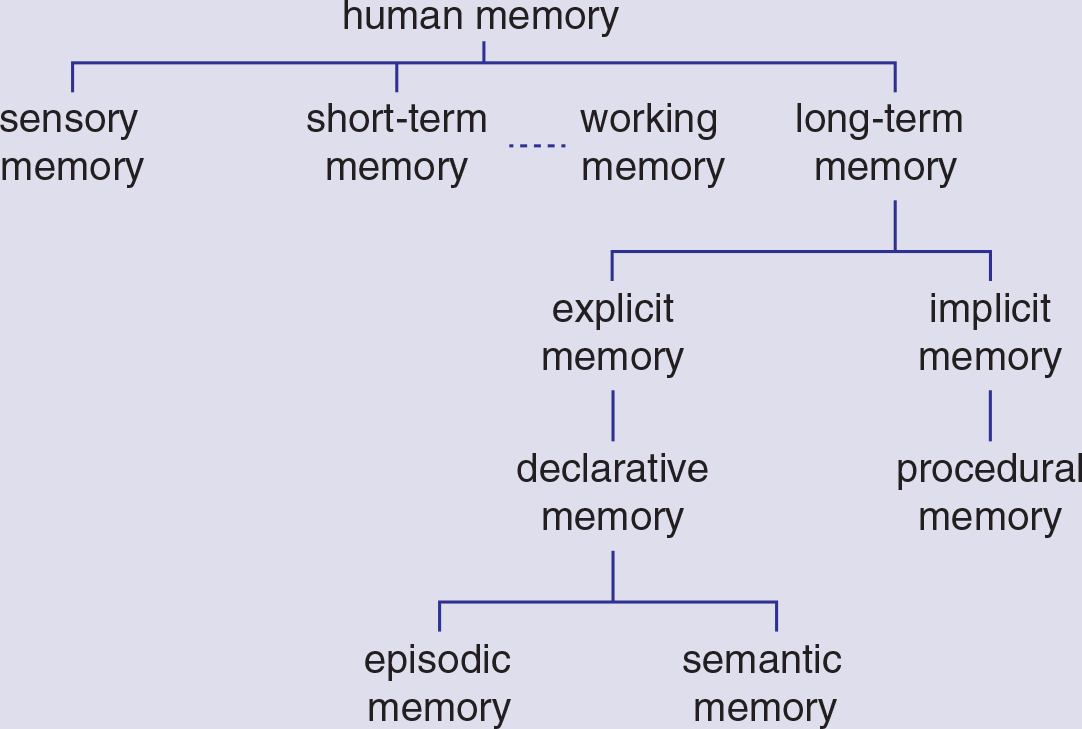
- Define each type of human memory:
While learning is mostly concerned with behavior, the study of memory focuses on how we gain the knowledge that we accumulate over our lifetimes. The formation of memories can be divided into three major processes: encoding, storage, and retrieval.
Encoding
Encoding refers to the process of putting new information into memory. Information gained without any effort is the result of automatic processing. This type of cognitive processing is unintentional, and information is passively absorbed from the environment. As you walk down the street, you are constantly bombarded with information that seeps into your brain: you notice the temperature; you keep track of the route that you’re taking; you might stop for coffee and realize that the same cashier has been working each day this week.
There are, however, times when we must actively work to gain information. In studying for the MCAT, for example, you may create flashcards to memorize the enzymes of digestion or the functions of endocrine hormones. This active memorization is known as controlled (effortful) processing.
MCAT EXPERTISE
Do not allow yourself to study for the MCAT using automatic processing! Just reading the text “to get through it” won’t cut it for the MCAT. Engage with the text: fill out the MCAT Concept Checks, write notes in the margins, ask yourself questions. Scientific studies of learning have demonstrated, time and time again, that controlled processing improves comprehension, retention, and speed and accuracy on Test Day.
With practice, controlled processing can become automatic. Think back to a time when you were learning a foreign language. At first, each word required a great deal of processing to decipher: you had to hear the word and consciously translate it into your native language in order to understand what was being said. This process took an amount of time and effort that was probably difficult to maintain for prolonged periods. However, as you gained more experience with the language, this process became easier until you may have been able to understand those same words intuitively, without having to think very hard about them at all. At that point, this skill that once required controlled processing became automatic.
There are a few different ways that we encode the meaning of information when controlled processing is required. We can visualize information (visual encoding), store the way it sounds (acoustic encoding), link it to knowledge that is already in memory (elaborative encoding), or put it into a meaningful context (semantic encoding). Of these, semantic encoding is the strongest and visual encoding is the weakest. When using semantic encoding, the more vivid the context, the better. In fact, we tend to recall information best when we can put it into the context of our own lives, a phenomenon called the self-reference effect. Similarly, when the conditions that are present during encoding are mimicked when retrieving the information, there is improved recall, which is a phenomenon called encoding specificity.
REAL WORLD
The purpose of the Real World sidebars in your MCAT Review books is semantic encoding: by putting content into a meaningful context, retention of the information is improved. Most of our Real World sidebars are related to medicine because of the self-reference effect.
Of course, grouping information into a meaningful context is only one trick that we can use to aid in encoding. Another such aid is maintenance rehearsal, which is the repetition of a piece of information to either keep it within working memory (to prevent forgetting) or to store it in short-term and eventually long-term memory—topics discussed in the next section.
Mnemonics are another common way to memorize information, particularly lists. As you’ve seen in your Kaplan study materials, mnemonics are often acronyms or rhyming phrases that provide a vivid organization of the information we are trying to remember. Two other mnemonic techniques are commonly employed by memory experts. The method of loci involves associating each item in a list with a location along a route through a building that has already been memorized. For example, in memorizing a grocery list, someone might picture a carton of eggs sitting on their doorstep, a person spilling milk in the front hallway, a giant stick of butter in the living room, and so on. Later, when the person wishes to recall the list, they simply take a mental walk through the locations and recall the images they formed earlier. Similarly, the peg-word system associates numbers with items that rhyme with or resemble the numbers. For example, one might be associated with the sun, two with a shoe, three with a tree, and so on. As groundwork, the individual memorizes their personal peg-list. When another list needs to be memorized, the individual can simply pair each item in the list with their peg-list. In this example, the individual may visualize eggs being fried by the sun (1), a pair of shoes (2) filled with milk, and a tree (3) with leaves made of butter. Because of the serial nature of both the method-of-loci and peg-word systems, they are very useful for memorizing large lists of objects in order.
REAL WORLD
Many feats of memory are accomplished via mnemonic techniques. In fact, the method of loci is a favorite among participants in the World Memory Championships.
Finally, chunking (sometimes referred to as clustering) is a memory trick that involves taking individual elements of a large list and grouping them together into groups of elements with related meaning. For example, consider the following list of 16 letters: E-N-A-L-P-K-C-U-R-T-R-A-C-S-U-B. Memorizing the list in order by rote might prove difficult until we realize that we can reverse the items and group them into meaningful chunks: BUS, CAR, TRUCK, PLANE.
Storage
Following encoding, information must be stored if it is to be remembered. There are several types of memory storage.
Sensory Memory
The first and most fleeting kind of memory storage is sensory memory, which preserves information in its original sensory form (auditory, visual, etc.) with high accuracy and lasts only a very short time, generally less than one second. Sensory memory consists of both iconic memory (fast-decaying memory of visual stimuli) and echoic memory (fast-decaying memory of auditory stimuli). Sensory memories are maintained by the major projection areas of each sensory system, such as the occipital lobe for vision and the temporal lobe for hearing. Of course, sensory memory fades very quickly, so unless the information is attended to, it will be lost.
MCAT EXPERTISE
Sensory memory theoretically encompasses all five major senses, but studies have been mostly limited to sight, hearing, and touch (haptic memory).
The nature of sensory memory can be demonstrated experimentally. Consider the following procedure: a research participant is presented with a three-by-three array of letters, such as that presented in Figure 3.4, that is flashed onto a screen for a mere fraction of a second. When asked to list all of the letters in the array, the participant is able to correctly identify three or four (a procedure known as whole-report). However, when asked to list the letters of a particular row immediately after the presentation of the stimulus (known as partial-report), the participant can do so with 100 percent accuracy, no matter which row is chosen. This is iconic memory in action: in the time it takes to list out a few of the items, the entire list fades; yet it is clear that all of the letters do make their way into iconic memory because any small subset can be recalled at will.
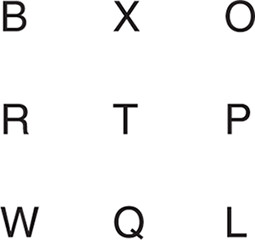
Figure 3.4. A Sample 3-by-3 Array for Studying Sensory Memory
MCAT EXPERTISE
Eidetic memory refers to the ability to recall, with high precision, an image after only a brief exposure. It is hypothesized that eidetic memory represents an extreme example of iconic memory that endures for a few minutes. Although generally not observed in adults, it is reported to occur in a small percentage of children.
Short-Term Memory
Of course, we do pay attention to some of the information that we are exposed to, and that information enters our short-term memory. Similar to sensory memory, short-term memory fades quickly, over the course of approximately 30 seconds without rehearsal. In addition to having a limited duration, the number of items we can hold in our short-term memory at any given time, our memory capacity, is limited to approximately seven items, usually stated as the 7 ± 2 rule. As discussed in the previous section, the capacity of short-term memory can be increased by clustering information, and the duration can be extended using maintenance rehearsal. Short-term memory is housed primarily in the hippocampus, which is also responsible for the consolidation of short-term memory into long-term memory.
Working Memory
Working memory is closely related to short-term memory and is similarly supported by the hippocampus. It enables us to keep a few pieces of information in our consciousness simultaneously and to manipulate that information. To do this, one must integrate short-term memory, attention, and executive function; accordingly, the frontal and parietal lobes are also involved. This is the form of memory that allows us to do simple math in our heads.
REAL WORLD
Have you ever looked at a picture of a simple unfinished puzzle, and been able to fit the pieces together mentally? This skill is explained by one of the major theories that underlies working memory, which includes the concept of a visuospatial sketchpad. The visuospatial sketchpad was proposed by Baddeley and Hitch as part of their three-part working memory model along with the other two components they proposed: the central executive and the phonological loop. The visuospatial sketchpad explains our ability to not only store visual and spatial information, but to manipulate it as well.
BEHAVIORAL SCIENCES GUIDED EXAMPLE WITH EXPERT THINKING
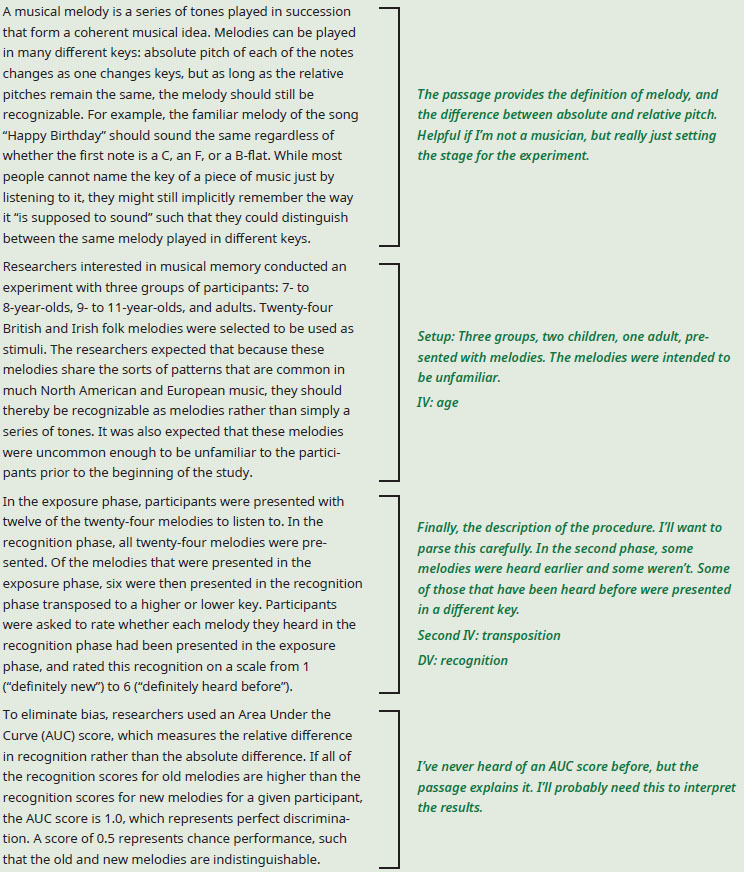
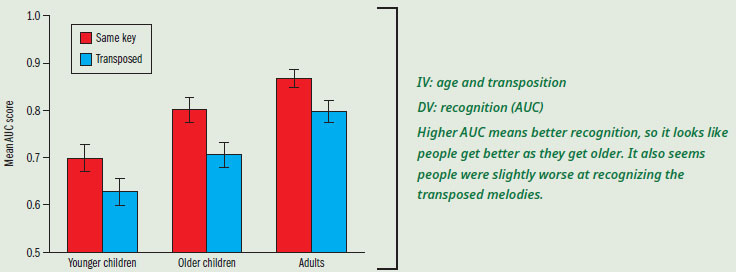
Figure 1 Mean AUC score for each group Adapted from: Schellenberg EG, Poon J, Weiss MW (2017) Memory for melody and key in childhood. PLoS ONE 12(10): e0187115. https://doi.org/10.1371/journal.pone.0187115
What do these results suggest about between-group and within-group trends with respect to explicit and implicit memory for music?
To answer this question, we’re going to have to make use of the results of this study, but we’ll also have to recall and apply content knowledge from outside this passage. The prompt asks about differences in explicit and implicit memory, so we’ll want to start by figuring out how these terms apply in this general context, then apply these ideas specifically to the experiment. For the MCAT, we should know that explicit and implicit memory are both subdivisions of long-term memory. Explicit memory is the encoding of facts, and particularly relevant to the present study is episodic memory, the kind of explicit memory that involves experiences. The question “have I heard this melody before?” is answered by accessing an explicit memory. The relevance of implicit memory is more difficult here, since we typically think of implicit memories as procedural, involving skills and conditioned responses. Whenever we’re not sure of how a concept in a question is related to the passage, we should go back to the passage and search for clues. The passage does provide a clue: in the first paragraph, the author describes the memory of the key of a melody as implicit rather than explicit. Now that we know what we’re looking for, we can examine the results of the study with these concepts, and the way in which they relate to the passage, already in mind.
The AUC score system used by the researchers might be unfamiliar, but the concept isn’t that much different from what we might normally see in a study like this one. A score of 0.5 represents random chance, and a score higher than that means that the participants were able to distinguish the melodies they’d heard from the ones they hadn’t. The higher the score, the better the recognition. From the figure, we can see two trends: as participants get older, recognition gets better, but when the melody is transposed, recognition gets worse for all participants by approximately the same amount.
We must apply the memory vocabulary words to these trends. We can conclude from these results that explicit memory for music improved by age across groups. Further, within each group, implicit memory did play a significant role in recognition, because melodies that matched those heard earlier explicitly but not implicitly (i.e., they were the same melody but transposed to a different key) were less readily recognized. The role of implicit memory on recognition seems to be consistent between groups.
Long-Term Memory
With enough rehearsal, information moves from short-term to long-term memory, an essentially limitless warehouse for knowledge that we are then able to recall on demand, sometimes for the rest of our lives. One of the ways that information is consolidated into long-term memory is elaborative rehearsal. Unlike maintenance rehearsal, which is simply a way of keeping the information at the forefront of consciousness, elaborative rehearsal is the association of the information to knowledge already stored in long-term memory. Elaborative rehearsal is closely tied to the self-reference effect noted earlier; those ideas that we are able to relate to our own lives are more likely to find their way into our long-term memory. While long-term memory is primarily controlled by the hippocampus, it should be noted that memories are moved, over time, back to the cerebral cortex. Thus, very long-term memories—our names and birthdates, the faces of our parents—are generally not affected by damage to the hippocampus.
There are two types of long-term memory. Implicit memory (also called nondeclarative memory) consists of our skills, habits, and conditioned responses, none of which need to be consciously recalled. Implicit memory includes procedural memory, which relates to our unconscious memory of the skills required to complete procedural tasks, and priming, which involves the presentation of one stimulus affecting perception of a second. Positive priming occurs when exposure to the first stimulus improves processing of the second stimulus, as demonstrated by measures such as decreased response time or decreased error rate. Conversely, in negative priming the first stimulus interferes with the processing of the second stimulus, resulting in slower response times and more errors.
Explicit memory (also called declarative memory) consists of memories that can be consciously recalled, whether voluntarily or involuntarily. Explicit memory can be further divided into episodic memory and semantic memory. Episodic memory refers to our recollection of life experiences. By contrast, semantic memory refers to ideas, concepts, or facts that we know, but are not tied to specific life experiences. Autobiographical memory is the name given to our explicit memories about our lives and ourselves, and includes all of our episodic memories of our own life experiences, but also includes semantic memories that relate to our personal traits and characteristics. Interestingly, memory disorders can affect one type of memory but leave others alone. For example, a patient who has amnesia might not remember learning to ride a bicycle (episodic memory) or the names of the parts of a bicycle (semantic memory), but may, surprisingly, retain the skill of riding a bicycle when given one (procedural memory). The various major categories of memory are summarized in Figure 3.5.
MCAT EXPERTISE
Although semantic and episodic memory are differentiated and can be separate, they can also co-occur. One type of explicit memory with components of both episodic and semantic memory is flashbulb memory, which is the detailed recollection of stimuli immediately surrounding an important (or emotionally arousing) event. Flashbulb memory helps you answer the question "Do you remember where you were when…?"
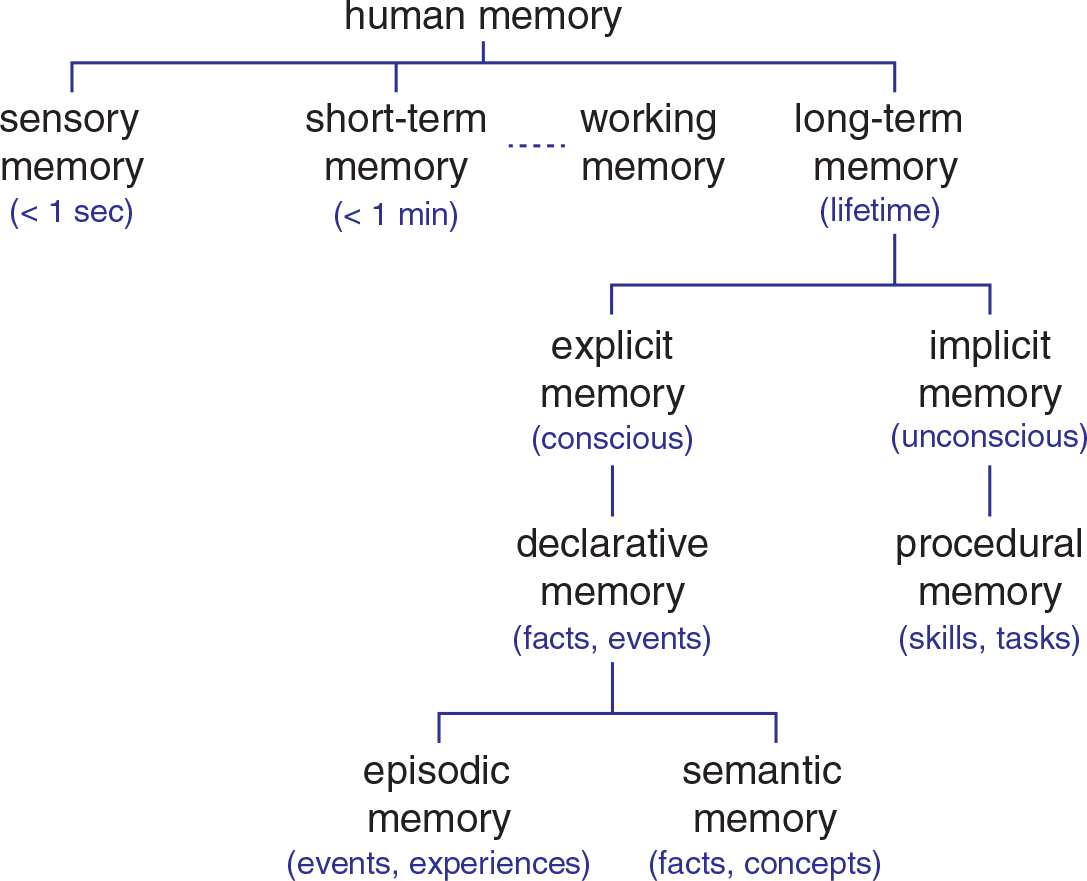
Figure 3.5. Types of Memory
Retrieval
Of course, memories that are stored are of no use unless we can pull them back out to use them. Retrieval is the name given to the process of demonstrating that something that has been learned has been retained. Most people think about retrieval in terms of recall, or the retrieval and statement of previously learned information, but learning can be additionally demonstrated by recognizing or quickly relearning information.
Recognition, the process of merely identifying a piece of information that was previously learned, is far easier than recall. This difference is something you can take advantage of because the MCAT, as a multiple-choice test, is largely based on recognizing information. If the MCAT were a fill-in-the-blank style exam, your approach to studying would have to be vastly different and far more in-depth.
REAL WORLD
Think back to elementary school. How many of your classmates do you think you could list? Chances are, not many. On the other hand, glancing through your class photo, you would probably recognize the vast majority of your former classmates. This gap is the difference between recall and recognition.
Relearning is another way of demonstrating that information has been stored in long-term memory. In studying the memorization of lists, Hermann Ebbinghaus found that his recall of a list of short words he had learned the previous day was often quite poor. However, he was able to rememorize the list much more quickly the second time through. Ebbinghaus interpreted this to mean that the information had been stored, even though it wasn’t readily available for recall. Through additional research, he discovered that the longer the amount of time between sessions of relearning, the greater the retention of the information later on. Ebbinghaus dubbed this phenomenon the spacing effect, and it helps to explain why cramming is not nearly as effective as spacing out studying over an extended period of time.
Recalling a fact at a moment’s notice can be difficult. Fortunately, the brain has ways of organizing information so that it can take advantage of environmental cues to tell it where to find a given memory. Psychologists think of memory not as simply a stockpile of unrelated facts, but rather as a network of interconnected ideas. The brain organizes ideas into a semantic network, as shown in Figure 3.6, in which concepts are linked together based on similar meaning, not unlike an Internet encyclopedia wherein each page includes links for similar topics. For example, the concept of red might be closely linked to other colors, like orange and green, as well as objects, like fire engine and roses. When one node of our semantic network is activated, such as seeing the word red on a sign, the other linked concepts around it are also unconsciously activated, a process known as spreading activation. Spreading activation is at the heart of the previously mentioned positive priming, as recall is aided by first being presented with a word or phrase, a recall cue, that is close to the desired semantic memory.
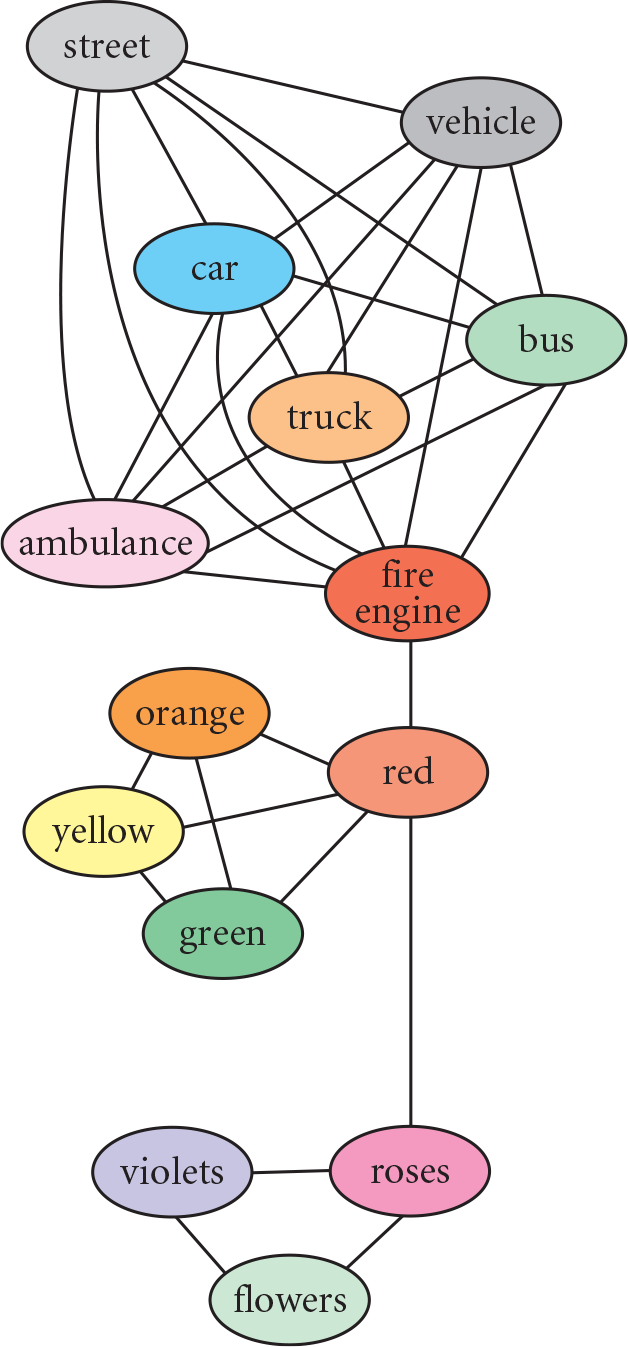
Figure 3.6. An Example Semantic Network In spreading activation, the concept ofredwill also unconsciously activate other linked concepts.
Another common retrieval cue is context effect, where memory is aided by being in the physical location where encoding took place. Psychologists have shown a person will score better when they take an exam in the same room in which they learned the information. Context effects can go even further than this; facts learned underwater are better recalled when underwater than when on land. Similarly, source monitoring is a part of the retrieval process that involves determining the origin of memories, and whether they are factual (real and accurate) or fictional (from a dream, novel, or movie).
A person’s mental state can also affect their ability to recall. State-dependent memory, alternately referred to as a state-dependent effect, is a retrieval cue based on performing better when in the same mental state as when the information was learned. People who learn facts or skills while intoxicated, for example, will show better recall or proficiency when performing those same tasks while intoxicated as compared to performing them while sober. Emotions work in a similar way: being in a foul mood primes negative memories, which in turn work to sustain the foul mood. So not only will memory be better for information learned when in a similar mood, but recall of negative or positive memories will lead to the persistence of the mood.
Finally, studies on list memorization have indicated that an item’s position in the list affects participants’ ability to recall, which Ebbinghaus termed the serial-position effect. When researchers give participants a list of items to memorize, the participants have much higher recall for both the first few and last few items on the list. The tendency to remember early and late items in the list is known as the primacy and recency effect, respectively. However, when asked to remember the list later, people show strong recall for the first few items while recall of the last few items fades. Psychologists interpret this to mean that the recency effect is a result of the last items still being in short-term memory on initial recall.
Forgetting
Unfortunately, even long-term memory is not always permanent. Several phenomena can result in amnesia, a significant loss of memorized information. The inability to remember where, when, or how one has obtained knowledge is called source amnesia.
Brain Disorders
There are several disorders that can lead to decline in memory. The most common is Alzheimer’s disease, which is a degenerative brain disorder thought to be linked to a loss of acetylcholine in neurons that link to the hippocampus, although its exact causes are not well understood. Alzheimer’s is marked by progressive dementia (a loss of cognitive function) and memory loss, with atrophy of the brain, as shown in Figure 3.7. While not perfectly linear, memory loss in Alzheimer’s disease tends to proceed in a retrograde fashion, with loss of recent memories before distant memories. Microscopic findings of Alzheimer’s include neurofibrillary tangles and ***β*-amyloid plaques. One common phenomenon that occurs in individuals with middle- to late-stage Alzheimer’s issundowning**, an increase in dysfunction in the late afternoon and evening.

Figure 3.7. Findings of Alzheimer’s Disease
BRIDGE
The β-amyloid plaques of Alzheimer’s disease are incorrectly folded copies of the amyloid precursor protein, in which insoluble β-pleated sheets form and then deposit in the brain. Protein folding is discussed in detail in Chapter 1 of MCAT Biochemistry Review.
Korsakoff’s syndrome is another form of memory loss caused by thiamine deficiency in the brain. The disorder is marked by both retrograde amnesia (the loss of previously formed memories) and anterograde amnesia (the inability to form new memories). Another common symptom is confabulation, or the process of creating vivid but fabricated memories, typically thought to be an attempt made by the brain to fill in the gaps of missing memories.
Agnosia is the loss of the ability to recognize objects, people, or sounds, though usually only one of the three. Agnosia is usually caused by physical damage to the brain, such as that caused by a stroke or a neurological disorder such as multiple sclerosis.
Decay
Of course, not all memory loss is due to a disorder. Through a process known as decay, memories are simply lost naturally over time as the neurochemical trace of a short-term memory fades. In his word memorization experiment, Ebbinghaus noted what he called a “curve of forgetting," formally called the retention function, as shown in Figure 3.8. For a day or two after learning the list, recall fell sharply but then leveled off.
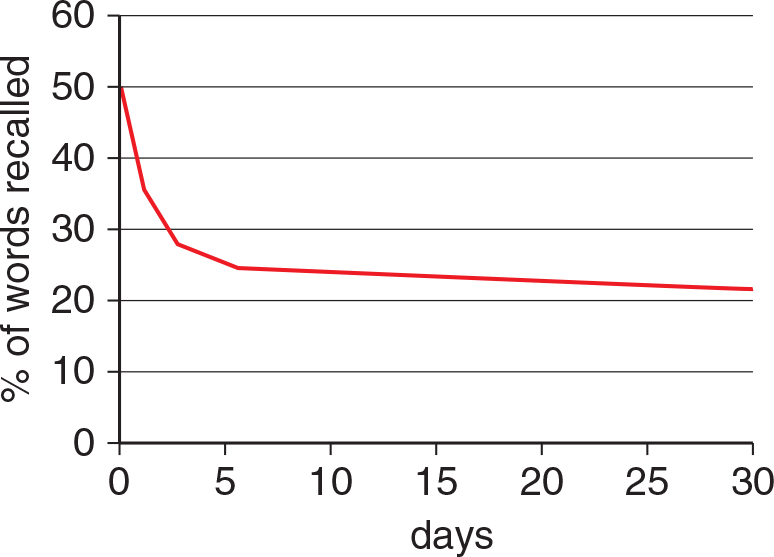
Figure 3.8. Ebbinghaus’s Curve of Forgetting
Interference
Another common reason for memory loss is interference (also referred to as an interference effect), a retrieval error caused by the existence of other, usually similar, information. Interference can be classified by its direction. When we experience proactive interference, old information is interfering with new learning. For example, think back to a time when you moved to a new address. For a short time, you may have had trouble recalling individual pieces of the new address because you were so used to the old one. Similarly, Ebbinghaus found that with each successive list he learned, his recall for new lists decreased over time, an effect he attributed to interference caused by older lists.
Retroactive interference is when new information causes forgetting of old information. For example, at the beginning of a school year, teachers learning a new set of students’ names often find that they can no longer remember the names of the previous year’s students. One way of preventing retroactive interference is to reduce the number of interfering events, which is why it is often best to study in the evening about an hour before falling asleep (although this also depends on your personal style!).
Aging and Memory
Contrary to popular belief, aging does not necessarily lead to significant memory loss; while there are many individuals whose memory fades in old age, this is not always the case. In fact, studies show that there is a larger range of memory ability for 70-year-olds than there is for 20-year-olds. There are, however, some trends that can be demonstrated when evaluating the memories of older individuals. When asked about the most pivotal events in their lives, people in their 70s and 80s tend to say that their most vivid memories are of events that occurred in their teens and 20s, a fact that psychologists interpret to mean that this time is a peak period for encoding in a person’s life.
Even for older adults, certain types of memory remain quite strong. People tend not to demonstrate much degeneration in recognition or skill-based memory as they age. Even certain types of recall will remain strong for most people; semantically meaningful material can be easily learned and recalled, most likely due to older individuals having a larger semantic network than their younger counterparts. Prospective memory (remembering to perform a task at some point in the future) remains mostly intact when it is event-based—that is, primed by a trigger event, such as remembering to buy milk when walking past the grocery store. On the other hand, time-based prospective memory, such as remembering to take a medication every day at 7:00 a.m., does tend to decline with age.
Memory Reconstruction
We often think of memory as a record of our experiences or a kind of video recording that is stored to be accessed later; this accurate recall of past events is defined as reproductive memory. Nothing could be further from the truth. Reconstructive memory is a theory of memory recall in which cognitive processes such as imagination, semantic memory, and perception affect the act of remembering. This theory explains how two people can recall the same event as occurring in completely different ways. A memory that incorrectly recalls actual events or recalls events that never occurred is known as a false memory. Despite their unsettling nature, false memories are common and are to be expected when we consider the many factors that can affect memory. Most memories are encoded with little detail, only focusing on the details deemed important in the moment. Also, as previously discussed, if a person repeatedly rehearses the memory in their mind, then that person may fill in missing details with unreliable information. Repressed memories, memories stored in the unconscious mind and blocked from recall, have also been a topic of controversy. Some psychologists believe repressed memories can be brought back into our conscious mind either spontaneously or through psychotherapy. Such memories are called recovered memories. However, it is not possible to distinguish between false memories and recovered memories without evidence and some research psychologists believe psychotherapy is more likely to lead to the creation of false memories. So, the act of recalling a memory can result in the production of a false memory.
False memory production is not only limited to internal factors. Memories can also be affected by outside sources as well. In a famous experiment, participants were shown several pictures including one picture of a car stopped at a yield sign. Later, these participants were presented with written descriptions of the pictures, and some of these descriptions contained misinformation, such as a description of a car stopped at a stop sign. When asked to recall the details of the pictures, many participants insisted they had seen a stop sign in the picture. This example illustrates the misinformation effect, where a person’s recall of an event becomes less accurate due to the injection of outside information into the memory.
The misinformation effect can also be seen at the point of recall. In another experiment, participants were shown a video of an automobile accident. Some participants were then asked, How fast were the cars moving when they collided?, while others were asked about the accident using more descriptive language such as How fast were the cars moving when they crashed? Those participants who were asked the question with leading language were much more likely to overstate the severity of the accident than those who had been asked the question with less descriptive language.
Intrusion errors refers to false memories that have included a false detail into a particular memory. This is similar to the misinformation effect but distinct in that the intrusion error is not from an outside source. Instead, the intruding memory is injected into original memory due to both memories being related or sharing a theme. Upon memory recall, the brain incorrectly associates the intruding memory with the source memory, leading to a false memory. For example, if over the years you’ve attended multiple New Year’s Eve celebrations in two different cities, then your memories of the two cities are linked. A possible intrusion error could be recalling that a particular restaurant is located in Vancouver, because you recall eating at the restaurant on New Year’s Eve and celebrating New Year’s Eve in Vancouver. However, the restaurant is really in Toronto, where you have also celebrated on New Year’s.
Source-monitoring error involves confusion between semantic and episodic memory: a person remembers the details of an event, but confuses the context under which those details were gained. Source-monitoring error often manifests when a person hears a story of something that happened to someone else, and later recalls the story as a personal memory.
REAL WORLD
During a Congressional Medal of Honor ceremony in 1983, Ronald Reagan relayed a vivid story about a heroic World War II pilot who received a posthumous medal. Skeptical reporters, unaware of any incident matching the details of Reagan’s story, checked into the story and found that the pilot had existed—in the 1944 movie A Wing and a Prayer. Reagan had remembered the details of the pilot’s heroic actions but had forgotten their source.
MCAT CONCEPT CHECK 3.2
Before you move on, assess your understanding of the material with these questions.
- List the three modes in which information can be encoded, from strongest to weakest.
- _________________________
- _________________________
- _________________________
- In what ways is maintenance rehearsal different from elaborative rehearsal? ____________________________
____________________________
- In terms of recall, why might it be a bad idea to study for the MCAT while listening to music?
_______________________
- What are some factors that might cause eyewitness courtroom testimony to be unreliable?
3.3 Neurobiology of Learning and Memory
LEARNING OBJECTIVES
After Chapter 3.3, you will be able to:
- Describe neuroplasticity and changes that occur throughout the human life span
- Recall the terms involved with removing and strengthening memory connections
Even as you read this text, your brain is changing. Memory, and therefore learning, involves changes in brain physiology, such that with each new concept you learn your brain is altering its synaptic connections in response. You may have heard that it is far easier for children to learn a new language than it is for adults. Indeed, the saying you can’t teach an old dog new tricks, while not strictly true, does have its roots in neurobiology.
As infants, we are born with many more neurons than we actually need. As our brains develop, neural connections form rapidly in response to stimuli via a phenomenon called neuroplasticity (also known as neural plasticity). In fact, the brains of young children are so plastic that they can reorganize drastically in response to injury, as evidenced by studies of children who have had entire hemispheres of their brains removed to prevent severe seizures. The remaining hemisphere will change to take over functions of the missing parts of the brain, allowing these children to grow up to lead unimpaired lives. While our brains do maintain a degree of plasticity throughout our lives, adult brains display nowhere near the degree of plasticity as those of a child. Another way our brains change is through a process called synaptic pruning. As we grow older, weak neural connections are broken while strong ones are bolstered, increasing the efficiency of our brains’ ability to process information.
This concept of plasticity is important because it is closely linked to learning and memory. As you learned in Chapter 4 of MCAT Biology Review, stimuli cause activation of neurons, which release their neurotransmitters into the synaptic cleft, the gap between a neuron and a target cell. These neurotransmitters continue to stimulate activity until degradation, reuptake, or diffusion out of the synaptic cleft. In the interim, this neural activity forms a memory trace that is thought to be the cause of short-term memory. As discussed earlier, if the stimulus isn’t repeated or rehearsed, the memory trace disappears, and the consequence is the loss of the short-term memory. However, as the stimulus is repeated, the stimulated neurons become more efficient at releasing their neurotransmitters and at the same time receptor sites on the other side of the synapse increase, increasing receptor density. The strengthening of neural connections through repeated use is known as long-term potentiation, and is believed to be the neurophysiological basis of long-term memory.
MCAT EXPERTISE
Recent research has begun to elucidate the mechanism of long-term potentiation. It has been observed that a specific type of glutamate receptor, the NMDA receptor, is required for the strengthening of synaptic connections.
MNEMONIC
The word potentiate means to increase the potency or strength of something. Long-term potentiation can be thought of as the strengthening of a "long-term" synaptic connection.
As described in the previous section, a memory begins its life as a sensory memory in the projection area of a given sensory modality. This sensory memory is brief, unless maintained in consciousness and moved, as a short-term memory, into the hippocampus in the temporal lobe. The memory can then be manipulated through working memory while in the hippocampus (in tandem with the frontal and parietal lobes), and even stored for later recall. Over very long periods of time, memories are gradually moved from the hippocampus back to the cerebral cortex. Note that this general pathway is a drastic oversimplification of the complex interplay of brain regions involved in memory, but is a useful paradigm for Test Day.
MCAT CONCEPT CHECK 3.3
Before you move on, assess your understanding of the material with these questions.
- What is neuroplasticity? How does neuroplasticity change during life? _________________________
- What is the term for removing weak neural connections? What is the term for strengthening memory connections through increased neurotransmitter release and receptor density?
_________________________
- Removing weak connections:
_________________________
- Strengthening connections:
Conclusion
In this chapter, we discussed two very important ways that we react to our environments. We are constantly receiving input from the world around us, and the way we memorize that information depends greatly on both the nature of the information and its importance to us individually. That information can also have a profound effect on us, causing us to increase or decrease the frequency of certain behaviors, sometimes without our conscious knowledge. Because the concepts of learning and memory are both used heavily in research, we can expect the MCAT to place many of its passages testing these topics within an experimental context.
GO ONLINE!
You’ve reviewed the content, now test your knowledge and critical thinking skills by completing a test-like passage set in your online resources!
CONCEPT SUMMARY
Learning
- Habituation is the process of becoming used to a stimulus. Dishabituation can occur when a second stimulus intervenes, causing a resensitization to the original stimulus.
- Associative learning is a way of pairing together stimuli and responses, or behaviors and consequences.
- In classical conditioning, an unconditioned stimulus that produces an instinctive, unconditioned response is paired with a neutral stimulus. With repetition, the neutral stimulus becomes a conditioned stimulus that produces a conditioned response.
- In operant conditioning, behavior is changed through the use of consequences.
- Reinforcement increases the likelihood of a behavior.
- Punishment decreases the likelihood of a behavior.
- The schedule of reinforcement affects the rate at which the behavior is performed. Schedules can be based either on a ratio of behavior to reward or on an amount of time, and can be either fixed or variable. Behaviors learned through variable-ratio schedules are the hardest to extinguish.
- Observational learning, or modeling, is the acquisition of behavior by watching others.
Memory
- Encoding is the process of putting new information into memory. It can be automatic or effortful. Semantic encoding is stronger than both acoustic and visual encoding.
- Sensory and short-term memory are transient and are based on neurotransmitter activity. Working memory requires short-term memory, attention, and executive function to manipulate information.
- Long-term memory requires elaborative rehearsal and is the result of increased neuronal connectivity.
- Explicit (declarative) memory stores facts and stories.
- Implicit (nondeclarative) memory stores skills and conditioning effects.
- Facts are stored via semantic networks.
- Recognition of information is stronger than recall.
- Retrieval of information is often based on priming interconnected nodes of the semantic network.
- Memories can be lost through disorders such as Alzheimer’s disease, Korsakoff’s syndrome, or agnosia; decay; or interference.
- Memories are highly subject to influence by outside information and mood both at the time of encoding and at recall.
Neurobiology of Learning and Memory
- Both learning and memory rely on changes in brain chemistry and physiology, the extent of which depends on neuroplasticity, which decreases as we age.
- Long-term potentiation, responsible for the conversion of short-term to long-term memory, is the strengthening of neuronal connections resulting from increased neurotransmitter release and adding of receptor sites.
ANSWERS TO CONCEPT CHECKS
**3.1**
- Eating each course of a meal before moving on to the next causes habituation; each bite causes less pleasurable stimulation, so people feel less desire to keep eating. On the other hand, mixing up the courses of a meal causes dishabituation for taste, which would cause people to eat more overall.
- The conditioned stimulus is the smell of popcorn. The unconditioned stimulus is the popping of the balloon. The conditioned response is nervousness (fear) in response to the presence of popcorn. The unconditioned response is fear in response to the popping of the balloon.
- Negative reinforcement causes an increase of a given behavior by removing something unpleasant, while positive punishment reduces behavior by adding something unpleasant. Examples will vary, but common negative reinforcers include medicines that reduce pain or avoiding uncomfortable situations to reduce anxiety. Common examples of positive punishments include having to pay a fine for speeding while driving or getting detention in school for bad behavior.
**3.2**
- Of the three modes in which information can be encoded, semantic is the strongest, followed by acoustic. Visual is the weakest.
- Maintenance rehearsal is the repetition of information to keep it within short-term memory for near-immediate use. Elaborative rehearsal is the association of information to other stored knowledge and is a more effective way to move information from short-term to long-term memory.
- Because you will be taking the MCAT in a quiet room, studying under similar circumstances will aid recall due to context effects. Music may also compete for attention, reducing your ability to focus on the relevant study material.
- Several factors can affect the accuracy of eyewitness testimony, including the manner in which questions are asked; the nature of information shared with the witness by police, lawyers, and other witnesses following the event; the misinformation effect; source-monitoring error; and the amount of time elapsed between the event and the trial. Even watching crime dramas, watching the news, or witnessing similar events can cause source-monitoring error.
**3.3**
- Neuroplasticity is the ability of the brain to form new connections rapidly. The brain is most plastic in young children, and plasticity quickly drops off after childhood.
- Pruning is the term for removing weak neural connections. Long-term potentiation is the strengthening of memory connections through increased neurotransmitter release and receptor density.
SCIENCE MASTERY ASSESSMENT EXPLANATIONS
1. A
After a while, the participant became habituated to the sound of the buzzer. Introducing a new stimulus, such as the banging pans, should dishabituate (resensitize) the original stimulus, causing a temporary increase in response to the sound of the buzzer.
2. C
The sound of a can opener would not normally produce a response on its own, making it a stimulus that must have been conditioned by association with food.
3. B
Generalization is the process by which similar stimuli can produce the same conditioned response. Here, the response to the taste and smell of oranges has generalized to that of all citrus.
4. D
Avoidance learning is a type of negative reinforcement in which a behavior is increased to prevent an unpleasant future consequence. Extinction, (A), is a decreased response to a conditioned stimulus when it is no longer paired with an unconditioned stimulus. Punishment, (B) and (C), leads to decreased behaviors in operant conditioning.
5. A
Long term potentiation is believed to be the neurophysiological basis of long-term memory, making (A) the correct answer. As synapses are reinforced, the neuroplasticity of the brain decreases, eliminating (C). Also, synaptic pruning, (B), refers to the removal of infrequently used synapses, which is not consistent with the description in the question stem.
6. C
In a fixed-interval schedule, the desired behavior is rewarded the first time it is exhibited after the fixed interval has elapsed. Both fixed-interval and fixed-ratio schedules tend to show this phenomenon: almost no response immediately after the reward is given, but the behavior increases as the rat gets close to receiving the reward.
7. A
Complicated, multistage behaviors are typically taught through shaping, so statement III must not be part of the correct answer. Reinforcers do not necessarily need to be food-based, and instinctive drift can interfere with learning of complicated behaviors; therefore, only statement I is accurate.
8. C
This is the definition of controlled processing and is the only answer choice that is necessarily true of controlled processing. Effortful processing is used to create long-term memories, and—with practice—can become automatic, invalidating (A) and (B). Most of our day-to-day activities are processed automatically, making (D) incorrect.
9. A
Semantic encoding, or encoding based on the meaning of the information, is the strongest of the methods of encoding. Visual encoding, (B), is the weakest, and acoustic encoding, (D), is intermediate between the two. Iconic memory, (C), is a type of sensory memory.
10. C
We are born with an overabundance of neurons and quickly form many new synapses in the first few years of life. As we age, the plasticity of our brains decreases, although we do retain some plasticity throughout adulthood. Thus, the brain of a two year old, due to its higher neuroplasticity, would better adapt, supporting (C) as the correct answer.
11. D
The association of words on a list to a preconstructed set of ideas is common to both the method-of-loci and peg-word mnemonics. Method-of-loci systems, (B), associate items with locations, while peg-word systems use images associated with numbers.
12. A
Partial-report procedures, in which the individual is asked to recall a specific portion of the stimulus, are incredibly accurate, but only for a very brief time. This is a method of studying sensory (specifically, iconic) memory. Both the serial position effect, (B), and the 7 ± 2 rule, (C), are characteristics of short-term memory.
13. B
Semantic memory is the category of long-term memory that refers to recall of facts, rather than experiences or skills. Be careful not to confuse semantic memory with semantic networks, (D), which are the associations of similar concepts in the mind to aid in their retrieval.
14. C
State-dependent recall is concerned with the internal rather than external states of the individual. As such, both statements II and III are examples of state-dependent circumstances, while statement I might cause a context effect instead.
15. B
Older adults may have trouble with time-based prospective memory, which is remembering to do an activity at a particular time. Other forms of memory are generally preserved, or may decline slightly but less significantly than time-based prospective memory.
GO ONLINE
Consult your online resources for additional practice.
SHARED CONCEPTS
Behavioral Sciences Chapter 1
Biology and Behavior
Behavioral Sciences Chapter 2
Sensation and Perception
Behavioral Sciences Chapter 4
Cognition, Consciousness, and Language
Behavioral Sciences Chapter 5
Motivation, Emotion, and Stress
Behavioral Sciences Chapter 7
Psychological Disorders
Biology Chapter 4
The Nervous System