Chapter 5: Motivation, Emotion, and Stress
Chapter 5: Motivation, Emotion, and Stress
SCIENCE MASTERY ASSESSMENT
Every pre-med knows this feeling: there is so much content I have to know for the MCAT! How do I know what to do first or what’s important?
While the high-yield badges throughout this book will help you identify the most important topics, this Science Mastery Assessment is another tool in your MCAT prep arsenal. This quiz (which can also be taken in your online resources) and the guidance below will help ensure that you are spending the appropriate amount of time on this chapter based on your personal strengths and weaknesses. Don’t worry though—skipping something now does not mean you’ll never study it. Later on in your prep, as you complete full-length tests, you’ll uncover specific pieces of content that you need to review and can come back to these chapters as appropriate.
How to Use This Assessment
If you answer 0–7 questions correctly:
Spend about 1 hour to read this chapter in full and take limited notes throughout. Follow up by reviewing all quiz questions to ensure that you now understand how to solve each one.
If you answer 8–11 questions correctly:
Spend 20–40 minutes reviewing the quiz questions. Beginning with the questions you missed, read and take notes on the corresponding subchapters. For questions you answered correctly, ensure your thinking matches that of the explanation and you understand why each choice was correct or incorrect.
If you answer 12–15 questions correctly:
Spend less than 20 minutes reviewing all questions from the quiz. If you missed any, then include a quick read-through of the corresponding subchapters, or even just the relevant content within a subchapter, as part of your question review. For questions you answered correctly, ensure your thinking matches that of the explanation and review the Concept Summary at the end of the chapter.
- A college student strives for excellent grades and hopes to graduate with a better GPA than an older sibling. This type of motivation is considered:
- extrinsic motivation.
- intrinsic motivation.
- a primary drive.
- a secondary drive.
- When practicing a recital song at home, a student sounds perfectly in pitch to family and friends. However, when performing at the recital in front of a large audience of peers, strangers, and coaches, the student’s pitch and tone are off, resulting in a poor performance. This second performance is best explained by:
- drive reduction theory.
- instinct approach theory.
- Maslow’s hierarchy of needs.
- the Yerkes–Dodson law.
- Seeking homeostasis to reduce an uncomfortable internal state is associated with which motivational theory?
- Drive reduction theory
- Instinct theory
- Arousal theory
- Incentive theory
- People from cultures around the world can identify which of the following emotions?
- Happiness, sadness, and surprise
- Happiness, anger, and apathy
- Sadness, anticipation, and happiness
- Excitement, anger, and disgust
- Experiencing emotion involves three components, which are:
- behavioral, reactionary, and cognitive.
- emotional, physical, and mental.
- physiological, cognitive, and behavioral.
- emotional, cognitive, and behavioral.
- The statement “I noticed my heart racing and breathing rate increasing when I saw a bear, so I am afraid” corresponds most closely with which theory of emotion?
- Schachter–Singer theory
- Yerkes–Dodson theory
- Cannon–Bard theory
- James–Lange theory
- Which theory of motivation is most significantly informed by Darwin’s theory of evolution?
- Arousal theory
- Drive reduction theory
- Instinct theory
- Incentive theory
- Simultaneous processing of conscious emotions and physiological activation is the defining feature of which theory of emotion?
- Schachter–Singer theory
- James–Lange theory
- Incentive theory
- Cannon–Bard theory
- All of the following brain regions are primarily responsible for the experience of emotions EXCEPT the:
- amygdala.
- prefrontal cortex.
- basal ganglia.
- thalamus.
- A person with high left frontal lobe activity is most likely experiencing which emotion?
- Happiness
- Sadness
- Surprise
- Disgust
- Determination of the intensity and risk of a stressor occurs during which stage(s) of stress appraisal?
- Primary appraisal only
- Secondary appraisal only
- Both primary and secondary appraisal
- Neither primary nor secondary appraisal
- A medical student is feeling a high level of stress due to upcoming exams and pressure from family to engage in activities at home. The student chooses to go to the gym for a workout to help relax. This workout is which type of stress?
- Hassle
- Frustration
- Distress
- Eustress
- Which type of conflict is associated with the LEAST amount of stress?
- Approach–approach conflict
- Avoidance–avoidance conflict
- Approach–avoidance conflict
- Avoidance–escape conflict
- While cleaning your house, you notice a large spider on the wall by your head and feel your heart rate jump up and your skin temperature grow warm. Which stage of stress response are you experiencing?
- Alarm
- Resistance
- Exhaustion
- Homeostasis
- Each of the following responses to stress is considered maladaptive EXCEPT:
- drug use.
- social withdrawal.
- progressive muscle relaxation.
- avoiding the stressor.
Answer Key
- A
- D
- A
- A
- C
- D
- C
- D
- C
- A
- B
- D
- A
- A
- C
Chapter 5: Motivation, Emotion, and Stress
CHAPTER 5
MOTIVATION, EMOTION, AND STRESS
In This Chapter
5.1 Motivation
Instinct Theory
Arousal Theory
Drive Reduction Theory
Need-Based Theories
Additional Theories and Applications
5.2 Emotion
Three Elements of Emotion
Universal Emotions
Adaptive Role of Emotion
Theories of Emotion
The Limbic System
5.3 Stress
Cognitive Appraisal of Stress
Types of Stressors
Physiological Response to Stressors
Emotional and Behavioral Responses to Stress
Coping and Stress Management
Concept Summary
CHAPTER PROFILE
The content in this chapter should be relevant to about 6% of all questions about the behavioral sciences on the MCAT.
This chapter covers material from the following AAMC content categories:
6C: Responding to the world
7A: Individual influences on behavior
Introduction
A heart condition, substantial bone density decreases, esophageal and stomach ulcers, a loss of 25 percent of body mass—these are some of the possible consequences of anorexia nervosa. Sometimes those who develop this condition have been put under extreme pressure in their work or personal lives to look a certain way. Over time, this pressure can motivate weight loss in an unhealthy manner. Patients are sometimes motivated by feelings of disgust and guilt that go directly against the body’s basic needs. A combination of stress from job and peers, intrinsic and extrinsic motivation, and negative emotions can result in what could be a life-threatening condition.
In this chapter, we’ll discuss motivation, emotion, and stress. We will look at factors that influence motivation, the components of emotion, and the stressors that lead to the stress response. We will also look at theories used to explain these processes and associated behaviors. The physiological, cognitive, and behavioral elements will be examined in order to understand the role that these topics play in everyday life. Exploring these ideas will enable us to tackle any question related to these concepts on Test Day.
5.1 Motivation
LEARNING OBJECTIVES
After Chapter 5.1, you will be able to:
- Describe the sources of motivation posited by instinct theory, arousal theory, drive reduction theory, and the need-based theories
- Order Maslow’s proposed hierarchy of needs from most to least essential
- Apply opponent-process theory to drug use and withdrawal
Motivation is the purpose, or driving force, behind our actions. The word derives from the Latin movere, meaning “to move.” There are many examples of motivation in our everyday lives. As you sit, studying for the MCAT, you realize you are thirsty, so you reach for your water bottle. When you realize it is empty, the need to quench your thirst drives you to get up, walk to the kitchen, and fill the bottle with water. Thus, the physical state of thirst motivated an action. The desire to go to medical school and become a physician has motivated you to complete required undergraduate coursework, strive for a competitive GPA, participate in extracurricular activities, and dedicate your time to study for a standardized test. The goal of staying fit and healthy motivates many to spend hours in the gym, while the initial discomfort of physical activity might motivate others to stay sedentary. Motivation can be directed toward minimizing pain, maximizing pleasure, or it can be rooted in the desire, or appetite, to fullfil a physical need. Though the term appetite is commonly used to refer to a need for food, this term can more generally be applied to any need such as eating, drinking, sleeping, or social acceptance.
Motivation can manifest from external forces, such as rewards and punishments, or internal forces, where the behavior is personally gratifying. External forces, coming from outside oneself, create extrinsic motivation. Extrinsic motivation can include rewards for showing a desired behavior or avoiding punishment if the desired behavior is not achieved. Examples of such motivation include working hard at your job for praise from your boss, practicing regularly for a sport so that you will perform strongly in an upcoming game, or studying for months on end to achieve a high score on the MCAT. Each of these acts results in external, tangible rewards. Extrinsic motivation can also include doing chores to avoid punishment and working to avoid being fired. Competition is a strong form of external motivation because people are incentivized to beat others and not only to win, perform, or achieve for themselves. Motivation that comes from within oneself is referred to as intrinsic motivation. This can be driven by interest in a task or pure enjoyment. A student who takes interest in the subject matter at hand and has the goal of mastering the content is driven by intrinsic motivation, while the goal of achieving high grades is considered extrinsic.
REAL WORLD
Intrinsic motivation can be reduced by introducing external reward into a scenario. In one study, children were given art supplies and told to draw. Some children were told they would receive a gold ribbon for their drawing, while others were not. Those who knew of the potential reward were driven by extrinsic motivation and spent less time drawing, acting only to receive the reward. Children who did not know about the reward drew for the sake of drawing—by intrinsic motivation—and spent more time drawing.
The primary views of motivation focus on instincts that elicit natural behavior, the desire to maintain optimal levels of arousal, the drive to reduce uncomfortable states, and the goal of satisfying physiological and psychological needs.
Instinct Theory
Early attempts to understand the basis of motivation focused on instincts, which are innate, fixed patterns of behavior. For example, wolves are instinctively pack creatures that naturally follow the alpha male of their group. Additionally, they are highly territorial creatures, protecting areas that are much larger than needed to hunt and dwell. This protection includes scent-marking, howling, and direct aggressive attacks on intruders. Humans also have instinctive behavior; for example, thumb sucking is an instinctual response to stress in babies that is aimed at self-soothing. As discussed in Chapter 1 of MCAT Behavioral Sciences Review, primitive reflexes like the grasp reflex, shown in Figure 5.1, are also instinctual. Note that some instincts last for the entire lifetime, while others may appear or disappear with age.
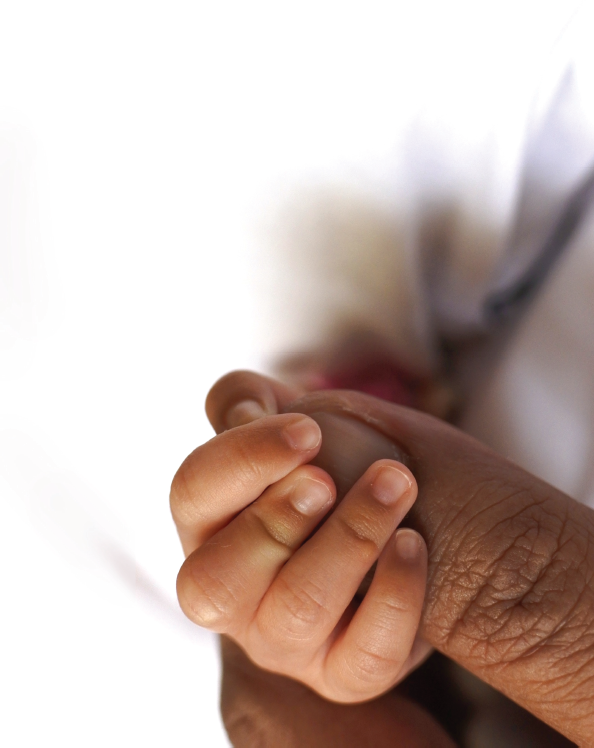
Figure 5.1. The Grasp Reflex Primitive reflexes are examples of instincts seen in infants that extinguish with age.
According to the instinct theory of motivation, certain behaviors are based on evolutionarily programmed instincts. This theory was one of the first to describe motivation and was derived from Darwin’s theory of evolution. William James, the father of modern psychology, was one of the first to write about human instincts in his 1890 publication of Principles of Psychology. He stated that humans were motivated by many instincts, possibly more than any other animal studied. James suggested that human actions are derived from 20 physical instincts, including suckling and locomotion, and 17 mental instincts, including curiosity and fearfulness. However, he said that many of these instincts were in direct conflict with each other and could be overridden by experience. Arguably the greatest proponent of instinct theory was William McDougall, who proposed that humans were led to all thoughts and behaviors by 18 distinctive instincts, including flight and acquisition. James and McDougall postulated that the instincts of suckling and carrying food to the mouth result in naturally motivating one to eat.
KEY CONCEPT
An instinct is an innate, fixed pattern of behavior. It may be consistent throughout life, or it may appear or disappear with time.
Arousal Theory
Another factor that influences motivation is arousal, the psychological and physiological state of being awake and reactive to stimuli. Arousal involves the brainstem, autonomic nervous system, and endocrine system and plays a vital role in behavior and cognition.
Arousal theory states that people perform actions in order to maintain an optimal level of arousal: seeking to increase arousal when it falls below their optimal level, and to decrease arousal when it rises above their optimum level. Additionally, the Yerkes–Dodson law postulates a U-shaped function between the level of arousal and performance. This law states that performance is worst at extremely high and low levels of arousal and optimal at some intermediate level, as depicted in Figure 5.2. The optimal level of arousal varies between different types of tasks: lower levels are optimal for highly cognitive tasks, while higher levels are optimal for activities that require physical endurance and stamina. Further, simple tasks generally require slightly higher arousal than complex tasks.
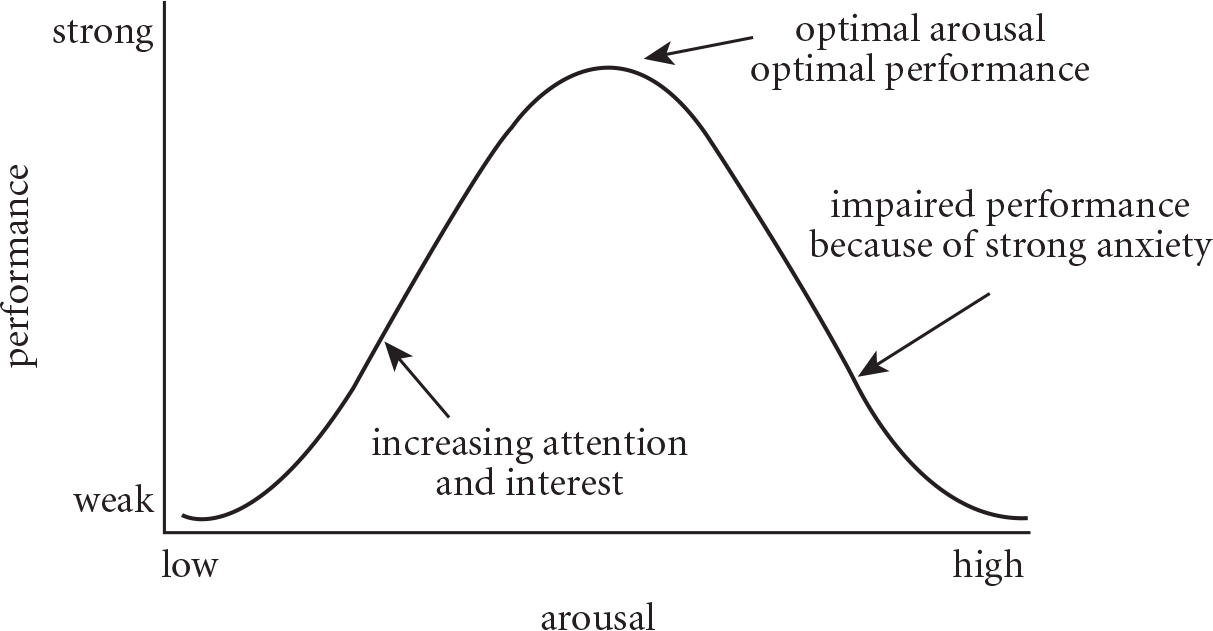
Figure 5.2. Yerkes–Dodson Law
REAL WORLD
While a moderate level of arousal is optimal for performance, certain individuals seek out higher levels of arousal. Such people may seek out dangerous activities, such as skydiving or bungee jumping. These individuals are sometimes found to have lower levels of monoamine oxidase (MAO), which breaks down catecholamines. Low levels of MAO result in higher neurotransmitter levels, which may lead to motivation to experience high levels of arousal.
Drive Reduction Theory
Drives are defined as internal states of tension that activate particular behaviors focused on goals. Drives are thought to originate within an individual without requiring any external factors to motivate behavior. In other words, drives help humans survive by creating an uncomfortable state, ensuring motivation to eliminate this state or to relieve the internal tension created by unmet needs. Primary drives, including the need for food, water, and warmth, motivate us to sustain bodily processes in homeostasis. Homeostasis is the regulation of the internal environment to maintain an optimal, stable set of conditions. In homeostatic regulation, external factors are encountered, and the system will react to push the system back to its optimal state.
REAL WORLD
One well-characterized drive is the hunger (food) drive, which has been studied for more than 60 years. The hunger drive is a primary drive, in that food is necessary for life. Given the necessity of food to life, many species possess multiple processes that drive the individual to consume food. These biological processes include tie-ins to the sense of smell and taste, which were demonstrated by many studies, notably those of Janowitz and Grossman.
Homeostasis is usually controlled by negative feedback loops. A common real-life example of a negative feedback loop is a thermostat. A thermostat is set to a desired temperature, and then sensors monitor the air temperature in relation to this desired temperature. If the air temperature gets too cold, the heater will turn on; if the temperature gets too warm, the heater will turn off. Negative feedback loops in the body operate the same way. Likewise when our bodies are lacking nutrients and energy, feedback systems release hormones like ghrelin that create hunger and motivate eating. After we consume food, feedback is sent to the brain to turn off the hunger drive through hormones like leptin. Hunger is a complex feedback system involving these hormones, receptors in the walls of the stomach, levels of glucose (maintained by the liver), and insulin and glucagon levels (released by the pancreas). The concentrations of many hormones of the endocrine system are regulated by three-organ “axes,” such as the hypothalamic–pituitary–adrenal axis shown in Figure 5.3.
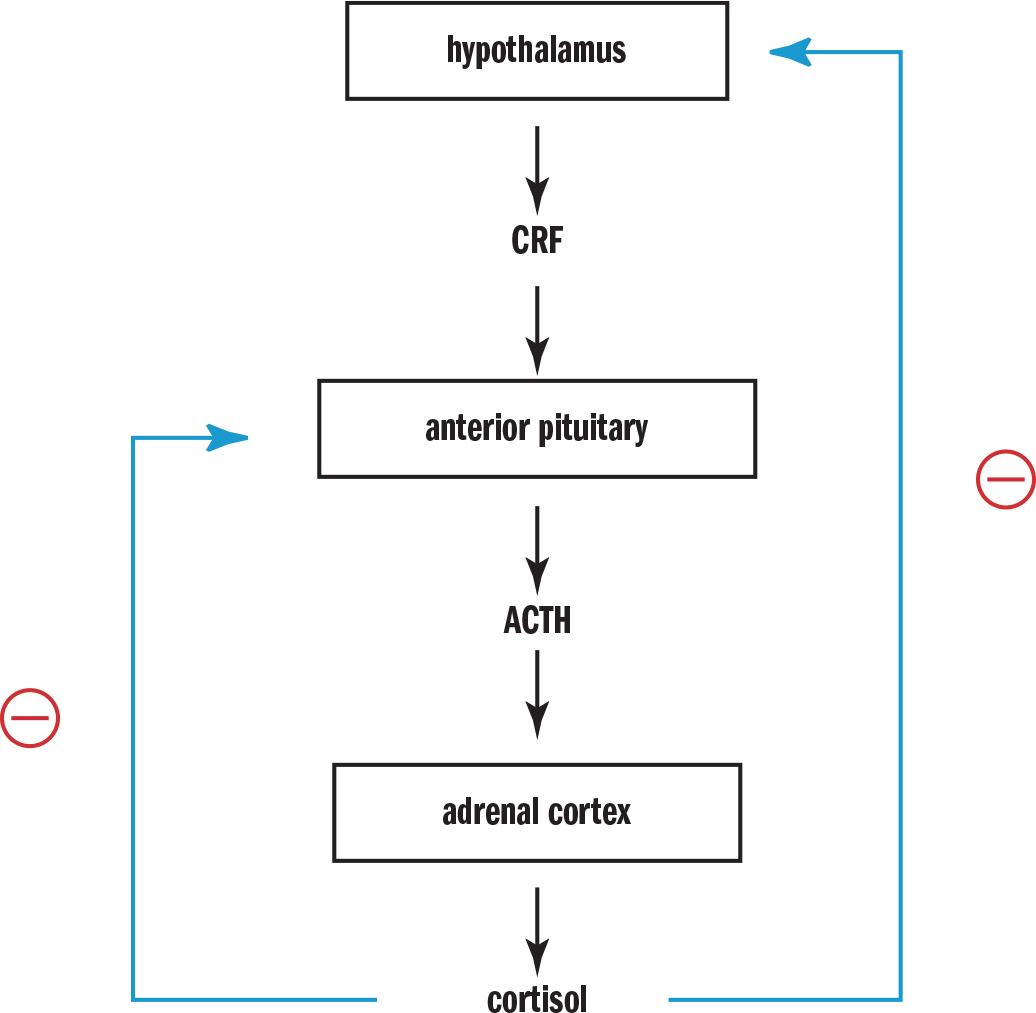
Figure 5.3. Negative Feedback in the Endocrine System
Additional drives that are not directly related to biological processes are called secondary drives. These drives are thought to stem from learning. The drive to matriculate into medical school and become a physician is an example of a secondary drive. Secondary drives also include certain emotions, such as the desire for nurturing, love, achievement, and aggression.
KEY CONCEPT
Primary drives are those that motivate us to sustain necessary biological processes. Secondary drives are those that motivate us to fulfill nonbiological, emotional, or “learned” desires.
Drive reduction theory explains that motivation is based on the goal of eliminating uncomfortable states. Theorists hypothesize that certain physiological conditions result in a negative internal environment. This internal environment then drives motivation and seeks homeostasis in order to reduce the uncomfortable internal state.
BRIDGE
Drive reduction theory can be applied to motivation in terms of learning, and is commonly used to define motivational states within behavioral conditioning. Conditioning and learning are discussed in Chapter 3 of MCAT Behavioral Sciences Review.
Need-Based Theories
In need-based theories of motivation, energy and resources are allocated to best satisfy human needs. These needs may be primary needs, which are generally physiological needs such as the need for food, water, sleep, and shelter. Or these needs might be secondary needs, which are generally mental states, like a desire for power, achievement, or social belonging.
Abraham Maslow defined needs as relatively long-lasting feelings that require relief or satisfaction and tend to influence action. He observed that certain needs will yield a greater influence on our motivation and he established what is referred to as Maslow’s hierarchy of needs. Maslow classified needs into five groups, and assigned different levels of priority to each group. The hierarchy is typically displayed as a pyramid, as shown in Figure 5.4, where the most primitive, essential, and important needs are at the base. The first four levels of the pyramid correspond to physiological needs, safety and security, love and belonging, and self-esteem. The highest level of the pyramid corresponds to self-actualization, or the need to realize one’s fullest potential. Maslow theorized that if the lowest level of need is not met, motivation to meet that need will be the highest priority. Once the lowest level of needs is met, if additional needs exist, they will be satisfied based on priority. For example, a person’s most basic motivation will be to satisfy physiological needs, followed by the need to establish a safe and secure environment.
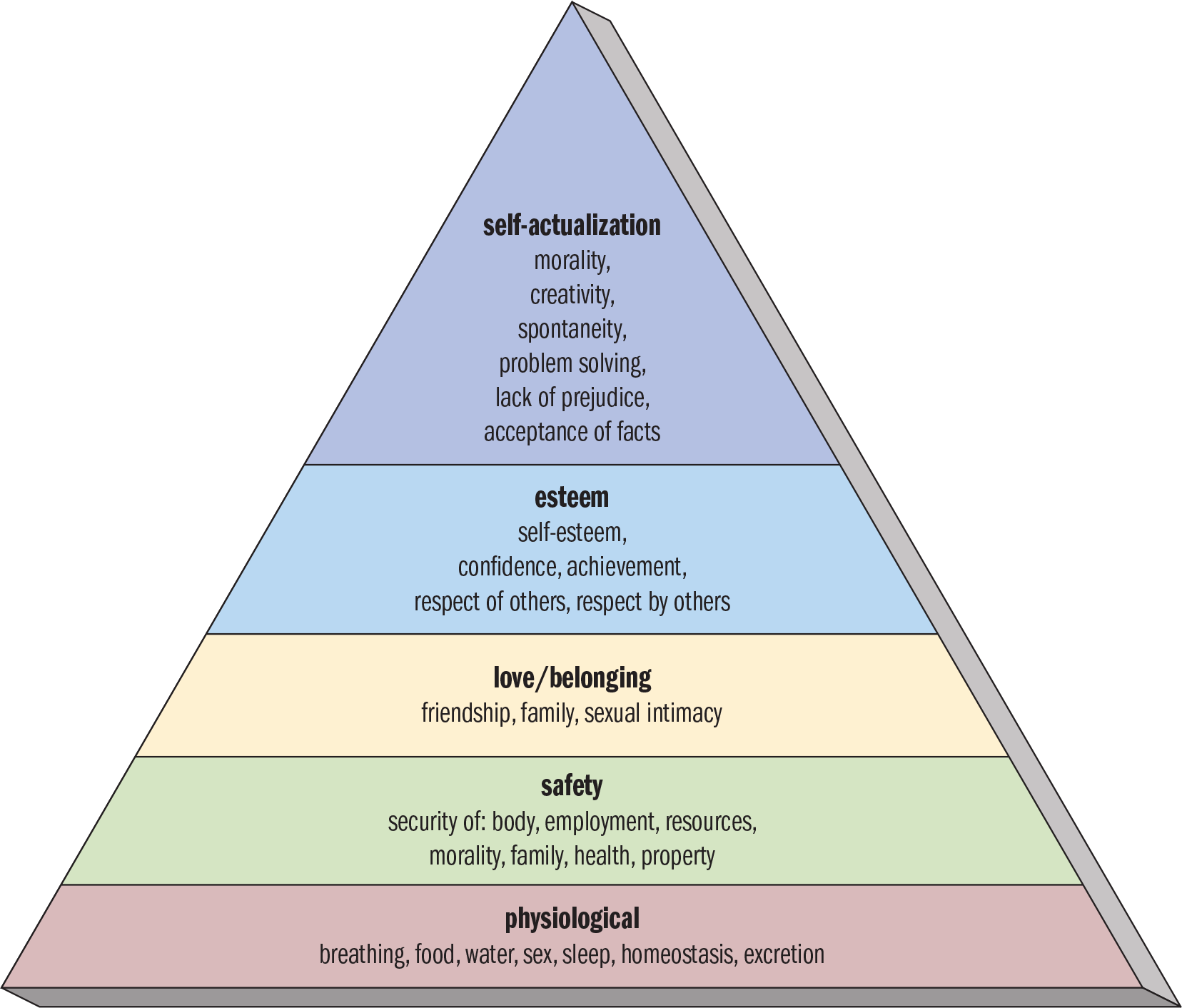
Figure 5.4. Maslow’s Hierarchy of Needs
Another need-based motivational theory is the self-determination theory (SDT), which emphasizes the role of three universal needs: autonomy, the need to be in control of one’s actions and ideas; competence, the need to complete and excel at difficult tasks; and relatedness, the need to feel accepted and wanted in relationships. Theorists explain that these three needs must be met in order to develop healthy relationships with oneself and others.
MCAT EXPERTISE
Knowing the four primary factors that influence motivation is key for Test Day: instincts, arousal, drives, and needs. The MCAT will expect you to know the common theories for explaining motivation.
Additional Theories and Applications
There are a few other theories of motivation that you should know for the MCAT: opponent-process theory, sexual motivation, incentive theory, and expectancy-value theory. Opponent-process theory and sexual motivation will be discussed in more detail below. Incentive theory explains that behavior is motivated not by need or arousal, but by the desire to pursue rewards and to avoid punishments. Expectancy–value theory states that the amount of motivation needed to reach a goal is the result of both the individual’s expectation of success in reaching the goal and the degree to which the individual values succeeding at the goal.
There are many motivations that stem from biology but that are impacted by additional psychological and sociocultural factors. One of the strongest natural motivations is hunger. However, people often eat for the sheer pleasure of the act, a motivation that may contribute to obesity occurring at alarming rates in the United States. Societal and cultural norms can determine what types of foods one eats and when. For example, some cultures have a traditional diet that is very high in fat and participate in many social activities involving food. At the other extreme, anorexia nervosa is also correlated to biological and cultural factors. It has been observed that those suffering from the disease are more likely to suffer from personality disorders as well. The prevalence of anorexia in the United States has increased significantly in the last several decades as the societal concept of beauty has changed from more full-bodied idols to extremely thin cultural icons.
Opponent-Process Theory
Motivations are considered destructive if they result in harm to oneself. For example, drug abusers can be motivated to take drugs by the pleasure experienced when taking the drug or by the removal of withdrawal symptoms. Most recreational drugs in the United States are psychoactive substances such as narcotics, sedatives, stimulants (e.g. caffeine and nicotine), hallucinogens, cannabis, and alcohol. A theory of motivation that explains continuous drug use is the opponent-process theory. This theory explains that when a drug is taken repeatedly, the body will attempt to counteract the effects of the drug by changing its physiology. For example, the body will counteract repeated use of alcohol, a depressant, by increasing arousal. The problem with this reaction is that it will last longer than the drug, resulting in withdrawal symptoms that are exactly opposite the effects of alcohol: sensations of anxiety, jitteriness, and irritability. The withdrawal created by this mechanism can create a physical dependence on the drug. Opponent-process theory can also explain tolerance, a decrease in perceived drug effect over time. Cultural and demographic factors also affect drug use. Young adults are the most likely age group to smoke, with a decline in smoking rates seen as the group ages. Smoking is also seen more commonly in disadvantaged socioeconomic groups. Across the globe, smoking rates are highest in Eastern Europe; this creates visibility, leading to additional pressure or desire to smoke in these communities.
BEHAVIORAL SCIENCES GUIDED EXAMPLE WITH EXPERT THINKING
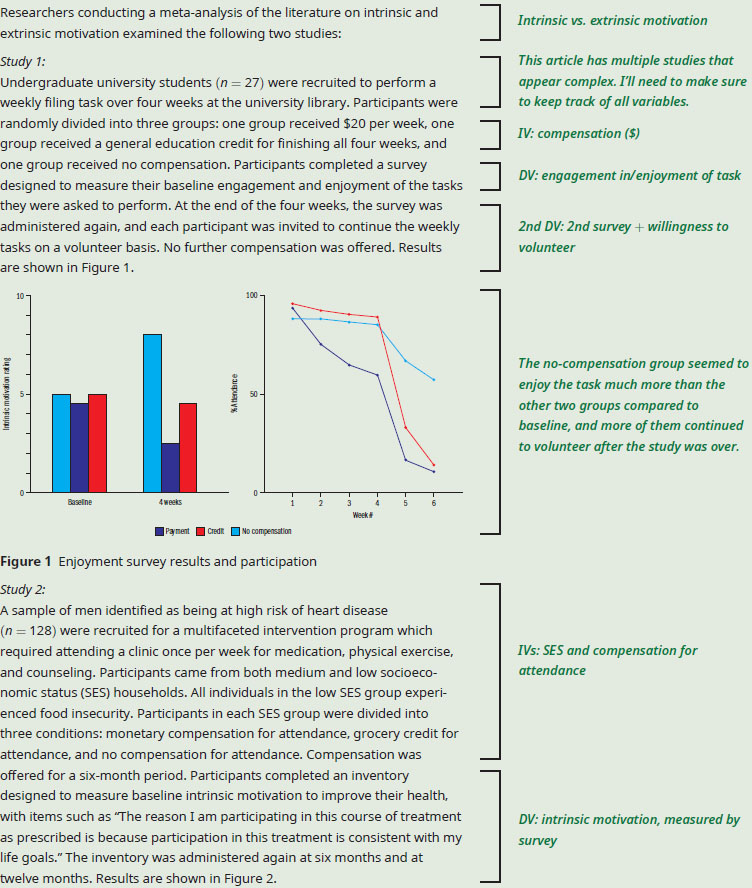
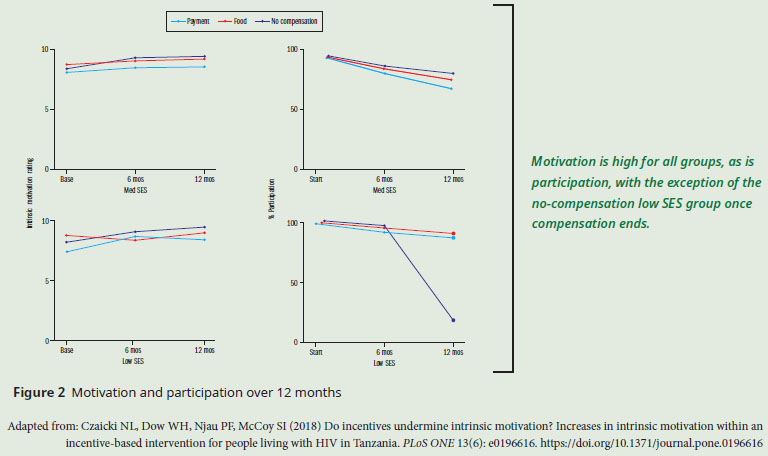
What do the results of these two studies suggest about the role of intrinsic and extrinsic factors in motivation?
This question is asking for a fairly high-level analysis of the three different conditions across the two studies. To answer, first we will need to consider what was being tested and the results from each study. Identifying the variables as we read the studies will make this task much more manageable and, as we have seen in guided examples from other chapters, is a generally good approach to reading any study. In Study 1, the only difference between groups is the offer of compensation, which is an extrinsic motivator. The results are consistent with conventional wisdom (and our outside content knowledge) that when an extrinsic motivator is introduced, intrinsic motivation decreases. Therefore, when the compensation is removed, participation declines. We can specifically see this within the data: groups receiving compensation see a substantial decline in intrinsic motivation and attendance as compared to the no-compensation group. Additionally, the lack of an extrinsic motivator increases intrinsic motivation, as demonstrated by the volunteerism rate in the no-compensation group.
Given the results of Study 1, Study 2 may seem surprising. Based on the results in the figure for Study 2, for the medium SES and low SES groups receiving compensation, intrinsic motivation remained consistent throughout the study. For the low SES group, however, participation declined sharply for the non-compensated group.
Fortunately, on Test Day we will never be asked to write an essay explaining these results, so we are not responsible for coming up with an explanation on our own. Among the answer choices will be an explanation that is consistent with both the scientific content we studied and the analysis of the results we conducted.
If a question like this shows up on the real MCAT, take a moment to consider what we know and what we’ve learned from the passage, and make a general prediction that targets the kind of information a correct answer could provide. In this case we are looking for a difference between the low and medium SES groups that might explain the observed difference in the no-compensation group. We might consider the implications of SES generally, but the passage provided a potential clue when it mentioned that the low SES group had food insecurity. Given what we know about Maslow’s hierarchy of needs we might anticipate an answer that implies motivation to obtain food is more important than reducing the risk of heart disease.
Sexual Motivation
Sexual motivation is another area that has been widely studied. In 1948, Alfred Kinsey reported his findings on sexual behavior from interviews with people from a broad range of sociocultural backgrounds. Kinsey hoped to identify what sexual behaviors people were participating in, how often, with whom, and at what age they began. William Masters and Virginia Johnson published another important study of sexual motivation. The study involved physiological measurement of sexual arousal, proving that men and women experience similar physical responses. The most notable differences seen among the genders were based on cultural influences and learned behavior.
Physiologically, humans are motivated to sexual behavior based on the secretion of estrogens, progesterone, and androgens. There is a strong correlation between hormone concentration and sexual desire. Another biological factor for sexual motivation is smell. Certain odors have been shown to increase sexual desire and activity. Pleasure and the interpretation of pleasure is also a key player in sexual motivation and one that is highly influenced by culture. One study measured physiological arousal based on watching sexually explicit videos. The results showed that men and women experienced the same levels of arousal, but women more often reported being unaroused or having feelings of disgust based on subjective interviews. This study demonstrated that cognition plays a role in sexual motivation. Additionally, culture and society influence what is deemed appropriate sexual behavior, the age at which it is deemed appropriate, and with whom. Cultural norms and conditioning influence the desire for sexual interaction, or lack thereof.
MCAT CONCEPT CHECK 5.1
Before you move on, assess your understanding of the material with these questions.
- For each of the theories listed below, what creates motivation?
Theory Factor for Motivation Instinct theory Arousal theory Drive reduction theory Need-based theories
- List Maslow’s hierarchy of needs in decreasing priority:
- _________________________
- _________________________
- _________________________
- _________________________
- _________________________
- Based on opponent-process theory, what clinical features would be expected with withdrawal from cocaine use? ____________________________
5.2 Emotion
LEARNING OBJECTIVES
After Chapter 5.2, you will be able to:
- Describe the three elements of emotion: psychological response, behavioral response, and cognitive response
- Recall the seven universal facially expressed emotions
- Compare and contrast the James–Lange, Cannon–Bard, and Schachter–Singer theories of emotion
- Identify the names and functions of the parts of the limbic system
Emotion is a natural instinctive state of mind derived from one’s circumstances, mood, or relationships with others. The word emotion is derived from the same Latin word as motivation.
Three Elements of Emotion
There are three elements of an emotion: the physiological response, the behavioral response, and the cognitive response.
Physiological Response
When a feeling is first experienced, arousal is stimulated by the autonomic nervous system. The physiological component includes changes in heart rate, breathing rate, skin temperature, and blood pressure. While it may be hard to recognize these changes and associate them with an emotion in everyday life, these changes have been detected in laboratory settings. Some emotions, such as fear, aggression, and embarrassment, are associated with more pronounced physiological changes than others.
Behavioral Response
The behavioral component of an emotion includes facial expressions and body language. For example, a smile, a friendly hand gesture, or even a subtle head tilt toward someone are commonly recognized as warm and happy signals. On the other hand, a frown, slumping of the shoulders, and looking downward are recognized as sad or downtrodden signals.
Cognitive Response
Finally, the cognitive component of emotion is the subjective interpretation of the feeling being experienced. Determination of one’s emotion is an evaluative process largely based on memories of past experiences and perception of the cause of the emotion.
Universal Emotions
Darwin made the argument that emotions are a result of evolution; thus, emotions and their corresponding expressions are universal. He explained that all humans evolved the same set of facial muscles to show the same expressions when communicating emotion, regardless of their society or culture. This sparked an ongoing discussion of the relationship between emotion and culture among psychologists and sociologists. Paul Ekman described a set of basic emotions that are recognized by societies around the world and further identified that six emotions are associated with consistent facial expressions across cultures. Ekman and other psychologists have revised this list; one of the more well-recognized sets consists of seven universal facially expressed emotions and includes: happiness, sadness, contempt, surprise, fear, disgust, and anger. These emotions correspond to the distinctive facial expressions explained in Table 5.1 and depicted in Figure 5.5.
Table 5.1. Seven Universal Emotions
EMOTION FACIAL EXPRESSION CUES
Happiness Smile, wrinkling around eyes, raised cheeks
Sadness Frown, inner eyebrows pulled up and together
Contempt One corner of the mouth pulled upwards
Surprise Eyes widen, eyebrows pulled up and curved, jaw opens
Fear Eyes widen, eyebrows pulled up and together, lips pulled toward ears
Disgust Nose wrinkling and/or raising of upper lip
Anger Glaring, eyebrows pulled down and together, lips pressed together
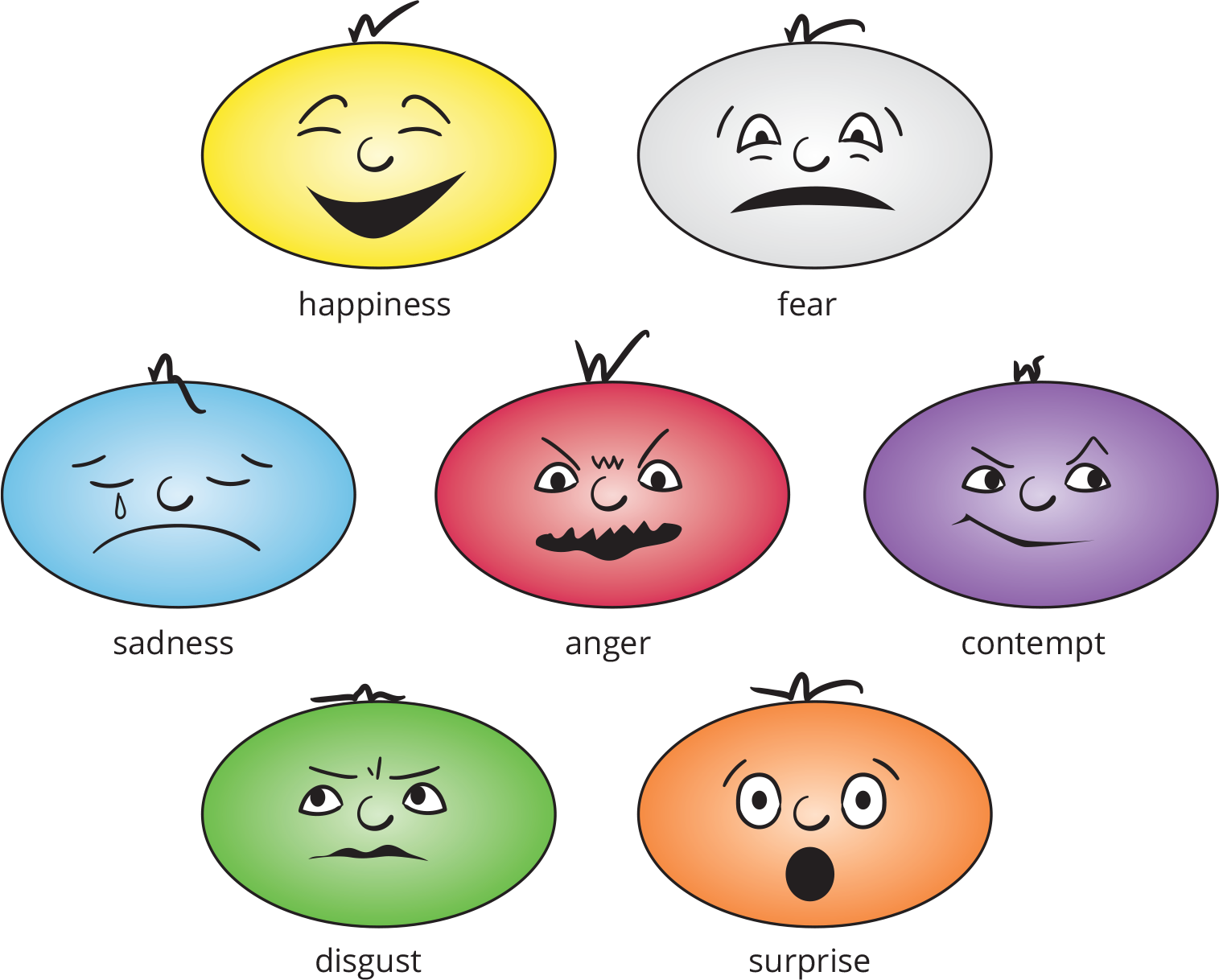
Figure 5.5. Seven Universal Emotions
While emotions are experienced universally, it is argued that they can be affected greatly by culture. Cultural dissimilarities in emotion include varying reactions to similar events, differences in the emotional experience itself, the behavior exhibited in response to an emotion, and the perception of that emotion by others within the society.
MCAT EXPERTISE
The AAMC lists fear, anger, happiness, surprise, contempt, disgust, and sadness as universal emotions. Given the lack of consensus in the scientific community, the MCAT is more likely to test the topic conceptually than specifically.
Facial-Feedback Effect
Charles Darwin was also one of the first people to suggest that not only did emotion affect one’s expression, but that physiological changes also can affect emotion. The facial-feedback effect, also known as the facial-feedback hypothesis, is a theory that certain facial expressions can influence emotions. There are two versions of this theory that are commonly referenced: the weak version, which hypothesizes that facial expressions have a minor ability to affect emotions, and the strong version, which states that facial feedback is the primary cause of an emotional state.
Adaptive Role of Emotion
In accordance with Darwin’s thoughts on universal emotion, the evolutionary perspective states that everything we do, think, and feel is based on specialized functional programs designed for any problem we encounter. These programs are functionally coordinated in order to produce a cohesive response. Emotions are thought to be evolutionary adaptations due to situations encountered over the evolutionary history of the human species that guide sensory processing, physiological response, and behavior. Further, different emotions are thought to have evolved during different periods in history. Among the earliest to develop were primal emotions, such as fear; other, more evolutionarily progressive emotions include social emotions, such as guilt and pride.
Theories of Emotion
Early psychologists believed that the cognitive component of emotion led to the physiological component, which then produced the behavioral component. In other words, the feeling of anger started with perception of a negative stimulus, which caused physiological changes, such as increased skin temperature, which then resulted in behavior, such as yelling. This explanation assumes that feeling precedes arousal, which precedes action.
James–Lange Theory
William James, the founder of functionalist theory, viewed the progression of these emotional elements differently. Around the same time, Carl Lange developed a theory of emotion similar to that of James. The explanation developed by the two is referred to as the James–Lange theory of emotion. According to the theory, a stimulus results first in physiological arousal, which leads to a secondary response in which the emotion is labeled. James believed that when peripheral organs receive information and respond, that response is then labeled as an emotion by the brain. For example, a car cutting you off on the highway is a stimulus for elevated heart rate and blood pressure, increased skin temperature, and dry mouth. These physiological responses result in the cognitive labeling of anger: I must be angry because my skin is hot and my blood pressure is high. By extension, an emotion would not be processed without feedback from the peripheral organs; this theory predicts that individuals who cannot mount a sympathetic response, like patients with spinal cord injuries, should show decreased levels of emotion. Subsequent studies have proven this claim to be false; spinal cord injury subjects continue to show the same level of emotion after their injuries as before.
Cannon–Bard Theory
Walter Cannon and Philip Bard developed another scheme for explaining emotional components, referred to as the Cannon–Bard theory of emotion. In an attempt to test the James–Lange theory, Cannon studied the expression of emotion and its relationship to feedback from the sympathetic nervous system using cats whose afferent nerves had been severed. He hypothesized that physiological arousal and feeling an emotion occur at the same time, not in sequence. Thus, severing the feedback should not alter the emotion experienced. In this theory, a person will respond with action after experiencing the emotion both mentally and physically. Bard, a student of Cannon’s, further explained that when exposed to a stimulus, sensory information is received and sent to both the cortex and the sympathetic nervous system simultaneously by the thalamus. Thus, the Cannon–Bard theory of emotion, depicted in Figure 5.6, states that the conscious experience of emotion and physiological arousal occur simultaneously, and then the behavioral component of emotion (i.e., action) follows: I see a snake, so I feel afraid and my heart is racing... Let me out of here!
While critics of the James–Lange theory cite the severed afferent nerve study as support for the Cannon–Bard theory, there are also weaknesses in this theory. The Cannon–Bard theory fails to explain the vagus nerve, a cranial nerve that functions as a feedback system, conveying information from the peripheral organs back to the central nervous system.

Figure 5.6. Cannon–Bard Theory of Emotion Visual stimuli pass through the thalamus, and rough information is sent to the amygdala (fear) and the sympathetic nervous system (arousal). Action (muscle contraction) quickly follows. The visual cortex can either strengthen or quell this fear response once it has identified the stimulus.
Schachter–Singer Theory
A third theory is the Schachter–Singer theory of emotion, also termed the cognitive arousal theory or the two-factor theory, which states that two factors (physiological arousal and a cognitive label) are needed to experience emotion. According to this theory, physiological arousal alone is insufficient to elicit an emotional response. To feel an emotion, the mind must also identify the environmental stimulus causing that physiological arousal: I am excited because my heart is racing and everyone else is happy.
What is unique to the Schachter–Singer theory is this aspect of cognitive appraisal: to feel an emotion, one must consciously analyze the environment in relation to nervous system arousal. To study this phenomenon, Stanley Schachter and Jerome Singer gave injections of epinephrine or placebo to groups of subjects that were either informed, ignorant, or misinformed. They also manipulated external cues in the study by having an actor act either happy or angry. They observed that epinephrine did result in increased physiological arousal; however, they also discovered that the environment and cognitive processing affected the emotion experienced by the subjects. The groups who were misinformed or ignorant experienced the highest levels of emotion. Schachter and Singer explained this result by stating that subjects experiencing physiological arousal with no explanation or with a misleading explanation will attribute that arousal to the surrounding environment, and label themselves as happy or angry based on the behavior of the actor. In other words, the presence of unexpected arousal plus an environment that encourages a particular emotion is sufficient to create that emotion in the subject. Contrarily, the informed group knew to expect physiological arousal from the drug, and thus attributed their feelings to side effects of the epinephrine, rather than to emotions.
The three theories of emotion discussed in this section are summarized in Table 5.2.
Table 5.2. Theories of Emotion
THEORY FIRST RESPONSE SECOND RESPONSE
James–Lange Stimulus Nervous system arousal Conscious emotion
Cannon–Bard Nervous system arousal and conscious emotion Action
Schachter–Singer Nervous system arousal and cognitive appraisal Conscious emotion
MCAT EXPERTISE
The MCAT will expect that you have a solid understanding of the differences in emotional processing described by each of the three theories of emotion. It is best to mentally sort these theories by “first response” and “second response” to the stimulus.
The Limbic System
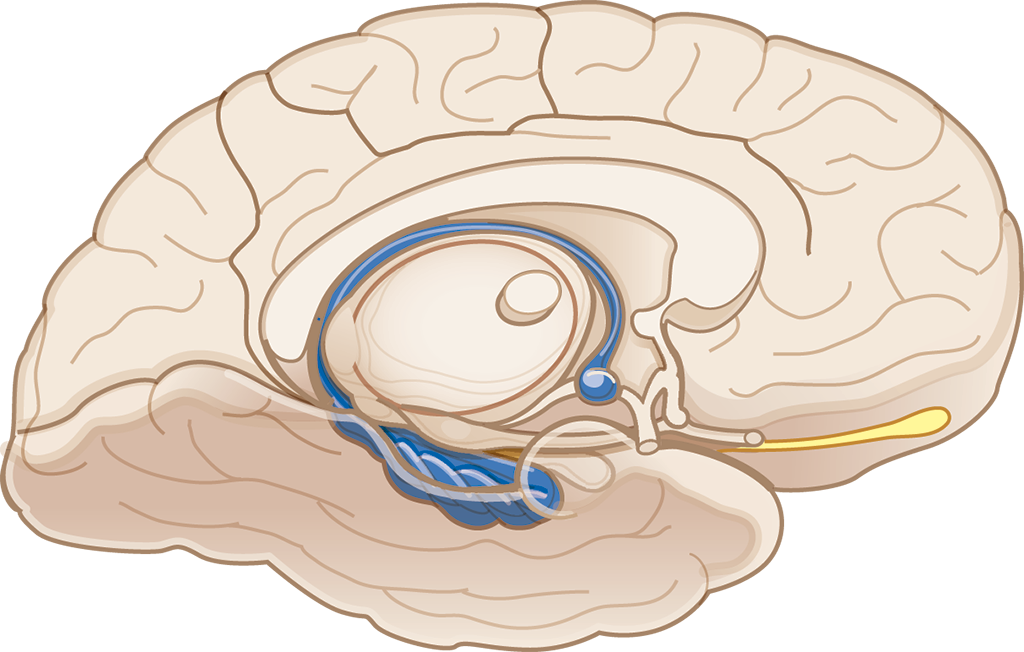
Experiencing emotion is a complex process involving many parts of the brain. The most notable of these circuits is the limbic system, a complex set of structures that reside below the cerebrum on either side of the thalamus, as shown in Figure 5.7. The system is made up of the amygdala, thalamus, hypothalamus, hippocampus and fornix, septal nuclei, and parts of the cerebral cortex; it plays a large role in both motivation and emotion.
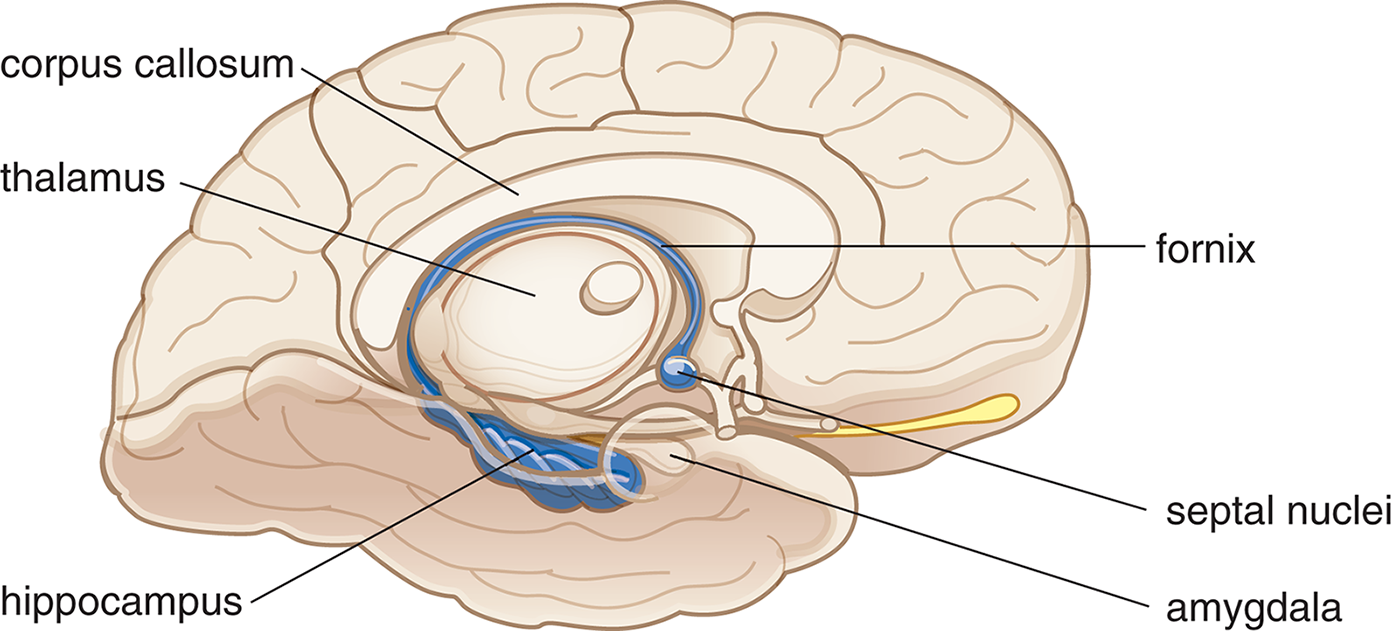
Figure 5.7. The Limbic System
REAL WORLD
When specific areas of the limbic system are stimulated during brain surgery, patients have described sensations such as happiness, contentment, and pleasure; in other areas, they report fear and anxiety.
The amygdala is a small round structure that signals the cortex about stimuli related to attention and emotions. The amygdala processes the environment, detects external cues, and learns from the person’s surroundings in order to produce emotion. This region is associated with fear and also plays a role in human emotion through interpretation of facial expressions.
REAL WORLD
Research on rats has shown that when the amygdalae are damaged, the rats can no longer be classically conditioned to establish new fears. Similar effects have also been seen in humans wherein damage to this region prevents fear conditioning. This has been measured by autonomic nervous system responses as well as functional imaging.
The thalamus functions as a preliminary sensory processing station and routes information to the cortex and other appropriate areas of the brain. The hypothalamus, located below the thalamus, synthesizes and releases a variety of neurotransmitters. It serves many homeostatic functions, and is involved in modulating emotion. Indeed, by controlling the neurotransmitters that affect mood and arousal, the hypothalamus largely dictates emotional states.
The hippocampus, within the temporal lobe, is primarily involved in creating long-term memories. Along with the functions of the amygdala and hypothalamus, the storage and retrieval of emotional memories is key in producing an emotional response. The hippocampus also aids in creating context for stimuli to lead to an emotional experience. As described in Chapter 3 of MCAT Behavioral Sciences Review, memory systems can be divided into two categories: explicit and implicit. When an emotion is experienced, sensory systems transmit this information into both the explicit memory system, primarily controlled by the hippocampus in the medial temporal lobe, and the implicit memory system, controlled by the amygdala. Both memory systems are used for both the formation and retrieval of emotional memories, as shown in Figure 5.8. The conscious (explicit) memory is the memory of experiencing the actual emotion: remembering that you were happy at your high school graduation or that you were sad when you lost a loved one is explicit memory. Note that these are episodic memories: they are more properly considered memories about emotions than stored emotions. The unconscious (implicit) memory is referred to as emotional memory; this is the storage of the actual feelings of emotion associated with an event. When experiencing a similar event later on, these emotions may be retrieved. Thus, explicit memory of the emotion produces a conscious memory of the experience, and implicit memory determines the expression of past emotions. This distinction can be further identified when looking at individuals with posttraumatic stress disorder (PTSD). The explicit memory is the “story” of the event: what happened, where it occurred, who was involved, the fact that the scenario was traumatic, and so forth. The implicit memory corresponds to the sensations of unease and anxiety when put back into a similar environment.
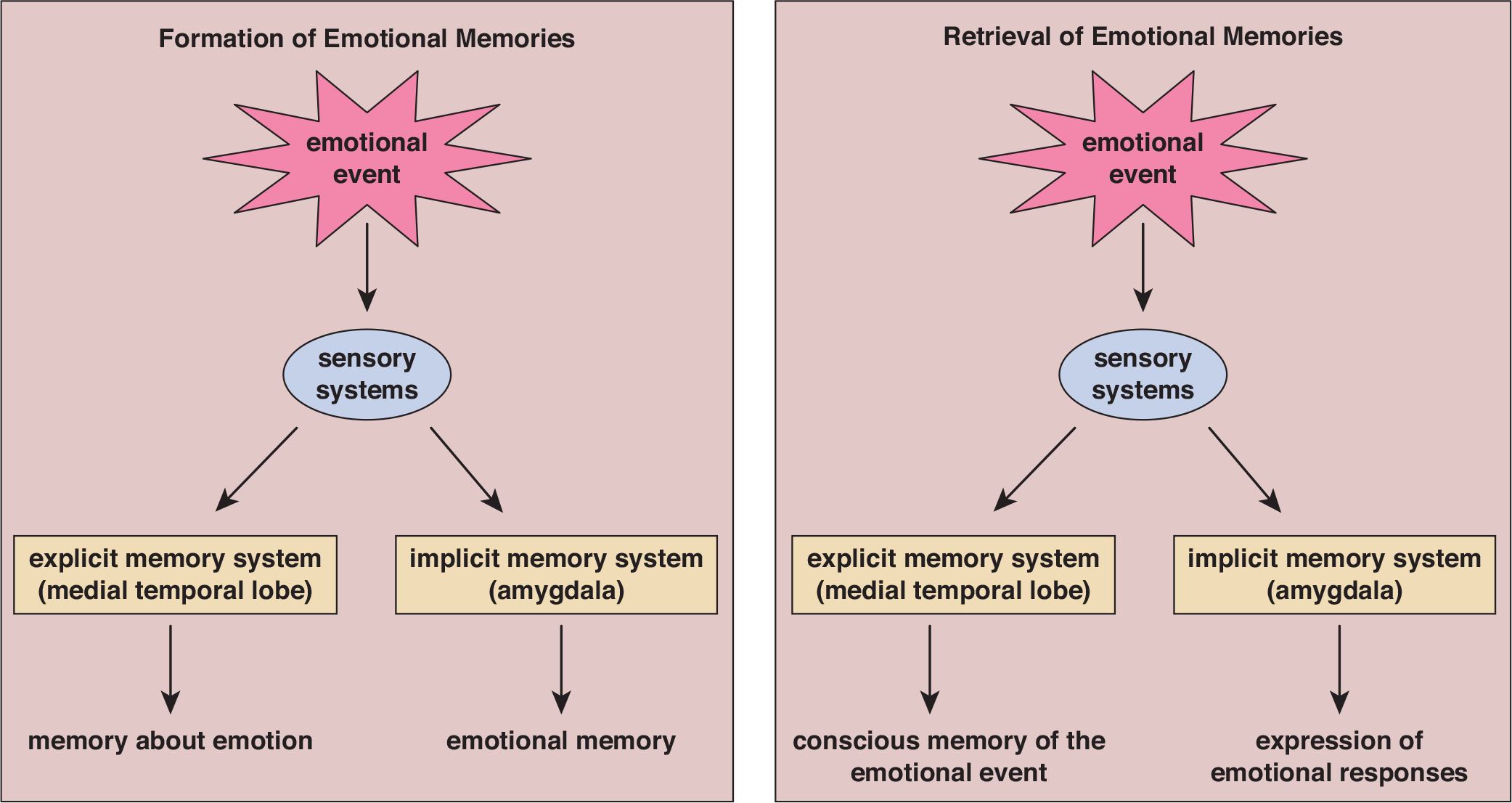
Figure 5.8. Formation and Retrieval of Emotional Memories
The ability to distinguish and interpret others’ facial expressions is primarily controlled by the temporal lobe, with some input from the occipital lobe. This function is lateralized: the right hemisphere is more active when discerning facial expressions than the left. There are also gender differences: women demonstrate more activation of these brain areas than men. This ability is present but weak in children and develops into adulthood; adults are much more effective at identifying both positive and negative emotions.
The prefrontal cortex is the anterior portion of the frontal lobes and is associated with planning intricate cognitive functions, expressing personality, and making decisions. The prefrontal cortex also receives arousal input from the brainstem, coordinating arousal and cognitive states. It has been demonstrated that the left prefrontal cortex is associated with positive emotions and the right prefrontal cortex with negative emotions. The dorsal prefrontal cortex is associated with attention and cognition, while the ventral prefrontal cortex connects with regions of the brain responsible for experiencing emotion. Specifically, the ventromedial prefrontal cortex, shown in Figure 5.9, is thought to play a substantial role in decision making and controlling emotional responses from the amygdala.
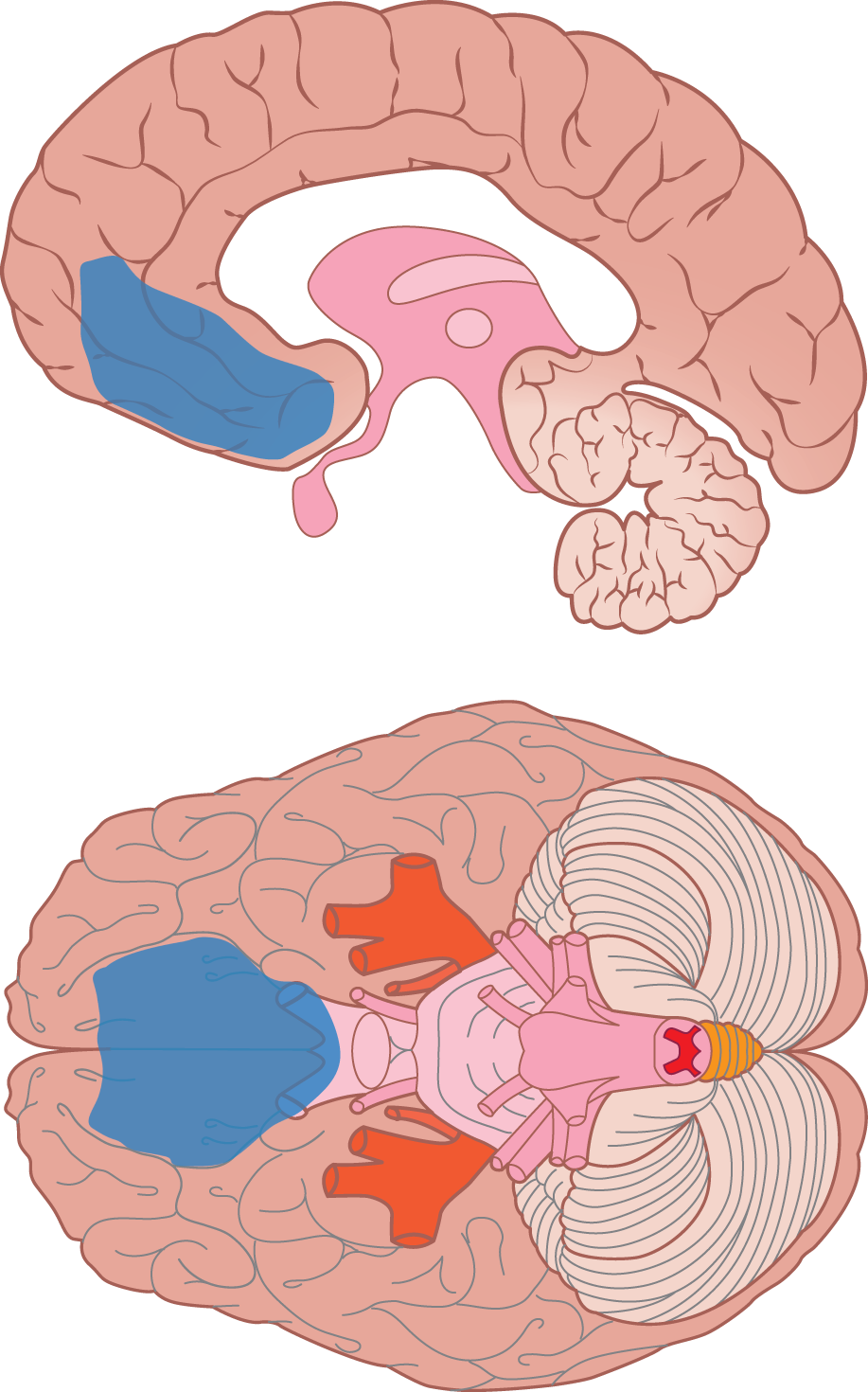
Figure 5.9. Ventromedial Prefrontal Cortex The ventromedial prefrontal cortex is highlighted in blue.
REAL WORLD
One of the most notable studies on prefrontal cortex function is that of Phineas Gage. Gage was involved in an accident in which a metal rod pierced his brain, destroying the left frontal lobe. Gage’s memory, speech, and motor skills were unaffected, but his personality was dramatically altered. Post-accident, Gage displayed irritable and impatient behavior, which inhibited his ability to complete simple tasks.
As described earlier, the autonomic nervous system is also related to emotion; specific physiological reactions are associated with specific emotions. Skin temperature, heart rate, breathing rate, and blood pressure are all affected when experiencing emotion. Decreased skin temperature is detected in subjects experiencing fear, while increased skin temperature is associated with anger. Increased heart rate is observed in subjects experiencing both anger and fear, while decreased heart rate is observed in subjects who are feeling happiness. Heart rate variability is another factor used to determine emotion. Decreased heart rate variability is associated with stress, frustration, and anger. Blood pulse volume increases with anger or stress and decreases with sadness or relaxation. Skin conductivity is directly correlated with sympathetic arousal; however, a specific emotion cannot be identified by skin response. Diastolic blood pressure is increased to the greatest degree by anger, followed by fear, sadness, and happiness.
MCAT CONCEPT CHECK 5.2
Before you move on, assess your understanding of the material with these questions.
- What are the three elements of emotion? Provide a brief description of each.
- _________________________
- _________________________
- _________________________
- What are the seven universal emotions?
- _________________________
- _________________________
- _________________________
- _________________________
- _________________________
- _________________________
- _________________________
- Compare and contrast the James–Lange, Cannon–Bard, and Schachter–Singer theories of emotion:
James–Lange Theory Cannon–Bard Theory Schachter–Singer Theory
- What is the function of each part of the limbic system listed below?
____________________________
- Amygdala:
____________________________
- Thalamus:
____________________________
- Hypothalamus:
____________________________
- Hippocampus:
_________________________
- Ventromedial prefrontal cortex:
5.3 Stress
LEARNING OBJECTIVES
After Chapter 5.3, you will be able to:
- Distinguish between primary and secondary appraisals of stress
- Recall the three stages of general adaptation syndrome and the physiological changes associated with each stage
- Recognize common stressors and effective techniques for management of stress
In all aspects of life, at all times of day, we must make decisions, overcome challenges, and continue forward. While some of these decisions are small, others require planning and adaptation to new circumstances. Behavior of others and the perception of our surroundings affect our behavior and mental state, at times in a negative manner. It is our response to challenging events, be they physical, emotional, cognitive, or behavioral, that defines stress.
Cognitive Appraisal of Stress
Cognitive appraisal is the subjective evaluation of a situation that induces stress. This process consists of two stages. Stage 1, or primary appraisal, is the initial evaluation of the environment and the associated threat. This appraisal can be identified as irrelevant, benign–positive, or stressful. If primary appraisal reveals a threat, stage 2 appraisal begins. Secondary appraisal is directed at evaluating whether the organism can cope with the stress. This appraisal involves the evaluation of three things: harm, or damage caused by the event; threat, or the potential for future damage caused by the event; and challenge, or the potential to overcome and possibly benefit from the event. Individuals who perceive themselves as having the ability to cope with the event experience less stress than those who don’t. In general, appraisal and stress level are personal, as individuals have different skills, abilities, and coping mechanisms. For example, while a spider might incite fear and stress in some, it would result in irrelevant appraisal in others. Some situations require ongoing monitoring through constant reappraisal, such as the perception of being followed.
MCAT EXPERTISE
The MCAT will expect you to know the two stages of stress appraisal: primary and secondary. Primary appraisal is the initial examination, which results in the identification of the stress as irrelevant, benign–positive, or stressful. If identified as a threat, secondary appraisal is an evaluation of one’s ability to cope with the stress.
Types of Stressors
A stressor is a biological element, external condition, or event that leads to a stress response. The severity of stressors can range from minimal or irritating hassles, like temporarily lost keys, to catastrophic scenarios, such as an impending natural disaster. Common stressors include:
- Environmental factors: uncomfortable temperature, loud sounds, inclement weather
- Daily events: running late, losing items, unexpected occurrences
- Workplace or academic setting: assignments, hierarchical interactions, time management
- Social expectations: demands placed on oneself by society, family, and friends
- Chemical and biological stressors: diet, alcohol, drugs, viruses, allergies, medications, medical conditions
Stressors are classified as either causing distress or causing eustress. Distress occurs when a stressor is perceived as unpleasant (e.g., a threat), whereas eustress is the result of a positively-perceived stressor (e.g., a challenge). Eustress can include life events such as graduating from college, studying to achieve a high score on the MCAT, getting married, or buying a house. While these events are largely positive, any event requiring individuals to change or adapt their lifestyle leads to stress. Stress level can be measured in “life change units” in a system called the social readjustment rating scale.
Stressors can also be psychological. Pressure, control, predictability, frustration, and conflict are all forms of psychological stress. Pressure is experienced when expectations or demands are put in place from external sources; this produces a feeling of urgency to complete tasks, perform actions, or display particular behaviors. The ability to control one’s surroundings typically reduces stress levels; the inability to control a situation or event increases stress. In a study of nursing home patients, it was observed that those who had the most control of their daily environment displayed more active, positive, and social behavior. Predictability also plays a role in stress levels. For example, firefighters and police officers who cannot predict their daily scenarios experience higher levels of stress on the job. Frustration, which occurs when attaining a goal or need is prevented, increases stress. These frustration stresses can be external, such as not getting a raise, or internal, such as a disability interfering with everyday life. Finally, conflict stresses arise from the need to make a choice. Approach–approach conflict refers to the need to choose between two desirable options. Avoidance–avoidance conflicts are choices between two negative options. Approach–avoidance conflicts deal with only one choice, goal, or event, but the outcome could have both positive and negative elements. For instance, while a job promotion might mean more money or status, it also comes with increased responsibility, potential for longer working hours, and increased pressure.
Physiological Response to Stressors
When subjected to stress, the body initially responds via the sympathetic nervous system. The “fight-or-flight” response initiates an increase in heart rate and decrease in digestion, with all available energy being reserved for reacting to the stressful event. The sequence of physiological responses developed by Hans Selye is called the general adaptation syndrome and consists of three distinct stages, as shown in Figure 5.10.
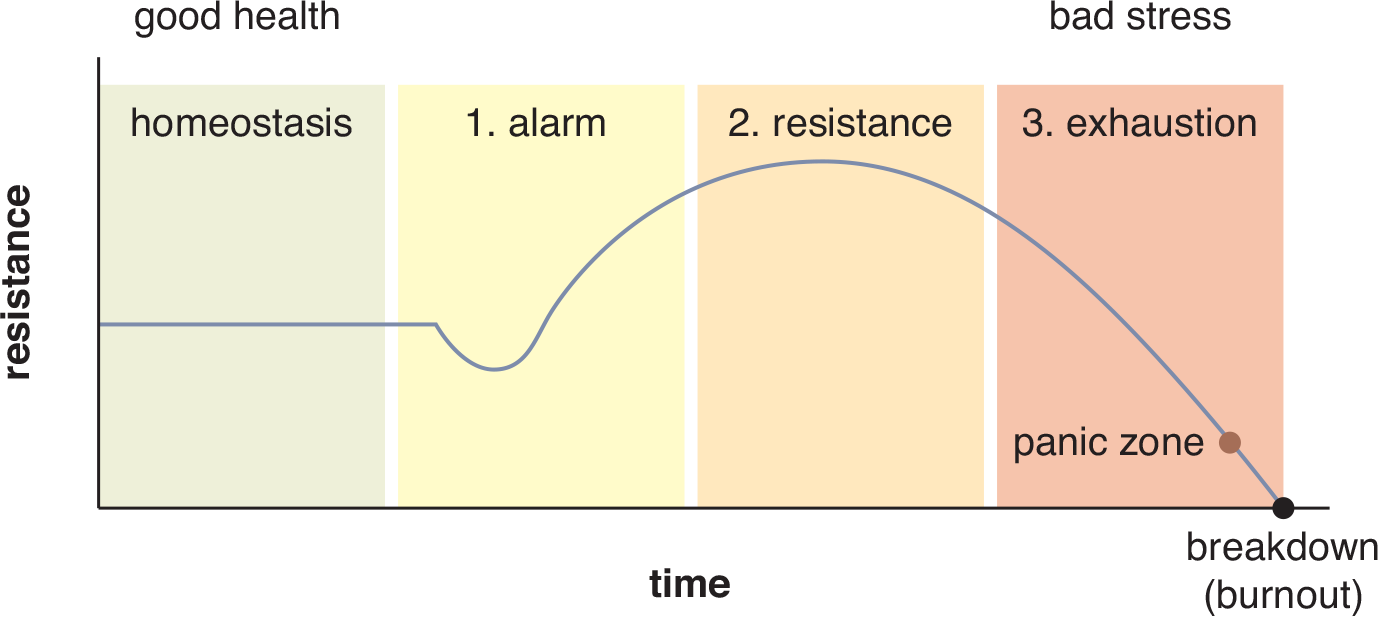
Figure 5.10. Three Stages of Stress Response
First is alarm, or the initial reaction to a stressor and the activation of the sympathetic nervous system. Shortly thereafter, the hypothalamus stimulates the pituitary to secrete adrenocorticotropic hormone (ACTH). This hormone stimulates the adrenal glands to produce cortisol, which maintains the steady supply of blood sugar needed to respond to stressful events. The hypothalamus also activates the adrenal medulla, which secretes epinephrine and norepinephrine to activate the sympathetic nervous system. The next stage is resistance, in which the continuous release of hormones allows the sympathetic nervous system to remain engaged to fight the stressor. Last, a person will experience exhaustion when the body can no longer maintain an elevated response with sympathetic nervous system activity. At this point, individuals become more susceptible to illnesses and medical conditions (such as ulcers and high blood pressure), organ systems can begin to deteriorate (with effects including heart disease), and in extreme cases, death can result. Some of the positive and negative effects of stress are shown in Table 5.3.
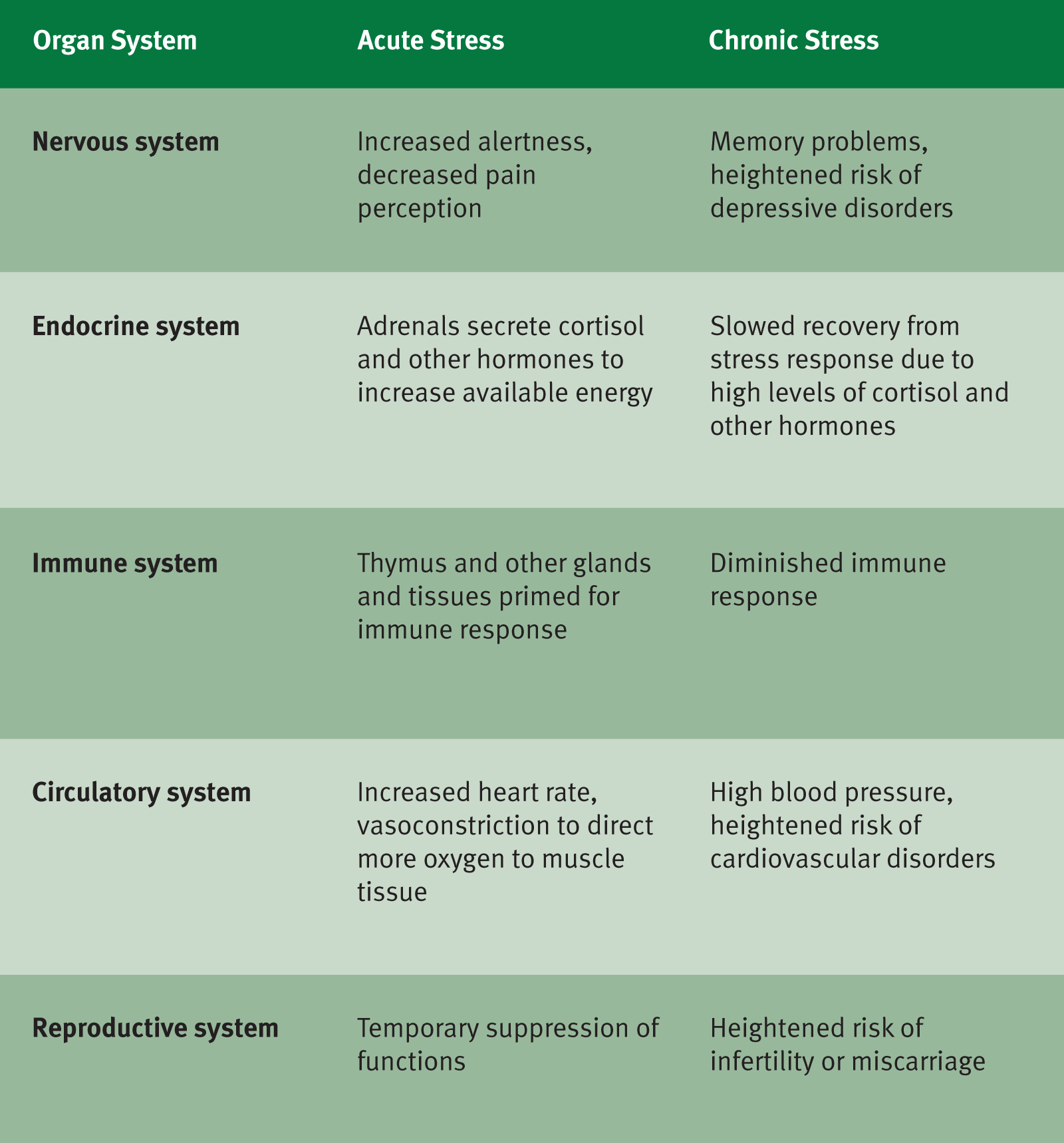
Table 5.3. Positive and Negative Effects of Stress
Emotional and Behavioral Responses to Stress
Beyond the effects on the human body, stress also takes a psychological toll on people who are unable to reduce their stress levels. On the emotional level, elevated stress can result in individuals feeling irritable, moody, tense, fearful, and helpless. They may also have difficulties with concentration and memory. Negative behavior responses to stress include withdrawing from others, difficulties at work or at school, substance use, aggression, and suicide. Additionally, chronic stress can lead to mental health disorders. The diathesis-stress model proposes that individuals have a predisposition to a set of biological or genetic traits (diatheses), and exposure to environmental conditions (stressors) may trigger disorders like schizophrenia and depression.
Coping and Stress Management
Strategies for coping with stress fall into two groups. Problem-focused strategies involve working to overcome a stressor, such as reaching out to family and friends for social support, confronting the issue head-on, and creating and following a plan of problem-solving actions. Emotionally focused strategies center on changing one’s feelings about a stressor. They include taking responsibility for the issue, engaging in self-control, distancing oneself from the issue, engaging in wishful thinking, and using positive reappraisal to focus on positive outcomes instead of the stressor. Some coping strategies are adaptive, and reduce stress in a healthy way. A person who is feeling stressed could, for example, reach out to a loved one for help as a support-seeking coping strategy. However, coping strategies may also be maladaptive and include detrimental tactics, such as turning to drugs or alcohol.
Individuals can also engage in stress management to reduce their stress levels. Exercise is a powerful stress management tool that not only improves health and well-being, but also enhances mood. Exercise releases endorphins, opioid neuropeptides that act as “feel-good” neurotransmitters. Relaxation techniques, including meditation, diaphragmatic breathing, and progressive muscle relaxation have also been found to reduce stress. Additionally, studies have shown that engaging in a spiritual practice helps to manage stress.
BRIDGE
Maladaptiveness is a key factor in determining whether a behavior should be considered a disorder. Maladaptive behaviors are discussed in more detail in Chapter 7 of MCAT Behavioral Sciences Review.
MCAT EXPERTISE
Use these coping and stress management techniques to boost your performance (and mood) on Test Day!
MCAT CONCEPT CHECK 5.3
Before you move on, assess your understanding of the material with these questions.
- What are the key features of primary and secondary cognitive appraisal of stress?
____________________________
- Primary appraisal:
_________________________
- Secondary appraisal:
- What are the three stages of the general adaptation syndrome? What physiological changes are evident in each stage?
Stage Physiological Changes
- What are some common stressors? What are some effective techniques for managing stress?
__________________________
- Common stressors:
________________________ ______________________ ________________________
- Stress management techniques:
Conclusion
The ability to strive for our goals and desires, be it for internal or external reasons, is an important aspect of psychology and behavior. Motivation is the mechanism used to meet our needs, act toward an end goal, and ultimately survive. While there are many factors that influence motivation, including instincts, arousal, drives, and needs, they all result in action to obtain perceived rewards, fulfill needs, or avoid perceived punishments. Emotion is a complex process resulting in physiological, cognitive, and behavioral elements, described in different fashions by the James–Lange, Cannon–Bard, and Schachter–Singer theories of emotion. Many components of the nervous system play a role in experiencing emotions, including the seven universal emotions. The response of the body and mind to challenges defines stress. Stress appraisal has phases that identify and allow the body to respond to the stressor encountered. The physical and mental response to stress can be severe, but there are many management and coping mechanisms commonly used to reduce the level of stress experienced.
Hopefully this chapter has left you motivated to keep working toward that goal of an excellent MCAT score and becoming the doctor you deserve to be. Studying for the MCAT certainly introduces a significant stress, but effective stress management techniques and a solid foundation in MCAT content and strategy will turn Test Day into eustress. Just keep your eyes on that white coat, an important garment that will someday be part of your identity—a topic we’ll explore in the next chapter.
GO ONLINE!
You’ve reviewed the content, now test your knowledge and critical thinking skills by completing a test-like passage set in your online resources!
CONCEPT SUMMARY
Motivation
- Motivation is the purpose, or driving force, behind our actions.
- Motivation can be extrinsic, based on external circumstances; or intrinsic, based on internal drive or perception.
- The primary factors that influence emotion are instincts, arousal, drives, and needs.
- Instincts are innate, fixed patterns of behavior. In the instinct theory of motivation, people perform certain behaviors because of these evolutionarily programmed instincts.
- In the arousal theory, people perform actions to maintain arousal, the state of being awake and reactive to stimuli, at an optimal level. The Yerkes–Dodson law shows that performance is optimal at a medium level of arousal.
- Drives are internal states of tension that beget particular behaviors focused on goals. Primary drives are related to bodily processes; secondary drives stem from learning and include accomplishments and emotions. Drive reduction theory states that motivation arises from the desire to eliminate drives, which create uncomfortable internal states.
- Satisfying needs may also motivate. Maslow’s hierarchy of needs prioritizes needs into five categories: physiological needs (highest priority), safety and security, love and belonging, self-esteem, and self-actualization (lowest priority).
- Self-determination theory emphasizes the role of three universal needs: autonomy, competence, and relatedness.
- Incentive theory explains motivation as the desire to pursue rewards and avoid punishments.
- Expectancy–value theory states that the amount of motivation for a task is based on the individual’s expectation of success and the amount that success is valued.
- Opponent-process theory explains motivation for drug use: as drug use increases, the body counteracts its effects, leading to tolerance and uncomfortable withdrawal symptoms.
- Sexual motivation is related to hormones as well as cultural and social factors.
Emotion
- Emotion is a state of mind, or feeling, that is subjectively experienced based on circumstances, mood, and relationships.
- The three components of emotion are cognitive (subjective), behavioral (facial expressions and body language), and physiological (changes in the autonomic nervous system).
- The seven universal emotions are happiness, sadness, contempt, surprise, fear, disgust, and anger.
- There are multiple theories of emotion, based on the interactions of the three components of emotion.
- In the James–Lange theory, nervous system arousal leads to an emotional experience.
- In the Cannon–Bard theory, arousal of the nervous system and the experience of emotion occur simultaneously.
- In the Schachter–Singer theory, nervous system arousal is combined with cognition to create the experience of emotion.
- The limbic system is the primary nervous system component involved in experiencing emotion.
- The amygdala is involved with attention and fear, helps interpret facial expressions, and is part of the intrinsic memory system for emotional memory.
- The thalamus is a sensory processing station.
- The hypothalamus releases neurotransmitters that affect mood and arousal.
- The hippocampus creates long-term explicit (episodic) memories.
- The prefrontal cortex is involved with planning, expressing personality, and making decisions. The ventral prefrontal cortex is critical for experiencing emotion; the ventromedial prefrontal cortex, specifically, is involved in controlling emotional responses from the amygdala and decision making.
Stress
- The physiological and cognitive response to challenges or life changes is defined as stress.
- Stress appraisal has two stages:
- Primary appraisal is classifying a potential stressor as irrelevant, benign–positive, or stressful.
- Secondary appraisal is directed at evaluating if the organism can cope with the stress, based on harm, threat, and challenge.
- A stressor is anything that leads to a stress response and can include environment, daily events, workplace or academic settings, social expectations, chemicals, and biological stressors. Psychological stressors include pressure, control, predictability, frustration, and conflict.
- Stressors can lead to distress or eustress.
- The three stages of the general adaptation syndrome are alarm, resistance, and exhaustion.
- Stress management can include psychological, behavioral, and spiritual aspects.
ANSWERS TO CONCEPT CHECKS
**5.1**
-
Theory Factor for Motivation Instinct theory Instincts: innate, fixed patterns of behavior in response to stimuli
Arousal theory Maintaining a constant level of arousal, the psychological and physiological state of being awake and reactive to stimuli
Drive reduction theory Drives: internal states of tension or discomfort that can be relieved with a particular action
Need-based theories Needs: factors necessary for physiological function or emotional fulfillment
- Physiological needs, safety and security, love and belonging, self-esteem, self-actualization
- Cocaine is a stimulant, causing euphoria, restlessness, increased heart rate, increased temperature, and anxiety. According to opponent-process theory, cocaine withdrawal should be the opposite: depressed mood, fatigue, decreased heart rate, decreased temperature, and apathy.
**5.2**
- The three elements of emotion are as follows:
- Physiological response (autonomic nervous system): heart rate, breathing rate, skin temperature, blood pressure
- Behavioral response: facial expressions, body language
- Cognitive response: subjective interpretation, memories of past experiences, perception of cause of emotion
- The seven universal emotions are happiness, sadness, contempt, surprise, fear, disgust, and anger.
-
James–Lange Theory Cannon–Bard Theory Schachter–Singer Theory
- Stimulus leads to physiological arousal
- Arousal leads to the conscious experience of emotion
- My skin is hot and my blood pressure is high so I must be angry
- Requires connection between sympathetic nervous system and brain
- Stimulus leads to physiological arousal and feeling of emotion
- Thalamus processes sensory information, sends it to cortex and sympathetic nervous system
- Action is secondary response to stimulus
- I see a snake, so I am afraid and my heart is racing ... Let me out of here!
- Does not explain vagus nerve
- Both arousal and labeling based on environment are required to experience an emotion
- I am excited because my heart is racing and everyone else is happy
- The amygdala is involved with attention and emotions (specifically fear), helps interpret facial expressions, and is part of the intrinsic memory system for emotional memory. The thalamus is a sensory processing station. The hypothalamus releases neurotransmitters that affect mood and arousal. The hippocampus creates long-term explicit memories (episodic memories). The ventromedial prefrontal cortex is involved in decision making and controlling emotional responses from the amygdala.
**5.3**
- Primary appraisal is categorizing the stressor as irrelevant, benign–positive, or stressful. Secondary appraisal is the evaluation of the ability of the organism to cope with that stress.
-
Stage Physiological Changes Alarm Activation of sympathetic nervous system, release of ACTH and cortisol, stimulation of adrenal medulla to secrete epinephrine and norepinephrine
Resistance Continuous release of hormones activates sympathetic nervous system
Exhaustion Can no longer maintain elevated sympathetic nervous system activity, more susceptible to illness and medical conditions, organ systems deteriorate, death
- Common stressors include environmental or physical discomfort, daily events, workplace or academic setting, social expectations, and chemical and biological stressors. Effective stress management techniques include exercise, relaxation techniques (meditation, diaphragmatic breathing, progressive muscle relaxation), spiritual practice, and many more.
SCIENCE MASTERY ASSESSMENT EXPLANATIONS
1. A
Due to the competitive nature of the motivation, this is considered extrinsic motivation. Extrinsic motivation is based on external conditions, including perceived reward or fear of punishment. In this case, the reward is beating the sibling. There is no suggestion of an uncomfortable internal state or tension, which is an aspect of drives, eliminating (C) and (D).
2. D
The Yerkes–Dodson law states that there is an optimal level of arousal necessary to perform. If levels of arousal are too high, poor performance can result. In the case of this student performing at a recital, arousal level is very high as a result of nervousness and anxiety, resulting in a poor performance.
3. A
Drive reduction theory is the theory that one will act to eliminate uncomfortable internal states known as drives. The body will push toward equilibrium, or homeostasis.
4. A
The seven universal emotions are happiness, sadness, contempt, surprise, fear, disgust, and anger.
5. C
The three components of emotion are the physiological (changes in the autonomic nervous system), cognitive (subjective interpretation of an emotion), and behavioral (facial expressions and body language) responses.
6. D
Experiencing a physiological reaction to a stimulus and then labeling that response as emotion is in line with the James–Lange theory of emotion. In the statement, seeing the bear is the stimulus, an increase in heart rate and breathing rate is the physiological reaction, and identifying this as fear is the emotion experienced.
7. C
According to Darwin’s theory of evolution, all species have instincts that help them survive. The instinct theory of motivation states that people are motivated to act based on instincts that they are programmed to exhibit.
8. D
The Cannon–Bard theory of emotion is based on the premise that conscious feelings and physiological components of emotion are experienced at exactly the same time. In this theory, this combination then leads to action. This is commonly confused with the Schachter–Singer theory, (A), in which nervous system arousal occurs and then is labeled based on the context provided by the environment.
9. C
The amygdala, prefrontal cortex, and thalamus all play a role in the experience of emotions. The basal ganglia are involved in smooth movement and are not primarily responsible for the experience of emotions.
10. A
The left frontal lobe is associated with positive feelings, corresponding with joy and happiness. The right frontal lobe is associated with negative feelings, such as sadness and disgust, (B) and (D).
11. B
Secondary appraisal of stress is the stage at which the ability of the organism to cope with the stressor is evaluated. This is based on the harm, threat, and challenge of the stressor, which are all correlated with its intensity. Primary appraisal is simply the initial determination of whether there is a negative association at all, not its intensity.
12. D
A positive stressor creates eustress. Because working out is used to relax, it is considered a eustress. Hassle, (A), and frustration, (B), are both types of distress, (C), or negative stressors.
13. A
Approach–approach conflict is one in which both results are good outcomes. While one must be chosen, neither choice results in a negative outcome: for example, choosing between two desserts. Avoidance–escape conflict, (D), is not a recognized form of conflict; these two terms are related to types of negative reinforcers.
14. A
The initial reaction to stress, which is activation of the sympathetic nervous system, is the alarm stage of stress response.
15. C
Progressive muscle relaxation is a relaxation technique demonstrated to help reduce stress in a manner that is beneficial to the body and psyche. The other methods described here, including avoidance of the stressor, (D), serve to increase stress or merely change the source of the stress.
GO ONLINE
Consult your online resources for additional practice.
SHARED CONCEPTS
Behavioral Sciences Chapter 1
Biology and Behavior
Behavioral Sciences Chapter 3
Learning and Memory
Behavioral Sciences Chapter 7
Psychological Disorders
Biology Chapter 4
The Nervous System
Biology Chapter 5
The Endocrine System
Biology Chapter 10
Homeostasis