Chapter 8: Social Processes, Attitudes, and Behavior
Chapter 8: Social Processes, Attitudes, and Behavior
SCIENCE MASTERY ASSESSMENT
Every pre-med knows this feeling: there is so much content I have to know for the MCAT! How do I know what to do first or what’s important?
While the high-yield badges throughout this book will help you identify the most important topics, this Science Mastery Assessment is another tool in your MCAT prep arsenal. This quiz (which can also be taken in your online resources) and the guidance below will help ensure that you are spending the appropriate amount of time on this chapter based on your personal strengths and weaknesses. Don’t worry though—skipping something now does not mean you’ll never study it. Later on in your prep, as you complete full-length tests, you’ll uncover specific pieces of content that you need to review and can come back to these chapters as appropriate.
How to Use This Assessment
If you answer 0–7 questions correctly:
Spend about 1 hour to read this chapter in full and take limited notes throughout. Follow up by reviewing all quiz questions to ensure that you now understand how to solve each one.
If you answer 8–11 questions correctly:
Spend 20–40 minutes reviewing the quiz questions. Beginning with the questions you missed, read and take notes on the corresponding subchapters. For questions you answered correctly, ensure your thinking matches that of the explanation and you understand why each choice was correct or incorrect.
If you answer 12–15 questions correctly:
Spend less than 20 minutes reviewing all questions from the quiz. If you missed any, then include a quick read-through of the corresponding subchapters, or even just the relevant content within a subchapter, as part of your question review. For questions you answered correctly, ensure your thinking matches that of the explanation and review the Concept Summary at the end of the chapter.
- The behavior of the individuals in the Stanford prison experiment is best explained by which of the following terms?
- Bystander effect
- Deindividuation
- Internalization
- Social loafing
- I only
- III only
- II and III only
- II and IV only
- A jury member who initially feels that a strict penalty should be placed on the defendant votes for an even stricter penalty after deliberation with the other jury members. This behavior is best described by which social phenomenon?
- Social facilitation
- Group polarization
- Assimilation
- Socialization
- Which of the following would decrease the likelihood of a bystander lending aid to a victim?
- Increasing the number of people in the room
- Increasing the degree of danger experienced by the victim
- Making the victim an acquaintance instead of a stranger
- Being alone in the room with the victim
- During groupthink, members of the group do all of the following EXCEPT:
- stereotype members outside of the group.
- withhold opposing views.
- ignore warnings against the ideas of the group.
- create a sense of negativity against risk taking.
- Adult prison systems may attempt to change the behavior of inmates through all of the following mechanisms of socialization EXCEPT:
- primary socialization.
- secondary socialization.
- anticipatory socialization.
- resocialization.
- Your neighbors ask you to collect their mail while they are out of town and you agree. Later that day, they ask you to water their plants as well. What technique for compliance are they using in this scenario?
- Lowball technique
- That’s-not-all technique
- Foot-in-the-door technique
- Door-in-the-face technique
- Which of the following statements represents the affective component of an attitude?
- “I love action movies.”
- “I’m going to see a new action movie at the theater.”
- “Action movies are much better than comedies.”
- “Tomorrow, I’m going to rent an action movie.”
- After sitting in a lecture, determining that a professor is a bad teacher based on the professor’s unprofessional attire and monotone speech is an example of which type of processing?
- Knowledge route processing
- Adaptive route processing
- Central route processing
- Peripheral route processing
- In the Milgram shock experiment, many subjects were willing to give the maximal voltage shock because they were influenced by which psychological principle?
- Deviance
- Obedience
- Conformity
- Compliance
- Each individual in a group of teenagers is asked to estimate the height of a tree. One individual estimates the height to be 25 feet, but after discussing with the group is convinced that the height is likely closer to 40 feet. Which type of conformity is seen here?
- Normative
- Identification
- Internalization
- Compliance
- Which of the following is NOT a component of the functional attitudes theory?
- Knowledge
- Acceptance
- Ego defense
- Ego expression
- The swimming times for all members of a swim team are tracked over a six-month period in team-only practices and at public meets. For 14 of the 16 members, top times were clocked at the meets. What social phenomenon does this evidence support?
- Social facilitation
- Peer pressure
- Identification
- Group polarization
- An 18-year-old is completing the final months of high school and begins to wake up early each day to run five miles in preparation for joining the Army. What type of socialization is this young person experiencing?
- Normative socialization
- Informative socialization
- Resocialization
- Anticipatory socialization
- Which of the following best reflects the difference between social action and social interaction?
- Social action refers to positive changes one makes in their society; social interaction refers to the route by which these changes occur.
- Social action refers to the effects of a group on an individual’s behavior; social interaction refers to the effects that multiple individuals all have on each other.
- Social action refers to changes in behavior caused by internal factors; social interaction refers to changes in behavior caused by external factors.
- Social action refers to changes in behaviors that benefit only the individual; social interaction refers to changes in behavior that benefit others.
- In the group setting, the mentality of “If you aren’t with us, you’re against us” is most representative of which factor of groupthink?
- Illusion of invulnerability
- Illusion of morality
- Pressure for conformity
- Self-censorship
Answer Key
- C
- B
- A
- D
- A
- C
- A
- D
- B
- C
- B
- A
- D
- B
- C
Chapter 8: Social Processes, Attitudes, and Behavior
CHAPTER 8
SOCIAL PROCESSES, ATTITUDES, AND BEHAVIOR
In This Chapter
8.1 Group Psychology
Social Action
Group Processes
Culture
8.2 Socialization
Norms
Agents of Socialization
Deviance and Stigma
Conformity, Compliance, and Obedience
8.3 Attitudes and Behavior
Components of Attitudes
Theories of Attitudes
Concept Summary
CHAPTER PROFILE
The content in this chapter should be relevant to about 9% of all questions about the behavioral sciences on the MCAT.
This chapter covers material from the following AAMC content categories:
7A: Individual influences on behavior
7B: Social processes that influence human behavior
7C: Attitude and behavior change
Introduction
The renowned Italian painter and sculptor Michelangelo Buonarroti stated that a sculptor simply releases and uncovers the ideal figures that are hidden within stone. This idea has led psychologists and sociologists to describe what is known as the Michelangelo phenomenon. The concept of self is made up of both the intrapersonal self, the ideas that individuals have regarding their own abilities, traits, and beliefs, and the interpersonal self, the manner in which others influence creation of the ideal self. In the Michaelangelo phenomenon, a close relationship between two individuals ‘sculpts’ both individuals’ skills and traits. This development occurs because of each individual’s perceptions of the other, and their behaviors in response to one another.
In this chapter, you will learn about the social processes and interactions that develop this self. The behavior and attitudes of individuals are highly influenced by the people with whom they interact, the society in which they live, and the culture in which they are immersed. Humans, being naturally social creatures, learn how to behave and react based on their relationships and experiences. The following pages will give us an in-depth look at the ways behavior is affected by the presence of others, group processes, culture, and socialization, as well as how attitudes are formed and how they impact behavior.
8.1 Group Psychology
LEARNING OBJECTIVES
After Chapter 8.1, you will be able to:
- Describe social facilitation, deindividuation, the bystander effect, social loafing, and peer pressure
- Compare and contrast group polarization and groupthink
- Distinguish between assimilation and multiculturalism
Understanding social processes and interaction has long been a goal of sociologists, notably Max Weber, who was one of the first sociologists to study this interaction. Weber attempted to understand and describe social action, which he defined as actions and behaviors that individuals are performing or modulating because others are around. The idea is that humans will behave in different ways based on their social environment and how their behavior will affect those around them. If individuals predict a negative reaction from those around them, they will often modify their behavior.
Social Action
Social action should be contrasted with social interaction. Social action considers just the individual that is surrounded by others. When examining social interaction, we will look at the behavior and actions of two or more individuals who take one another into account.
Social Facilitation
It has been observed that people tend to perform better on simple tasks when in the presence of others. This tendency is known as social facilitation, and it supports the idea that people naturally exhibit a performance response when they know they are being watched. Although being in the presence of others does not necessarily constitute an evaluation, the theory suggests that performance sparks a perceived evaluation in the individual performing. According to the Yerkes–Dodson law of social facilitation, being in the presence of others will significantly raise arousal, which enhances the ability to perform tasks one is already good at (or simple tasks), and hinders the performance of less familiar tasks (or complex tasks). For example, an expert pianist may perform better in concert than when alone in practice sessions. However, someone with very limited knowledge of music would perform worse in a social setting than when alone. This is demonstrated in Figure 8.1.
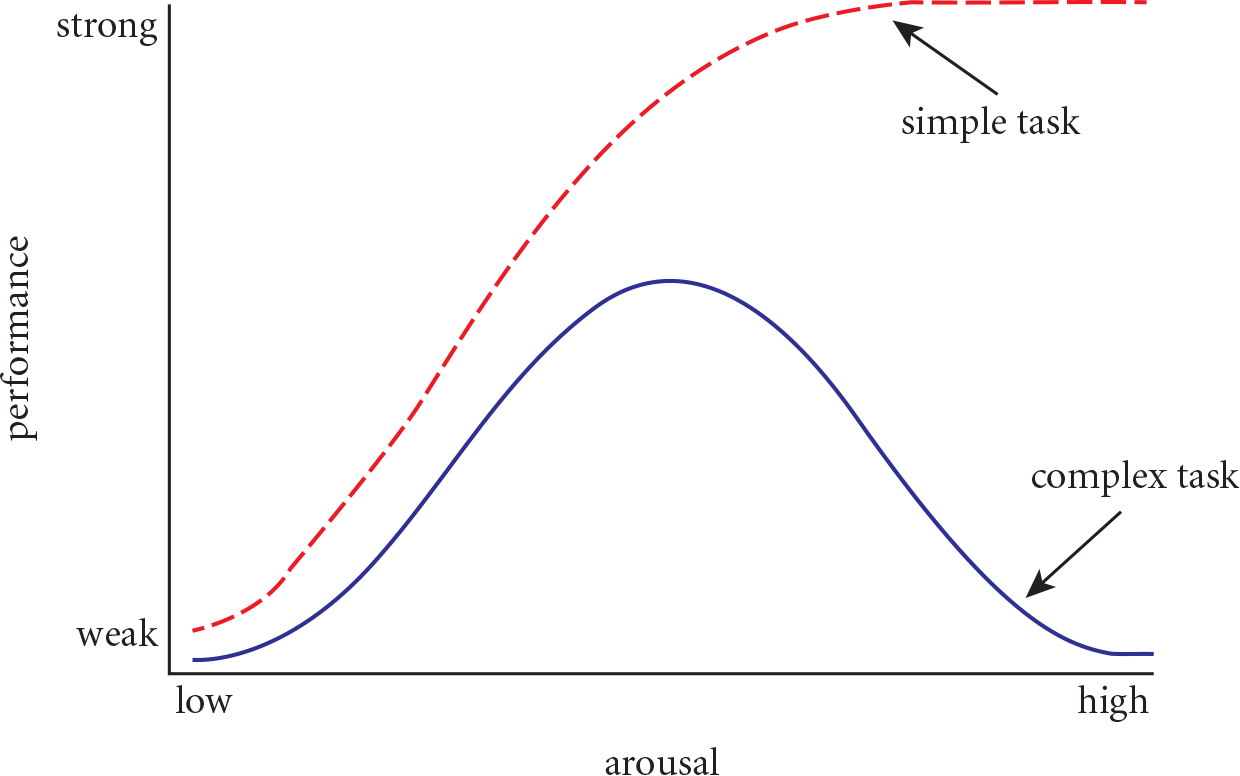
Figure 8.1. Yerkes–Dodson Law
Note the difference between Figure 5.2 (in Chapter 5 of MCAT Behavioral Sciences Review) and Figure 8.1. Whereas Figure 5.2 focuses solely on new or less-familiar tasks, Figure 8.1 also includes simple tasks, which are not adversely affected by heightened arousal. Social facilitation reflects the idea that performance is not solely influenced by individual ability, but also by social environment and awareness of that environment. In contrast to social facilitation, social inhibition occurs when an individual has a worse performance in front of an audience. On the Yerkes-Dodson curve, this inhibition would likely occur when a person performing a complex or unfamiliar task is at the highest level of arousal.
BRIDGE
The Yerkes–Dodson law is also used to describe the relationship between stress or sympathetic arousal and performance. Just as social facilitation can enhance the ability to perform tasks, so can moderate levels of arousal. Arousal can also be an effect of being surrounded by others and feeling pressure to perform: if there’s too much pressure, performance drops. Motivation and stress are discussed in Chapter 5 of MCAT Behavioral Sciences Review.
Deindividuation
Deindividuation describes the loss of one’s self-awareness in a group setting and the associated adoption of a more group oriented identity. This phenomenon is sometimes called mob mentality, as the individuals of the group lose their own sense of morals and judgment and follow along with the actions of the group. To explain this phenomenon social psychologists have cited group cohesion and individual anonymity as factors impacting deindividuation. If an individual can relate to the group, perhaps through a sports team or political affiliation, then the likelihood of that person adopting the group identity increases. In addition, group settings increase anonymity and thus diffuse the sense of individual responsibility for the actions of the group. Thus, as group anonymity increases, so does the strength of deindividuation. Applied to the real world, deindividuation often leads to antinormative behavior, that is, behavior not socially acceptable in most social circumstances; behavior “against the norm.” A commonly cited example of antinormative behavior in the context of deindividuation is the violence seen in crowds and riots. Large, homogenous groups are postulated to increase deindividuation effects, particularly when relative anonymity is a factor due to the group’s size. These factors can be further enhanced when a group is in uniform or masked, as shown in Figure 8.2.
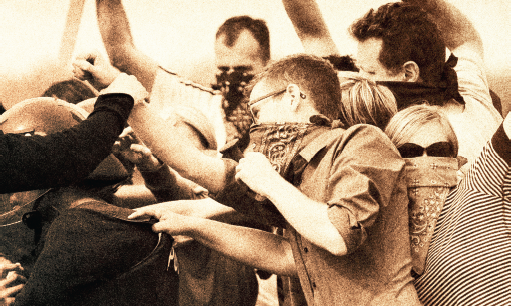
Figure 8.2. Deindividuation Being masked or in uniform facilitates anonymity in a crowd.
Diffusion of Responsibility
When a task is presented to a group, it becomes less likely that an individual will take responsibility due to the belief that someone else in the group will take action instead. This social phenomenon is known as diffusion of responsibility. The greater the number of people in the group, the more likely this phenomenon is to occur. Diffusion of responsibility contributes to several social phenomena, including the bystander effect and social loafing (both discussed below) and groupthink (discussed later in this chapter).
One powerful example of diffusion of responsibility in action is the bystander effect. This occurs when individuals do not intervene to assist those who are in perceived need when other people are present. The likelihood and timeliness of response is inversely related to the number of bystanders. In other words, the more people standing by, the less likely any one of those people is to help. There are several factors at play in the bystander effect. First, when in groups, people are less likely to notice danger or anything out of the ordinary. Additionally, when in groups, humans take cues from others. If other people are not responding to a situation, an individual is less likely to perceive the situation as a threat or emergency. The degree of emergency or the perceived danger plays a role in response. In low-danger scenarios, bystanders are less likely to provide aid; in high-danger scenarios, bystanders are more likely to intervene. Another factor is the degree of responsibility felt by the bystanders. This is determined by the competency of the bystanders, their relationship to the at risk individual(s), and whether they consider the person(s) at risk to be deserving of aid. Finally, cohesiveness of the group has been shown to influence responsiveness. In groups made up of strangers, the likelihood of a response, and the speed of that response, is much slower than in a group of well-acquainted individuals.
Diffusion of responsibility can also lead to a phenomenon known as social loafing, the tendency of individuals to reduce effort when in a group setting. This phenomenon may apply in many contexts: physical effort, such as carrying a heavy object; mental effort, such as working on a group project; or initiative, such as coming up with the solution to a problem.
REAL WORLD
The violent 1964 murder of Kitty Genovese outside her home in Queens created interest in the bystander effect after her murder and a lack of response by neighbors were reported in the newspaper. Kitty reportedly cried out while being attacked in her apartment parking lot. One neighbor called out the window for the attacker to leave her alone. The attacker left, but returned ten minutes later and found Kitty barely conscious just outside the back door. Genovese was attacked again for over half an hour and ultimately died en route to the hospital. Of the 38 witnesses (bystanders), it was reported that no one had called the police. Later investigation determined this not to be true, but the misreported incident was nevertheless influential for promoting the idea of the bystander effect.
Peer Pressure
From a sociology perspective, peers are individuals who are regarded as equals within a social group. Peer pressure refers to the social influence placed on an individual by one’s peers. Peer pressure exists at all ages. This pressure can come in many forms, including religious ideals, appearance, values, and sexual behavior. It can be positive or negative; certain types of peer pressure can benefit the individual experiencing the influence. In children, social acceptance is associated with being most like the social norm of the group, regardless of positive or negative connotations.
In adolescence, peers play an extremely important role in determining lifestyle, appearance, and social activities. While caregivers and other adults provide the foundation for development of beliefs and values, peers become very important as teenagers become independent from their parental figures. The pressure exerted by peers can cause changes in behavior, attitudes, or beliefs to conform to the norms of the group. Stress and the presence of peers can lead to poor choices and potentially facilitate risky behaviors such as binge eating, reckless driving, and violent activities.
Changes in beliefs or behavior due to peer pressure can be explained by the identity shift effect. When an individual’s state of harmony is disrupted by a threat of social rejection, the individual will often conform to the norms of the group. Upon doing so, however, the individual will begin to experience internal conflict because the behavior is outside the normal character of the individual. To eliminate the sense of internal conflict, individuals experience an identify shift wherein they adopt the standards of the group as their own. The identity shift effect also highlights a larger theme in psychology: cognitive dissonance, the simultaneous presence of two opposing thoughts or opinions. This generally leads to an internal state of discomfort, which may manifest as anxiety, fear, anger, or confusion. Individuals will try to reduce this discomfort by changing, adding to, or minimizing one of these dissonant thoughts.
Solomon Asch’s conformity experiment showed that individuals will often conform to an opinion held by the group. In this experiment, male college students participated in simple tasks of perception. The study was set up to have one individual who made observations in the presence of confederates, or actors who were pretending to be a part of the experiment. The point of the study was to examine if the behavior of the individual was influenced by the confederates. The participants were shown two cards like those in Figure 8.3. They were then asked to say aloud which line on the second card, labeled A, B, or C, matched the length of the line on the first card. Prior to the experiment, the confederates were secretly told to unanimously respond correctly or incorrectly to the question. When the confederates answered correctly, the error rate for the real participants was less than 1 percent. However, when the confederates answered incorrectly, it was seen that the real participants answered incorrectly up to one-third of the time. Thus, Asch concluded, individuals will sometimes provide answers they know to be untrue if it avoids going against the group: the urge toward conformity could outweigh the desire to provide the correct answer.
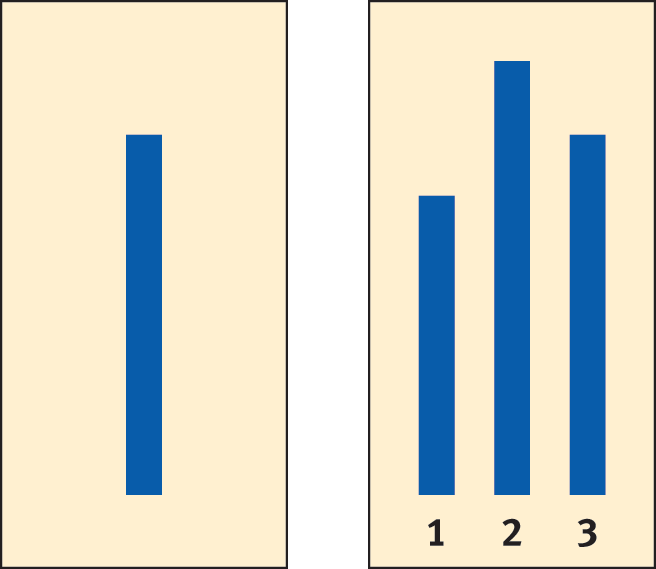
Figure 8.3. Example of Cards Used in the Asch Conformity Experiment
MCAT EXPERTISE
The MCAT can ask about psychological experiments by name, so you should be familiar with some of the landmark experiments in social psychology. For example, a question may refer to the Asch conformity experiment by name, or it may include a similar experiment without a direct reference and ask you to draw conclusions using your content knowledge.
Group Processes
In contrast to social action, social interaction explores the ways in which two or more individuals can both shape each other’s behavior. These include group processes and establishment of culture.
Group Polarization
Group polarization describes the tendency for groups to collaboratively make decisions that are more extreme than the individual ideas and inclinations of the members within the group. Thus, polarization can lead to riskier or more cautious decisions based on the initial tendencies of the group members toward risk or caution. This phenomenon has shown that individuals in groups will form opinions that are more extreme than the opinions they would reach in isolation. The hypothesis underlying polarization is that initial ideas tend not to be extreme, but that through discussion within the group, these ideas tend to become more and more extreme. This concept was originally termed risky shift because it was noted that groups tended to make riskier decisions than individuals. However, when psychologists began to realize that groups could also shift toward caution, the term became choice shift. Choice shift and group polarization refer to very similar concepts. However, choice shift refers specifically to measured changes in decisions before and after group interaction, whereas group polarization refers more generally to the tendency of a group to move to more extreme conclusions and decisions as a result of interaction.
Group polarization explains many real-life scenarios, including policy making, violence, and terrorism. For example, members of the same political party may espouse the same ideals and opinions in the group setting, but may waver slightly on issues when alone. This kind of polarization is also seen in jury deliberation. In the case of punitive damages (monetary penalties for a certain behavior), jurors who initially favor a high punishment may deliberate and decide upon an even higher punishment after discussion. As social media has exploded in recent decades, research has shown that the group does not necessarily need to be together physically in order for polarization to occur. Simply reading others’ ideas on social media sites can result in more extreme ideas from individuals.
Groupthink
Groupthink refers to a social phenomenon in which desire for harmony or conformity results in a group of people coming to an incorrect or poor decision. In an attempt to eliminate or minimize conflict among the group members, consensus decisions are reached without alternative ideas being assessed. In these cases, the desire to agree with the group causes a loss of independent critical thinking. The group also begins to isolate and ignore external viewpoints, seeing its own ideas as correct without question.
Groupthink can have a large impact on group decision making and is influenced by a variety of factors, including group cohesiveness, group structure, leadership, and situational context. Irving Janis conducted the first research on the theory in the 1970s. Janis studied the effect of extreme stress on group cohesiveness and its resulting effect on groupthink. Janis further investigated the decision making of groups that had led to disastrous American foreign policy decisions, including the Bay of Pigs invasion. Janis specifically examined eight factors that are indicative of groupthink:
- Illusion of invulnerability: Members encourage risks, ignore possible pitfalls and are too optimistic.
- Collective rationalization: Members ignore expressed concerns about group approved ideas.
- Illusion of morality: Members believe ideas produced by the group are morally correct, disregarding evidence to the contrary.
- Excessive stereotyping: Members construct stereotypes of those expressing outside opinions.
- Pressure for conformity: Members feel pressured not to express opinions that disagree with the group, and view opposition as disloyal.
- Self-censorship: Members withhold ideas and opinions that disagree with the group.
- Illusion of unanimity: Members believe the decisions and judgments of the group to be without disagreement, even if it does exist.
- Mindguards: Some members may decide to take on a role protecting the group against opposing views.
REAL WORLD
The Bay of Pigs Invasion and Cuban Missile Crisis were used by Janis as case studies. When JFK took over the White House, the administration inherited a CIA Cuban invasion plan, and it was accepted without critique. When Senator Fulbright and Secretary Schlesinger expressed objections, they were ignored by the Kennedy team. Over time, Fulbright and Schlesinger started to perform self-censorship. After the invasion, it was revealed that there were many inaccuracies in the CIA plan, including underestimation of the Cuban air force and the assumption that Castro would not have the ability to quell uprisings.
Many of these factors, including illusion of morality, excessive stereotyping, pressure for conformity, and mindguards can be seen in Figure 8.4, a propaganda poster from the United States during the McCarthy era. The poster draws on antisemitic stereotypes and fear of Communist influence to argue against public health measures like water fluoridation, polio vaccines, and mental healthcare.

Figure 8.4. Groupthink as Seen in McCarthy-Era Propaganda
Similar patterns of thinking, in which a group arrives at a common (but often extreme) consensus also underlie many cultural phenomena, including riots, fads, and mass hysteria. Antinormative behavior in riots was described previously in the section on deindividuation. Still, like groupthink, a shared political or social motivation may urge groups to engage in potentially violent and destructive behavior. A fad is a behavior that is transiently viewed as popular and desirable by a large community. Fads can include owning certain objects (such as pet rocks in the 1970s, Rubik’s cubes in the 1980s, and pogs in the 1990s) or engaging in certain behaviors (using catchphrases, altering clothing in some way, or engaging in particular types of media such as viral videos). Finally, mass hysteria refers to a shared, intense concern about the threats to society. In mass hysteria, many features of groupthink—collective rationalization, illusion of morality, excessive stereotyping, and pressure for conformity, in particular—lead to a shared delusion that is augmented by distrust, rumors, propaganda, and fear mongering. Perhaps the most notable historical case of mass hysteria was the Salem witch trials in colonial Massachusetts, which led to the execution of twenty individuals for fears of witchcraft.
Culture
Culture can be defined as the beliefs, behaviors, actions, and characteristics of a group or society of people. Culture is learned by living within a society, observing behaviors and traits, and adopting them. Culture is also passed down from generation to generation. While a “cultured” individual is often thought of as someone who has knowledge of the arts and expensive taste, sociology considers all people to be cultured by living within a society and participating in its culture. Culture is universal throughout humanity; while many animals exhibit purely instinctual behavior, humans show variable behaviors based on the cultures in which they reside. For example, while all wolf parents care for their pups in the same manner, human parents show vast differences in their caregiving. In some cultures, children are breastfed for years, while in others, infants are breastfed for mere months or not at all. Some groups have multiple caregivers who are not a parent, while others allow only a parent to care for the child. Even within a given culture, beliefs about the correct way to respond to infants crying can vary dramatically: some groups instantly comfort crying children and others let them “cry it out.” The beliefs held by an individual are typically based on learned behavior, expectations, and pressure from the group one is in. Cultural differences include everything from typical jobs, common dwellings, and diet to what time of day one eats and where one travels on vacation, if at all. When traveling outside of one’s own society, these cultural differences can seem quite dramatic and are often referred to as culture shock.
BRIDGE
A discussion of culture in the context of social structure is described in Chapter 11 of MCAT Behavioral Sciences Review.
Assimilation and Multiculturalism
Cultural assimilation is the process by which an individual’s or group’s behavior and culture begin to resemble that of another group. This can also mean that groups with different cultures begin to merge. Assimilation integrates new aspects of a society and culture with old ones, transforming the culture itself. While one society melds into another, it is typically not an even blend. One group will generally have more power and influence than the other, resulting in more traits of that culture being displayed after transformation. Four primary factors are sometimes used to assess the degree of assimilation in immigrant communities: socioeconomic status, geographic distribution, language attainment, and intermarriage.
One alternative to assimilation is the creation of ethnic enclaves, which are locations (usually neighborhoods) with a high concentration of one specific ethnicity, as shown in Figure 8.5. These are most common in urban areas and often have names like Chinatown or Little Italy.

Figure 8.5. An Ethnic Enclave Entrance to Chinatown, Sydney, Australia
Multiculturalism, also known as cultural diversity, refers to communities or societies containing multiple cultures or ethnic groups. From a sociology perspective, multiculturalism encourages, respects, and celebrates cultural differences, as shown in Figure 8.6. Multicultural socialization encourages the learning of norms and behaviors from multiple different cultures. This view can enhance acceptance of cultures within society, which contrasts with the concept of assimilation. While multiculturalism is often described as creating a cultural mosaic, or mixture of cultures and ethnic groups that coexist in society, assimilationism is described as creating a melting pot, or melting together of different elements of culture into one homogeneous culture.

Figure 8.6. Multiculturalism Multiculturalism may be celebrated through holidays and festivals, such as Harmony Day in Australia, shown here.
KEY CONCEPT
- Assimilation—(usually uneven) merging of cultures; a melting pot
- Multiculturalism—celebration of coexisting cultures; a cultural mosaic
Subcultures
Subcultures refer to groups of people within a culture that distinguish themselves from the primary culture to which they belong. When studying subcultures, symbolic attachment to things such as clothing or music can differentiate the group from the majority. Subcultures can be formed based on race, gender, ethnicity, sexuality, and other differentiating factors from the whole of society.
Subcultures can be perceived as negative when they subvert the majority culture’s definitions of normalcy. In the case of counterculture, the subculture group gravitates toward an identity that is at odds with the majority culture and deliberately opposes the prevailing social mores.
MCAT CONCEPT CHECK 8.1
Before you move on, assess your understanding of the material with these questions.
- Provide a brief definition for the following social phenomena:
________________________________
- Social facilitation:
________________________________
- Deindividuation:
________________________________
- Bystander effect:
________________________________
- Social loafing:
_________________________
- Peer pressure:
_________________________
- What are the similarities and differences between group polarization and groupthink?
_________________________
- What are the differences between assimilation and multiculturalism?
8.2 Socialization
LEARNING OBJECTIVES
After Chapter 8.2, you will be able to:
- Distinguish between conformity, compliance, and obedience
- Compare and contrast primary and secondary socialization
- Describe compliance techniques, such as foot-in-the-door, door-in-the-face, lowball, and that’s-not-all
More than any other animal, humans use social experiences to learn acceptable behavior in the culture in which they live. Sociologists and psychologists use the term socialization when discussing the process of developing, inheriting, and spreading norms, customs, and beliefs. Individuals gain the knowledge, skills, habits, and behaviors that are necessary for inclusion in society. Widely held views in a society become the accepted viewpoints and are generally adopted by the majority of individuals within that society. Beliefs, customs, and cultural norms are often passed down from one generation to another within a society in a process called cultural transmission or cultural learning. Spread of norms, customs, and beliefs from one culture to another can also occur, and is called cultural diffusion.
Socialization can be further categorized. Primary socialization occurs during childhood when we initially learn acceptable actions and attitudes in our society, primarily through observation of our caregivers and other adults in close proximity. In children, this sets the stage for future socialization and provides the foundation for creating personal opinions. Secondary socialization is the process of learning appropriate behavior within smaller sections of the larger society. This type of socialization occurs outside of the home and is based on learning the rules of specific social environments. For example, the behavior necessary to thrive in school is different from that in the home setting, and also from that which is acceptable on a sports field or in a church. Secondary socialization is typically associated with adolescents and adults and includes smaller changes and refinements to behavior that were established in primary socialization. Secondary socialization can also occur when moving to a new region or changing schools or professions. Anticipatory socialization is the process by which a person prepares for future changes in occupations, living situations, or relationships. A premedical student shadowing physicians to assimilate and practice appropriate behaviors in expectation of one day becoming a doctor is an example of anticipatory socialization. Resocialization is another process by which one discards old behaviors in favor of new ones, typically through intensive retraining, and can have positive or negative connotations. The method by which members of the armed forces are trained to obey orders and commands without hesitation is a prime example of resocialization, but so is attracting and indoctrinating members into a cult.
REAL WORLD
Cults that have become a mainstay in media today are often “Doomsday cults.” This term refers both to groups that prophesy catastrophe and apocalypse and to those who attempt to bring it about. In December of 2012, nearly 1000 members of the Chinese cult Church of Almighty God were arrested for broadcasting fears of apocalypse and encouraging the overthrow of the Communist Party.
Norms
Sociologists define norms as societal rules that define the boundaries of acceptable behavior. Mores are widely observed social norms. While norms are not laws, they do provide a mechanism for regulating the behavior of individuals and groups and thereby serve as a means of social control. Penalties for misconduct or rewards for appropriate behavior, called sanctions, can also be used to maintain social control. Negative sanctions punish behaviors that deviate from norms, while positive sanctions reward behaviors that comply with norms. Sanctions can also be categorized as formal or informal. Formal sanctions are enforced by formal social institutions like governments or employers and can include receiving a promotion (positive) or a jail sentence (negative). By contrast, informal sanctions are enforced by social groups. Informal sanctions might include being allowed to sit at a particular table in the school cafeteria (positive) or exclusion from a social group (negative).
Norms provide us with a sense of what is appropriate, what we should do, and what is considered taboo—socially unacceptable, disgusting, or reprehensible. Norms exist for behavior, speech, dress, home life, and more and can differ between groups within a society, and also between different cultures. For example, many Americans tend to be extraverted and talkative, even among strangers, while Japanese culture sometimes teaches that showing too much of oneself in a public setting is a sign of weakness. Thus, a very quiet person who does not make eye contact could seem odd in America but may fit in perfectly in Japan. Folkways are norms that refer to behavior that is considered polite in particular social interactions, such as shaking hands after a sports match, as seen in Figure 8.7.

Figure 8.7. Folkways An act as simple as shaking hands after a sporting match is an example of a folkway.
Agents of Socialization
Any part of society that is important when learning social norms and values is called an agent of socialization. For children, the primary agents of socialization are caregivers, often parents or other family members. Direct family remains an important agent of socialization for adolescents, but social circles—including friends, peers, and teachers—become important agents as well. For adults, colleagues and bosses can also act as agents of socialization. Aside from personal relationships, the environment is another agent of socialization. For example, when entering college, some teenagers may experience a complete lifestyle change and are in nearly constant interaction with people of their own age. This new environment creates a shift in acceptable behavior that can include late nights out with friends or all-night study sessions. When entering the workforce, another change in environment leads to socialization within the organization. Ethnic background, religion, and government also play a role in learned behavior, and are therefore also important agents of socialization. And geography at the national, regional, and neighborhood levels also dictates norms of behavior: acceptable behavior in downtown Manhattan is not identical to acceptable behavior in rural Montana.
REAL WORLD
A study published in 2002 examined the link between television and violence. In the study, the researchers followed 707 subjects for 17 years. Study subjects who watched more than one hour of TV per day were approximately four times more likely to act aggressively toward others later in life than those who watched less than one hour of TV. Of those who watched more than three hours of TV per day, nearly 30% were involved in assaults, robberies, or other aggressive behaviors. While this is an interesting link, remember that it shows correlation—not causation!
Furthermore, the media are an important agent of socialization through their influence on what is accepted within a particular society. Popular culture, i.e. common trends and beliefs prevalent at a given point in time, is heavily influenced by the media. The media can determine what is considered important in a particular society. Mass media is most commonly accessed through television, radio, newspapers, and the Internet. It delivers impersonalized communication to a vast audience, and can thereby establish trends in American or international popular culture. Many of the agents of socialization are summarized in Figure 8.8.

Figure 8.8. Agents of Socialization
Deviance and Stigma
Deviance refers to any violation of norms, rules, or expectations within a society. It is important to note that using the term deviant is often associated with strongly negative connotations; however, in the sociological context, it simply refers to any act that goes against societal norms. Deviance can vary in severity, from something as simple as jaywalking to something as serious as committing murder. Deviance also includes any act that meets with disapproval from the larger society.
Social stigma is the extreme disapproval or dislike of a person or group based on perceived differences from the rest of society. These deviations from the norm can include differences in beliefs, abilities, behaviors, and appearance. Certain medical conditions such as HIV, achondroplasia (dwarfism), and obesity can also be stigmatized. Stigma can also spread to affect others who are associated with a particular individual. For example, family members of an alleged or convicted murderer or rapist can be stigmatized. Stigma also evolves over time: whereas divorce was stigmatized in the early twentieth century, it no longer has such strong negative connotations.
BRIDGE
Mental illness has long been stigmatized in American society. While this is slowly changing, the potential stigma associated with a mental health diagnosis continues to be a hurdle to many patients seeking out or receiving care. Many common psychological disorders are discussed in Chapter 7 of MCAT Behavioral Sciences Review.
Deviance, stigmatization, and reputation are strongly linked with the labeling theory. This theory posits that the labels given to a person affect not only how others respond to that person, but also affect that person’s self-image. Labels can lead to channeling of behavior into deviance or conformity. For example, if members of society label a person as a criminal, this label could either lead to further criminality or to a change in behavior toward something more in line with what is accepted in that society. In many instances, we resist being labeled, particularly with labels we perceive as negative. However, groups may embrace deviant labels. Biker gangs, for example, utilize labeling to enhance the perception of their own subgroup. Internalizing a label and assuming the role implied by the label may lead to the assumed role taking over a person’s identity, a phenomenon known as role engulfment.
According to differential association theory, deviance, particularly criminal behavior, can be learned through interactions with others. In this theory, intimate exposure to others who engage in deviant behavior lays the groundwork for people to engage in deviant behavior themselves. However, people will also likely come into contact with norm-abiding individuals. Differential association, then, is the degree to which one is surrounded by ideals that adhere to social norms vs. ideals that go against them. In this theory, when associations with others engaging in deviant behavior are more numerous or intense than those engaging in normative behavior, individuals begins to gravitate toward deviant behavior themselves. In common language, we might describe someone as having “fallen into the wrong group.”
Finally, strain theory attempts to explain deviance as a natural reaction to the disconnect between social goals and social structure. One common example in strain theory is the American dream, which refers to acquiring wealth and personal stability through achievement and hard work. The American dream is considered a desirable social goal, but the structure of society is unable to guarantee the education and opportunity needed to achieve this goal to all citizens. Therefore, deviant behavior such as theft may arise as an attempt to achieve the social goal outside of the limiting social structure.
While deviance is often associated with negative behavior such as crime, functional theorists argue that it is necessary for social order. These theorists argue that deviance provides a clear perception of social norms and acceptable boundaries, encourages unity within society, and can even promote social change.
Conformity, Compliance, and Obedience
While deviance is defined as going against societal norms, conformity, compliance, and obedience are manners of adhering to social expectations or others’ requests.
Conformity
Conformity is matching one’s attitudes, beliefs, and behaviors to group or societal norms. The pressure to conform can be real or imagined: an actual pressure from others, or a perceived pressure or expectation. Conformity is also known as majority influence. The Asch experiments, described earlier, showed the strength of social influence on normative conformity, the desire to fit into a group because of fear of rejection.
There are distinct types of conformity, including internalization and identification. Internalization involves changing one’s behavior to fit with a group while also privately agreeing with the ideas of the group. Identification refers to the outward acceptance of others’ ideas without personally taking on these ideas.
KEY CONCEPT
Internalization and identification both deal with accepting others’ ideas, but whereas internalization also reflects a change in internal thoughts to agree with the idea, identification is acceptance of the idea on the surface level without internalizing it.
A classic experiment looking at internalization was Philip Zimbardo’s Stanford Prison Experiment. Zimbardo advertised for a role-playing experiment in which he recruited 21 male college students. The study participants were randomly assigned the role of prisoner or guard. The prisoners were arrested in their homes and taken to a “prison” created in the Stanford University psychology building. Guards were issued uniforms, including whistles, handcuffs, and dark glasses to prevent eye contact. The prisoners and guards quickly fell into their roles and displayed related behaviors almost immediately. Guards began to taunt and harass prisoners, appearing to enjoy their role. Prisoners also adopted their new role, taking the prison rules very seriously, and becoming more and more dependent on the guards. As the guards became more aggressive, the prisoners became more submissive, although they also attempted to mount a revolt. The study had to be ended after six days because the guards had begun to physically abuse the prisoners so severely that ethical concerns were raised. After the study ended, Zimbardo interviewed each participant. The guards and prisoners, who had internalized their roles, were both shocked by their behavior during the experiment.
REAL WORLD
In recent years, design flaws in the Stanford Prison Experiment have come to light. These include sampling biases, ethical concerns, lack of controls, and active participation in the experiment by Zimbardo himself.
The likelihood of conformity differs among cultures. For instance, individualist cultures tend to value independent thought and unique ideas and are thus less likely to conform; in collectivist cultures, group mentality often supersedes the individual. The latter type of society tends toward conformity.
Compliance
Compliance is a change in behavior based on a direct request. The person or group that asks the individual to make the change typically has no actual power or authority to command the individual, yet will ask the individual to change behavior. There are several notable techniques used to gain compliance of others, particularly within the marketing arena. The foot-in-the-door technique begins with a small request, and after gaining compliance, a larger request is made. An example of this scenario could be a fellow classmate asking to borrow your notes after missing class. You agree and offer to share the notes at the next class session. Later in the day, when you see the student again, you’re asked if you would be willing to make copies of your notes too. Many people will still agree at this point, as the first request opened the door to continued compliance.
The next technique is called the door-in-the-face technique. This is the opposite of the foot-in-the-door technique, wherein a large request is made at first and, if refused, a second, smaller request is made. Often, this smaller request is the actual goal of the requester. Using this technique, a fellow student might ask you to make a copy of your notes from class and bring them to the next class. If you deny the request, the student might follow up with a smaller request, asking to borrow your notes to make personal copies. The second, more reasonable request may be granted.
Another common method of achieving compliance is the lowball technique. In this technique, the requestor will get an initial commitment from an individual, and then raise the cost of the commitment. It is important to note that cost need not only include money, but can also include effort and time. An example of this technique is a scenario in which you are asked by your boss to head a committee with a time commitment of five hours per month of meetings. You agree to head the committee, but later discover that the commitment also includes written reports from each meeting and a quarterly presentation.
Yet another technique used to gain compliance is the that’s-not-all technique. In this method, an individual is made an offer, but before making a decision, is told the deal is even better than expected. This method is frequently seen in infomercials: We can offer you these earrings for the stunningly low price of $19.99. But wait! If you buy them, you’ll also receive our matching necklace, normal retail value $49.99, absolutely free.
Obedience
While compliance deals with requests made by people without actual authority over an individual, obedience is changing one’s behavior in response to a direct order or expectation expressed by an authority figure. While a classmate has no authority to demand notes from you, an authority figure has social power over other individuals. For instance, if a teacher demands that you hand over your notes from class, you would be obeying rather than complying. People are far more likely to obey than comply due to the real or perceived social power of the individual.
One of the most notable obedience experiment series was conducted by Stanley Milgram. In this classic set of studies, Milgram claimed to be recruiting participants for a study to test the effects of punishment on learning behavior. Participants were told they would be randomly assigned to be the “teacher” or “learner”; however, the “learner” was actually a paid actor (confederate). The teachers were told that they would be controlling an electrical panel that would administer shocks to the learners if they made mistakes. Prior to giving the first shock, the teachers were given a sample 45 V shock to make them aware of what they would be doing to the learners. The teachers were then told that they would need to increase the voltage by 15 V each time an incorrect response was given. The learners, who received no actual shock, were provided with scripts telling them to show pain, ask to stop the experiment, scream, and even feign passing out. As the learners acted more and more uncomfortable, the teachers became less willing to increase the shock voltage. However, by using increasingly demanding language (from Please continue to You have no other choice, you must go on), the researchers were able to get 65 percent of the participants to administer shocks to the maximum of 450 V, even if they showed discomfort in doing so. Milgram and other researchers were surprised at the level of obedience the participants showed during the experiment. This type of experiment has been repeated many times and has consistently shown that more than 60 percent of people will obey even if they do not wish to continue.
MCAT CONCEPT CHECK 8.2
Before you move on, assess your understanding of the material with these questions.
_________________________
- What is the difference between primary and secondary socialization?
- What are conformity, compliance, and obedience?
________________________________
- Conformity:
________________________________
- Compliance:
_________________________
- Obedience:
- For each of the compliance techniques listed below, provide a brief description:
________________________________
- Foot-in-the-door:
________________________________
- Door-in-the-face:
________________________________
- Lowball:
_________________________
- That’s-not-all:
8.3 Attitudes and Behavior
LEARNING OBJECTIVES
After Chapter 8.3, you will be able to:
- Recall the three components of attitude
- Describe the four functional areas of the functional attitude theory
- Identify the roles of central route and peripheral route processing in the elaboration likelihood model
- Recall the three interactive factors of Bandura’s triadic reciprocal causation
Social cognition focuses on the ways in which people think about others and how these ideas impact behavior. Our attitudes—the ways in which we perceive others—impact the ways we behave toward them.
Components of Attitudes
An attitude is the expression of positive or negative feeling toward a person, place, thing, or scenario. Attitudes develop from experiences with others who affect our opinions and behaviors. Even prior to meeting someone, past experiences and information from others can influence your attitude toward a person.
There are three primary components of attitude: affective, behavioral, and cognitive. The affective component of attitude refers to the way a person feels toward something, and is the emotional component of attitude. Snakes scare me and I love my family are both affective expressions of attitude. The behavioral component of attitude is the way a person acts with respect to something. For example, avoiding snakes and spending time with one’s family would reflect the behavioral component of the attitudes described earlier. Finally, the cognitive component of attitude is the way an individual thinks about something, which is usually the justification for the other two components. In the snake example above, knowing that snakes can be dangerous (and sometimes venomous) provides a reason to be afraid of snakes and to avoid them.
MNEMONIC
Components of Attitude: ABC
- Affective
- Behavioral
- Cognitive
Theories of Attitudes
The functional attitudes theory states that attitudes serve four functions: knowledge, ego expression, adaptation, and ego defense. The knowledge function can be summarized as follows: attitudes help provide organization to thoughts and experiences, and knowing the attitudes of others helps to predict their behavior. For example, one would predict that an individual who cares about political action would vote in an upcoming election. Attitudes facilitate being ego-expressive, allowing us to communicate and solidify our self-identity. For instance, if a person strongly identifies with a sports team, that person might wear a team hat to identify as having a positive attitude towards that team. Adaptive attitude is the idea that expressed socially acceptable attitudes will lead to acceptance. For example, a person declaring to a social group that they enjoyed a popular movie can help to build social bonds. Lastly, attitudes are ego-defensive if they protect our self-esteem or justify actions that we know are wrong. For example, a child who has difficulty doing math may develop a negative attitude toward the subject.
Learning theory posits that attitudes are developed through different forms of learning. Direct contact with the object of an attitude can influence attitude towards that object. For example, children form a positive attitude toward sweets almost immediately after tasting them. Direct instruction from others can also influence attitudes. For instance, a child who is taught by caregivers not to use curse words can form a negative attitude toward curse words and, indirectly, a negative attitude toward those who use curse words. Our attitudes can also be influenced by others’ attitudes. For example, teenagers may begin to have a positive attitude toward smoking if they notice that all of their friends smoke. Finally, attitudes may be formed through classical conditioning, operant conditioning, or observational learning, all of which are discussed in Chapter 3 of MCAT Behavioral Sciences Review.
The elaboration likelihood model is a theory of attitude formation and attitude change that separates individuals on a continuum based on how they process persuasive information. At one extreme are those who elaborate extensively, that is, those who think deeply about information, scrutinize its meaning and purpose, and draw conclusions or make decisions based on this analysis. Deep thinking in this manner is referred to as central route processing and focuses on central message characteristics like logical soundness, clarity, and coherence. When an attempt to influence attitudes uses information that appeals to central route processing, this attempt is said to be using the central route to persuasion. A scientific paper would be one example of an attempt to influence attitudes that uses the central route to processing. At the other extreme are those who do not elaborate and focus instead on peripheral message characteristics, including superficial details such as the appearance of the person delivering the argument, catchphrases and slogans, and credibility. This type of processing is known as peripheral route processing. When attempts to influence attitudes appeal to peripheral route processing, these attempts are said to be using the peripheral route to persuasion. An advertisement with just a logo that contains a visually appealing image is one example of an attempt to influence attitudes that uses the peripheral route to persuasion. To contrast these two types of processing, consider two voters watching a well-informed and charismatic politician speak: One voter might be swayed by the cogent arguments made by the politician, and this illustrates high elaboration, central route processing. The other voter might be swayed by the perception that the speaker is likable and a good person, illustrating low elaboration, peripheral route processing. Most individuals fall in the middle of this continuum, and the degree to which we elaborate on information can vary depending on the specific situation.
KEY CONCEPT
- Central route processing (high elaboration)—scrutinizing and analyzing the content of persuasive information
- Peripheral route processing (low elaboration)—focusing on superficial details of persuasive information, such as appearances, catchphrases and slogans, and credibility
Social cognitive theory postulates that people learn how to behave and shape attitudes by observing the behaviors of others. According to this theory, behavior is not learned by trial-and-error, but develops through direct observation and replication of the actions of others. This learning is influenced by personal factors (such as thoughts about the behavior) and the environment in which the behavior is observed. These three factors—behavior, personal factors, and environment—are not independent concepts, but influence each other, as shown in Bandura’s triadic reciprocal causation in Figure 8.9. For example, the work ethic of employees in a company (behavior) is affected by how hard their colleagues work, their previous attitudes toward hard work (personal), and the systems and infrastructure of the company (environment). Reciprocally, this behavior may create a change in the employees’ attitude toward work (personal) and the systems within the company (environment).
BEHAVIORAL SCIENCES GUIDED EXAMPLE WITH EXPERT THINKING
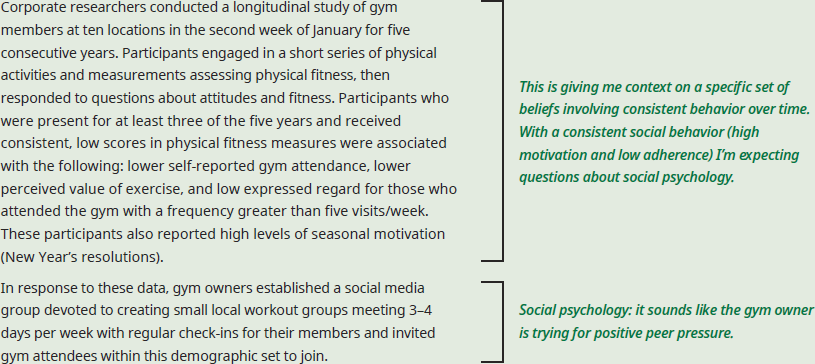
How might the group who received consistent low scores in physical fitness measures respond to the new initiative if they choose to participate? How do the results of the five year study inform predictions of their adherence to the 3–4 day per week workout plan?
The writers of the MCAT will hint at a concept in the passage or question stem and then ask us a question about recognizing or applying that concept to the situation described. We’ll want to be familiar enough with the content that when the question tells a story or mentions some specific example, we can say to ourselves “Oh, that’s _______!”
In order to answer this question, we’re going to have to dive into the scenario and identify factors that will influence behavioral outcomes. In the first paragraph, these gym members have maintained the same low level of fitness and low gym attendance for five years, which should remind us of attribution theory: consistent behaviors tend to have dispositional rather than situational explanations. Despite the finding of high seasonal motivation to engage with exercise, it’s likely that this group of individuals aren’t already in shape because of their attitudes towards themselves or working out (“I’m nervous people will judge me at the gym” or “I just don’t enjoy lifting weights”), rather than situational barriers (“My preferred gym is being renovated” or “I’m just super busy this year”). In other words, such attributions are about who “they are” instead of “what has happened to them.” We also get a hint in this direction with the finding about low regard for people who attend the gym very regularly. The cause/effect relationship for this set of findings and past behaviors is difficult to assess with the information provided, and may differ between participants. It could be that for some, the thoughts on gym enthusiasts influence their avoidance of the gym in an effort not to adopt similar behaviors. But for others, it could also be that their inability to get to the gym regularly might be influencing their attitudes about those who do in order to protect their egos.
Things are different this year, thanks to the creation of the new fitness group by the gym owners. Some subset of this group of participants have now joined a group of people who will be going to the gym together and will hold each other accountable. We should identify a specific social phenomenon as soon as we read that sentence: peer pressure!
Now that we’ve identified the important information in the scenario, we should return to the question itself. The question asks how the information we already have about this group of participants might predict their behaviors, which are the three factors of social-cognitive theory. Social-cognitive theory says that all of these things influence one another. If we put together everything we’ve learned, we see that the attitudes expressed in this group make it less likely that they’ll stick to working out, but they’ve also taken steps to change their environment by opting to join a new peer group for themselves, which makes it more likely that their behaviors may change. While it’s impossible to tell which of these influences will win out over the other, it is possible that putting themselves into this new environment and changing their behaviors will in fact change their attitudes over time to be more accepting of those people (now including themselves!) who go to the gym often.
In short, our answer is: the data on this group indicates a possible disposition that makes it less likely they will consistently go and work out at the gym. However, there is now a competing influence to go to the gym that applies to them based on peer pressure from their new group.
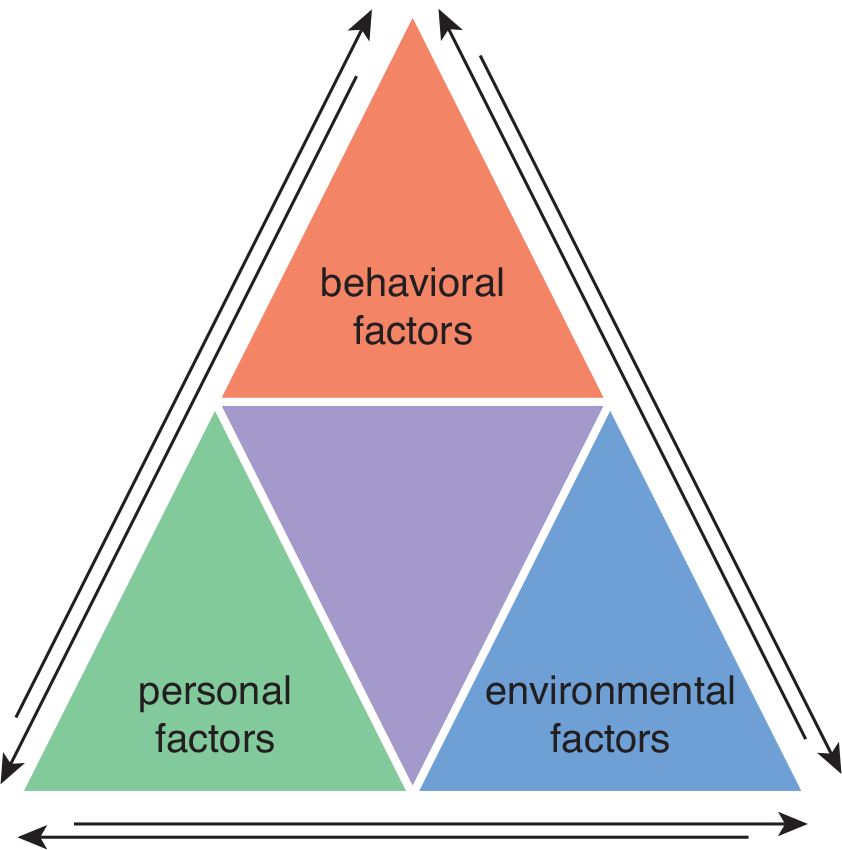
Figure 8.9. Bandura’s Triadic Reciprocal Causation
MCAT EXPERTISE
MCAT passages tend to describe an experiment or a scenario and drop in sentences or even short phrases that hint at related scientific content that is then used in questions. The better you are at recognizing this content, the more ready you will be to answer these questions quickly and correctly. But don’t feel like you need to scour each passage for every single concept that could appear in the question set.
MCAT CONCEPT CHECK 8.3
Before you move on, assess your understanding of the material with these questions.
- What are the three components of attitude?
- _________________________
- _________________________
- _________________________
- What are the four functional areas of the functional attitudes theory?
- _________________________
- _________________________
- _________________________
- _________________________
- What are the routes of processing used to explain the elaboration likelihood model? Which is associated with high elaboration?
- _________________________
- _________________________
- What are the three interactive factors of Bandura’s triadic reciprocal causation?
- _________________________
- _________________________
- _________________________
Conclusion
Human behavior is learned and influenced by those around us. Simply being around others can lead to changes in behavior from how we act when alone. Pressure from others can also lead to changes in behavior when people crave acceptance: inclusion in a group can lead to changes in thought processes and decision making. Social norms, which are learned through experience and observation, can be rejected by individuals, leading to deviance and stigmatization. However, the need to fit in can lead to conformity, compliance, and obedience. Attitudes are also developed through observations, experiences, and interactions with others, and there are multiple theories explaining their specific methods of formation.
This chapter focused primarily on how groups influence an individual’s behavior. In the next chapter, we’ll look at the structure of these groups and how we present ourselves to the larger society. We’ll explore methods of communication between individuals—both verbal and nonverbal—and consider how we encourage others to gain certain impressions about us.
GO ONLINE
You’ve reviewed the content, now test your knowledge and critical thinking skills by completing a test-like passage set in your online resources!
CONCEPT SUMMARY
Group Psychology
- Social facilitation describes the tendency of people to perform at a different level based on the fact that others are around.
- Deindividuation is a loss of self-awareness in large groups, which can lead to drastic changes in behavior.
- The bystander effect describes the observation that when in a group, individuals are less likely to respond to a person in need.
- Peer pressure refers to the social influence placed on individuals by others they consider equals.
- Group decision making may differ from individual decision making.
- Group polarization is the tendency toward making decisions in a group that are more extreme than the thoughts of the individual group members.
- Groupthink is the tendency for groups to make decisions based on ideas and solutions that arise within the group without considering outside ideas. Ethics may be disturbed as pressure is created to conform and remain loyal to the group.
- Culture describes the beliefs, ideas, behaviors, actions, and characteristics of a group or society of people.
- Assimilation is the process by which a group or individual’s culture begins to melt into another culture.
- Multiculturalism refers to the encouragement of multiple cultures within a community to enhance diversity.
- Subcultures refer to a group of people within a culture that distinguish themselves from the primary culture to which they belong.
Socialization
- Socialization is the process of developing and spreading norms, customs, and beliefs.
- Norms are what determine the boundaries of acceptable behavior within society.
- Agents of socialization include family, peers, school, religious affiliation, and other groups that promote socialization.
- Stigma is the extreme disapproval or dislike of a person or group based on perceived differences from the rest of society.
- Deviance refers to any violation of norms, rules, or expectations within a society.
- Conformity is changing beliefs or behaviors in order to fit into a group or society.
- Compliance occurs when individuals change their behavior based on the requests of others. Methods of gaining compliance include the foot-in-the-door technique, door-in-the-face technique, lowball technique, and that’s-not-all technique, among others.
- Obedience is a change in behavior based on a command from someone seen as an authority figure.
Attitudes and Behavior
- Attitudes are tendencies toward expression of positive or negative feelings or evaluations of something.
- There are affective, behavioral, and cognitive components to attitudes.
- The functional attitudes theory states that there are four functional areas of attitudes that serve individuals in life: knowledge, ego expression, adaptability, and ego defense.
- The learning theory states that attitudes are developed through forms of learning: direct contact, direct interaction, direct instruction, and conditioning.
- The elaboration likelihood model states that attitudes are formed and changed through different routes of information processing based on the degree of elaboration (central route processing, peripheral route processing).
- The social cognitive theory states that attitudes are formed through observation of behavior, personal factors, and environment.
ANSWERS TO CONCEPT CHECKS
**8.1**
- Social facilitation describes the tendency of people to perform at a different level based on the fact that others are around. Deindividuation is the idea that people will lose a sense of self-awareness and can act dramatically different because of the influence of a group. The bystander effect describes the observation that individuals are less likely to respond to a person in need when in a group. Social loafing refers to a decrease in effort seen when individuals are in a group. Peer pressure refers to the social influence placed on individuals by others they consider their equals.
- Group polarization and groupthink are both social processes that occur when groups make decisions. Group polarization is the tendency toward extreme decisions in a group. Groupthink is the tendency for groups to make decisions based on ideas and solutions that arise within the group without considering outside ideas, given the pressure to conform and remain loyal to the group.
- Societies that contain multiple cultures can exhibit multiculturalism or assimilation. Assimilation is the process by which multiple cultures begin to merge into one, typically with an unequal blending of ideas and beliefs. Multiculturalism refers to the idea that multiple cultures should be encouraged and respected without one culture becoming dominant overall.
**8.2**
- Primary socialization refers to the initial learning of acceptable behaviors and societal norms during childhood, which is facilitated mostly by caregivers and other adults. Secondary socialization refers to learning the norms of specific subgroups or situations during adolescence and adulthood.
- Conformity is changing beliefs or behaviors in order to fit into a group or society. Compliance occurs when individuals change their behavior based on the request of others who do not wield authority over the individual. Obedience is a change in behavior because of a request from an authority figure.
- The foot-in-the-door technique refers to asking for favors that increase in size with each subsequent request. The door-in-the-face technique refers to making a large request and then, if refused, making a smaller request. The lowball technique refers to gaining compliance without revealing the full cost (money, effort, or time) of the favor. The that’s-not-all technique refers to increasing the reward for a request before an individual has the chance to make a decision.
**8.3**
- The three components of attitude are affective, behavioral, and cognitive.
- The four functional areas of the functional attitudes theory are knowledge, ego expression, adaptation, and ego defense.
- The routes of processing used to explain the elaboration likelihood model are central route processing and peripheral route processing. Central route processing is associated with high elaboration.
- The three interactive factors of Bandura’s triadic reciprocal causation are behavior, personal factors, and environment.
SCIENCE MASTERY ASSESSMENT EXPLANATIONS
1. C
When fulfilling particular roles, an individual’s behavior can be very out of character. The changing of one’s behavior (and internal ideas) to match a group is called internalization conformity. This was a key part of the experiment. The experiment also involved deindividuation, the loss of self-identity in the group setting that can lead to antinormative or violent behavior.
2. B
The fact that individual opinions became more extreme during group discussion is explained by group polarization. The jury member initially felt that a strict penalty should be given, but this opinion became more extreme after conversation with the rest of the group.
3. A
It has been observed that increasing the number of bystanders decreases the likelihood that any of them will aid a victim. Increasing the degree of danger experienced by the victim, (B), making the victim an acquaintance instead of a stranger, (C), and being alone in the room with the victim, (D), would increase the likelihood that the bystander would help the victim.
4. D
With groupthink, a member would perform all of the actions described by the answer choices except create a sense of negativity against risk taking; in fact, there is optimism and encouragement toward risk taking in groupthink.
5. A
Primary socialization is the teaching of acceptable actions and attitudes during childhood, which would occur too early to be part of the adult prison system. Resocialization, (D), is the process by which one changes behaviors by discarding old routines and patterns and transitions to new behaviors necessary for a life change. The prison environment is designed to change unlawful behavior into desired behavior, making this an incorrect choice. When entering prison, an inmate must also undergo secondary socialization, (B), learning the rules of the specific social environment of the prison. Finally, if the inmate is not incarcerated for life, attempts at anticipatory socialization, (C), must be made before releasing the inmate in preparation for life outside of the prison.
6. C
This is a prime example of the foot-in-the-door technique. The neighbors first ask for a small favor and, after receiving commitment, ask for a larger favor.
7. A
The affective component of attitude consists of feelings and emotions toward something.
8. D
Peripheral route processing deals with processing information that is not based on content, but instead on superficial parameters such as boring speech patterns or appearance of the speaker. Central route processing, (C), is the processing of information through analysis of its content.
9. B
The Milgram shock experiment showed that individuals would obey orders from authority figures even if they were not comfortable with the task at hand. Conformity and compliance, (C) and (D), also deal with changes in individual behavior, but are not based on the requests of an authority figure.
10. C
Internalization refers to the type of conformity in which individuals change their outward opinion to match the group and also personally agree with those ideas.
11. B
The four functional areas of the functional attitudes theory are knowledge, adaptability, ego expression, and ego defense. Acceptance into a group may influence attitudes or opinions; however, this is not a part of the functional attitudes theory.
12. A
For 14 out of the 16 members, the record times were obtained during public meets. The fact that the team members performed better when in front of a crowd supports the notion of social facilitation.
13. D
This young person is preparing to spend time in a new social setting. The process of preparing for future changes in environment is considered anticipatory socialization.
14. B
Social action is best described as the effects that a group has on individual behavior, including social facilitation, deindividuation, the bystander effect, social loafing, and peer pressure. Social interaction describes how two or more individuals influence each other’s behavior, including group polarization and groupthink.
15. C
Placing spoken or unspoken expectations on individuals to agree with the ideas of the group is best described as pressure for conformity.
GO ONLINE
Consult your online resources for additional practice.
SHARED CONCEPTS
Behavioral Sciences Chapter 5
Motivation, Emotion, and Stress
Behavioral Sciences Chapter 6
Identity and Personality
Behavioral Sciences Chapter 9
Social Interaction
Behavioral Sciences Chapter 10
Social Thinking
Behavioral Sciences Chapter 11
Social Structure and Demographics
Physics and Math Chapter 11
Reasoning About the Design and Execution of Research